
Medieval-Modern Levantine handmade geometric painted ware (HMGP)
Jordan/Aqaba Highlands, Jordan/Central Highlands, Jordan/Jordan Valley, Jordan/Southern Highlands, Jordan/Northern Highlands, Syria/Hauran
11th c. CE - 20th c. CE
Later Islamic - Fatimid/Mamluk, Later Islamic - Fatimid/Mamluk, Ottoman, Ottoman
General Information
This family represents a long-lived, widespread family of vessels that are all handmade and painted. Designs range from geometric patterns to lines and free-style - and sometimes also plastic - decorations. Many shapes are known, including jugs, jars, bowls, basins, and lamps. Various forming techniques are attested: a slow-turning disc, coils, slabs (at Aqaba in Jordan), and sandbags (at Deir Alla and Heshban in Jordan). Low or poor firing is common, resulting in a noticeable black core; although some better-made, better fired examples are known. The firing variations may well be from production in open-air pits; such firing is known from Mandate-period Palestine. This tradition of handmade painted ware is known well beyond the Levant, from North Africa and Nubia to Central Asia. This ware family represents the decorated partner to the equally widespread and long-lived Medieval-Modern Levantine Handmade Unpainted ware (see this ware page for a lengthy bibliography applicable to both wares).
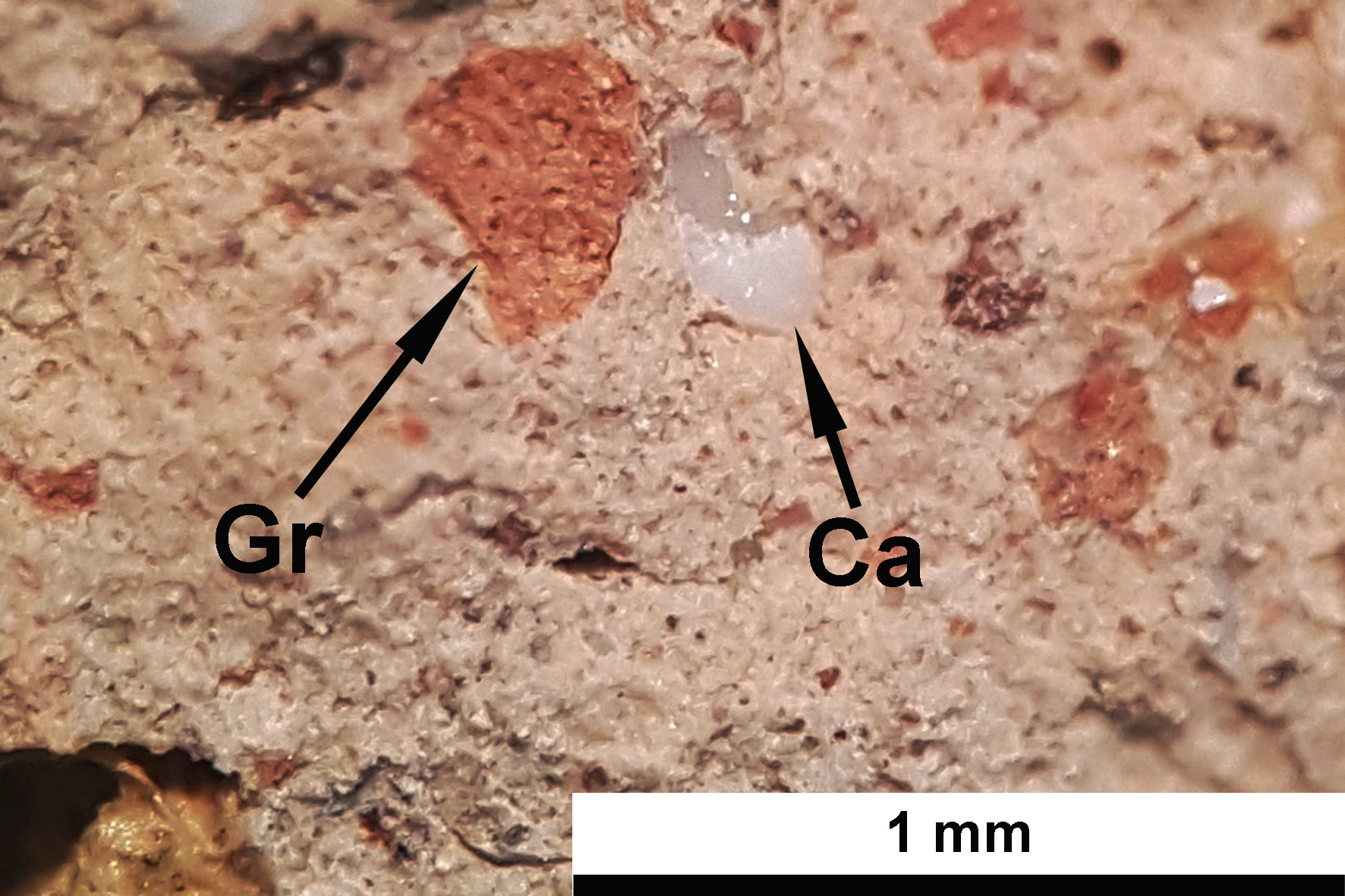
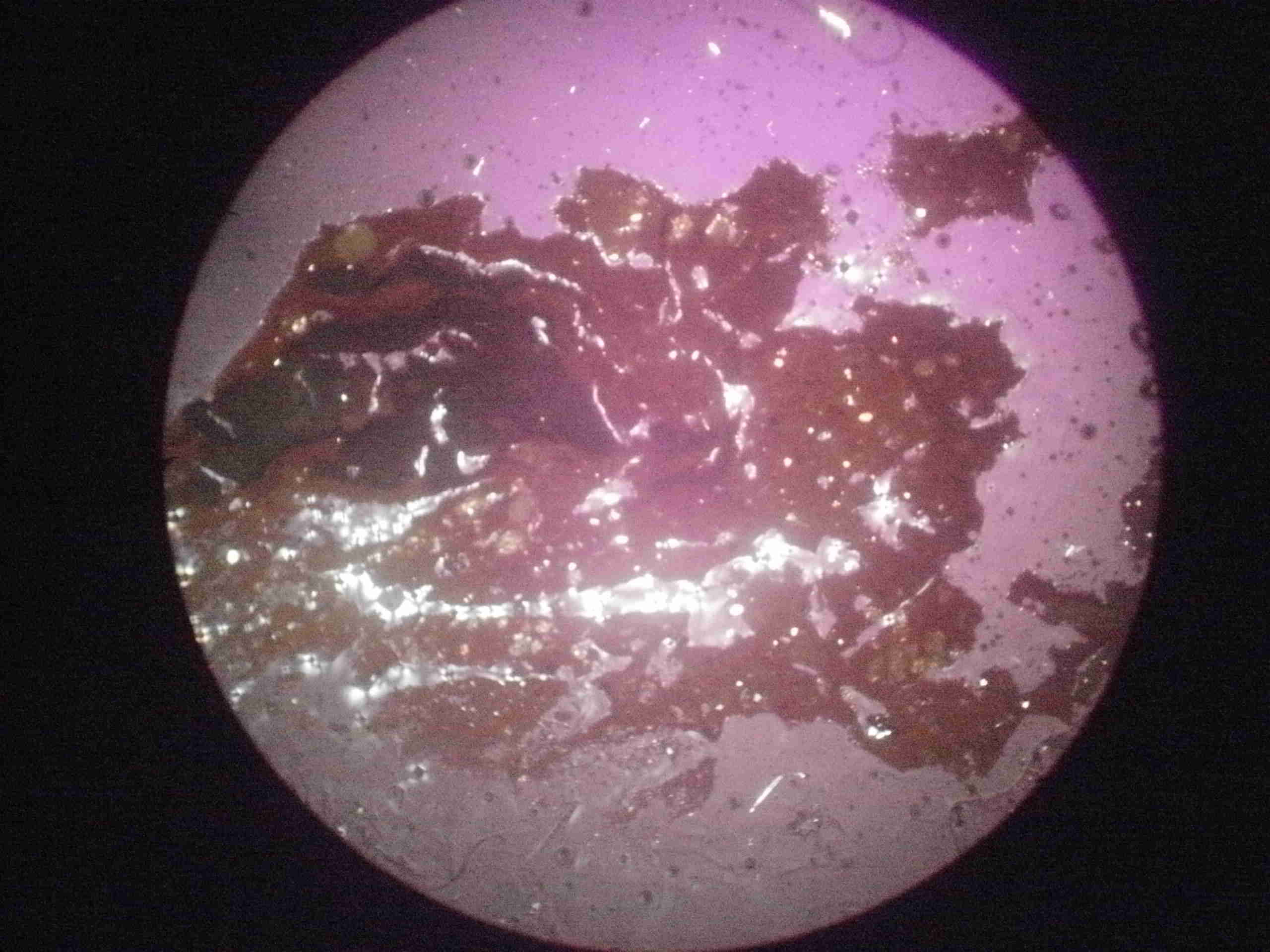
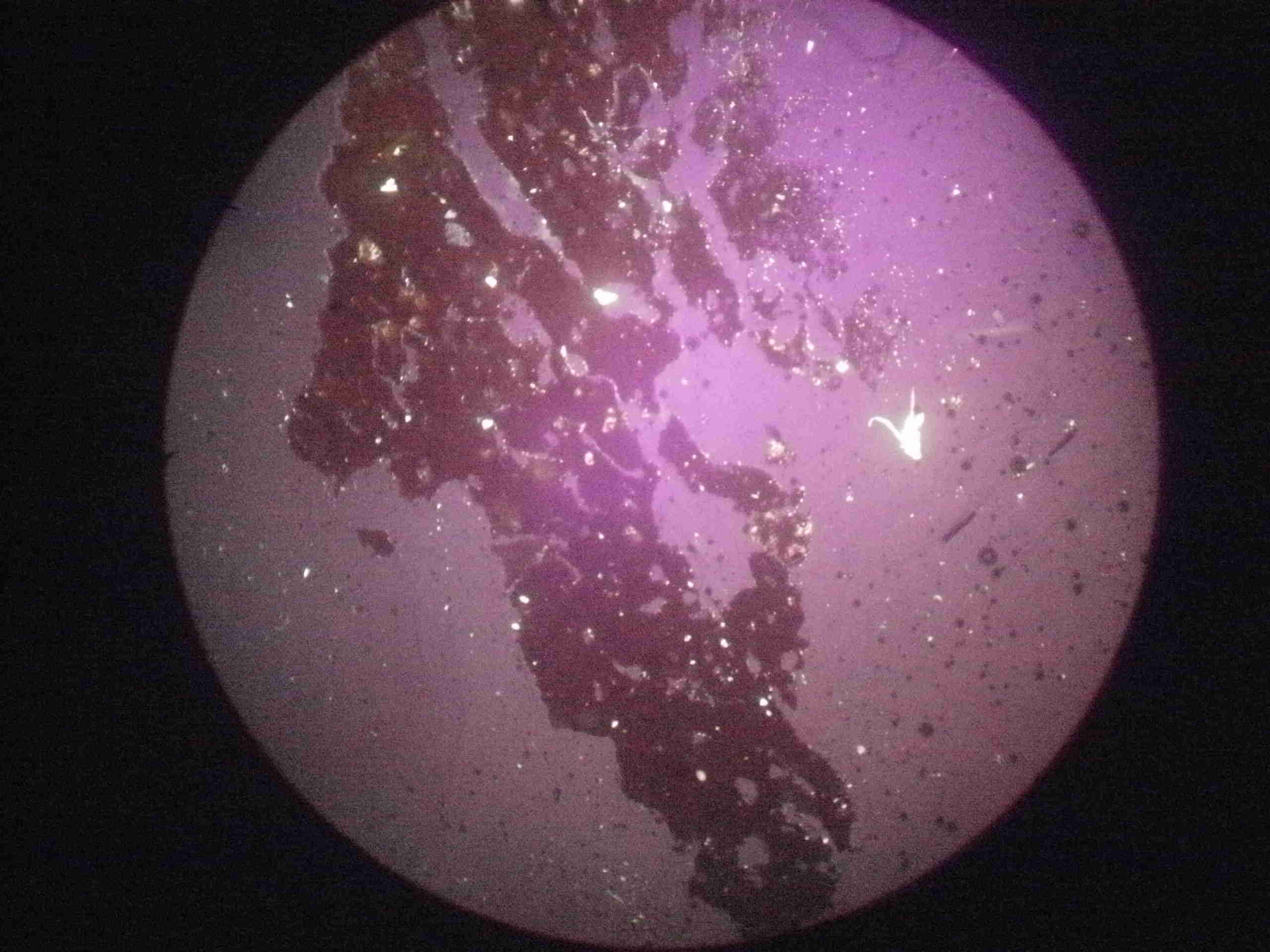
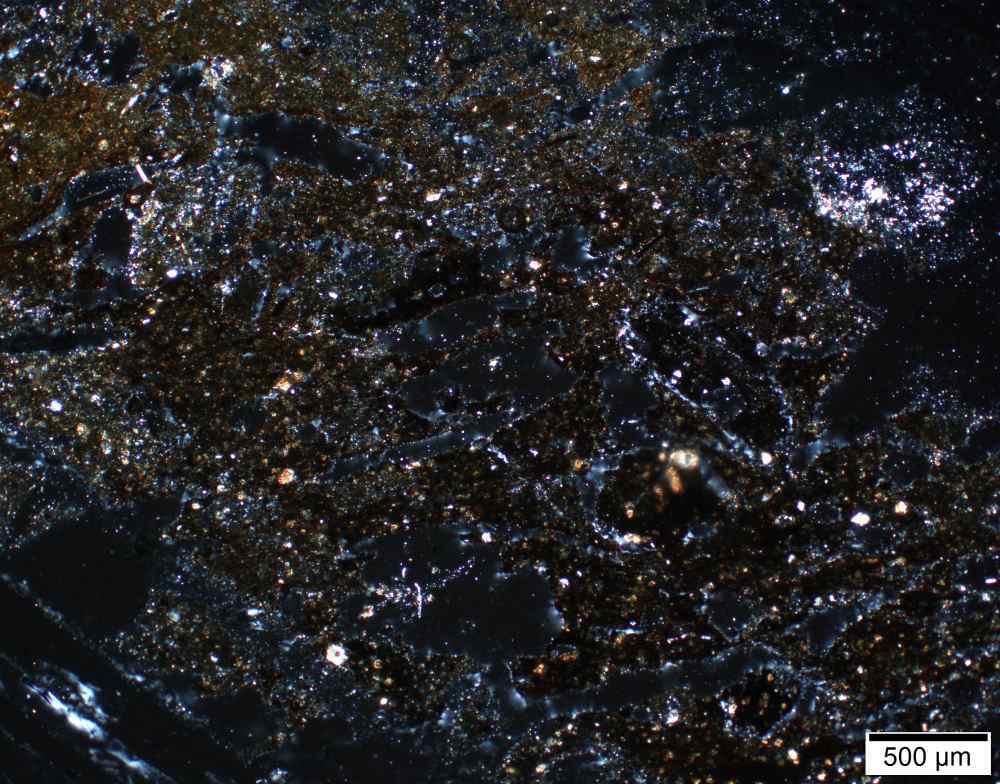
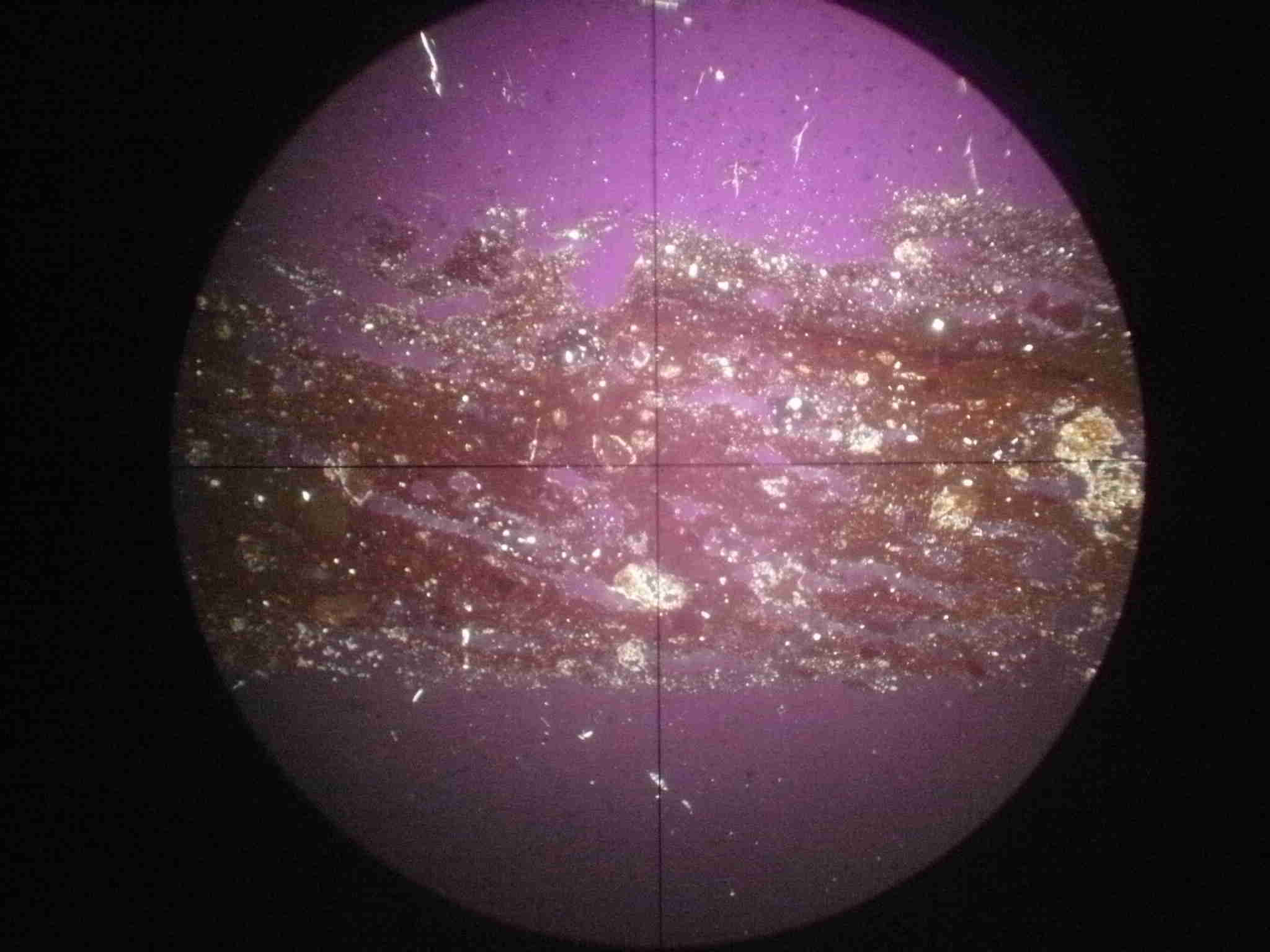
This description refers specifically to vessels from Petra and the Feynan. The clay is light brown to red in color, usually with a grey or black firing core. A distinguishing aspect is the presence of vegetal inclusions, which in Petra are included in a high proportion, in some cases specifically as dung temper. Other inclusions include many grits and lime. Vessels often covered with whitish or buff slip; orange slip is less common. On vessels from the middle and late Islamic periods in Petra and from the Late Islamic period in Israel/Palestine, the slip is often red. Vessels may be burnished but not always. The burnishing may be chronologically diagnostic; this remains to be proven. The painted decoration ranges in color: red, purple, brown/red, and black. In Petra, brown/red paint is defined as a paint with a significant colour variation, which easily ranges between brown and red on the same vessel, and it originates from the way the paint reacts to the uneven firing. Designs range from geometric patterns to lines and free-style decorations. A tentative chronology of this family based on surface treatment, especially painted decorations, has been attempted for Petra (See Sinibaldi 2013,The pottery from the 11th-20th centuries from the FJHP survey).
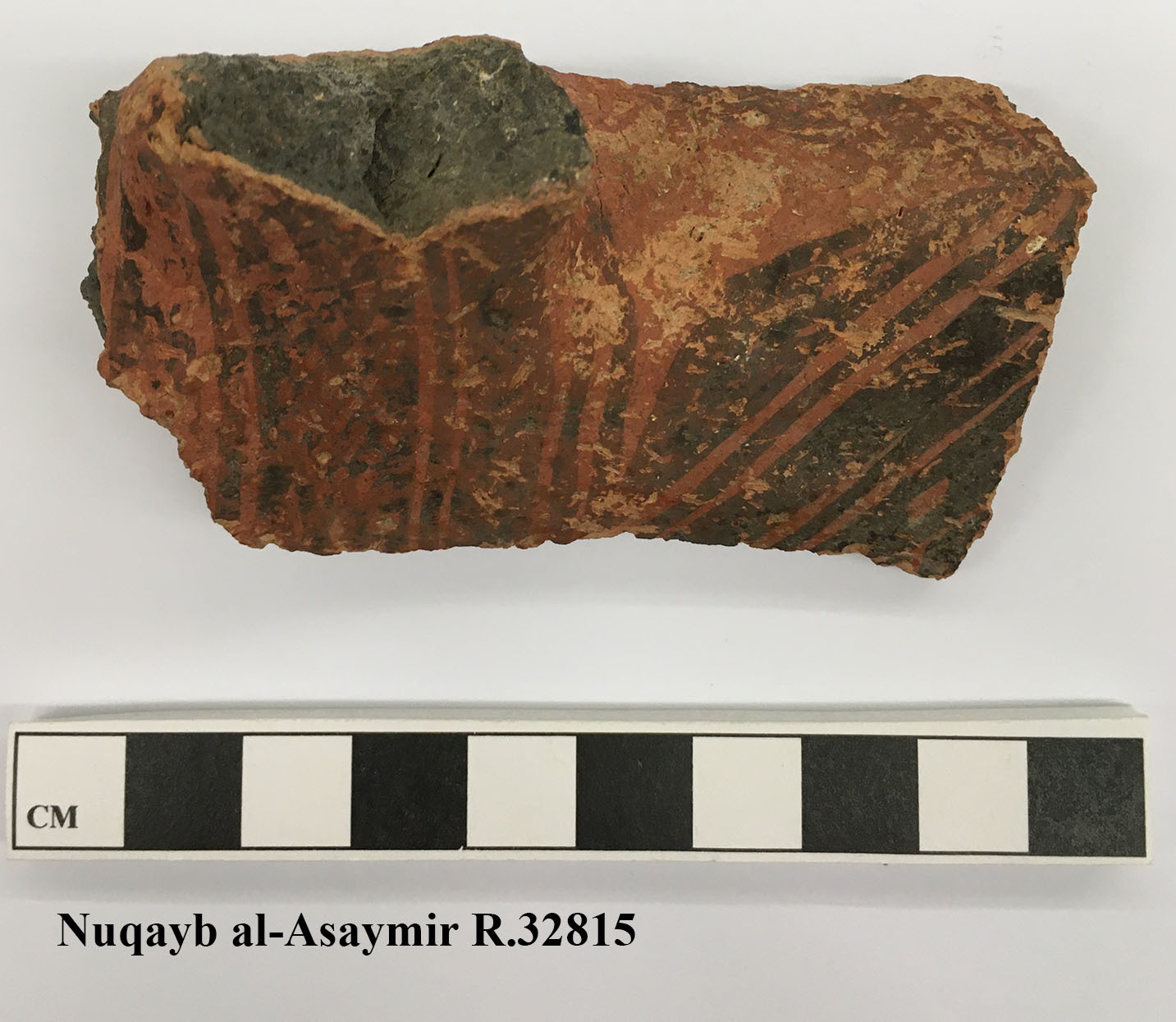
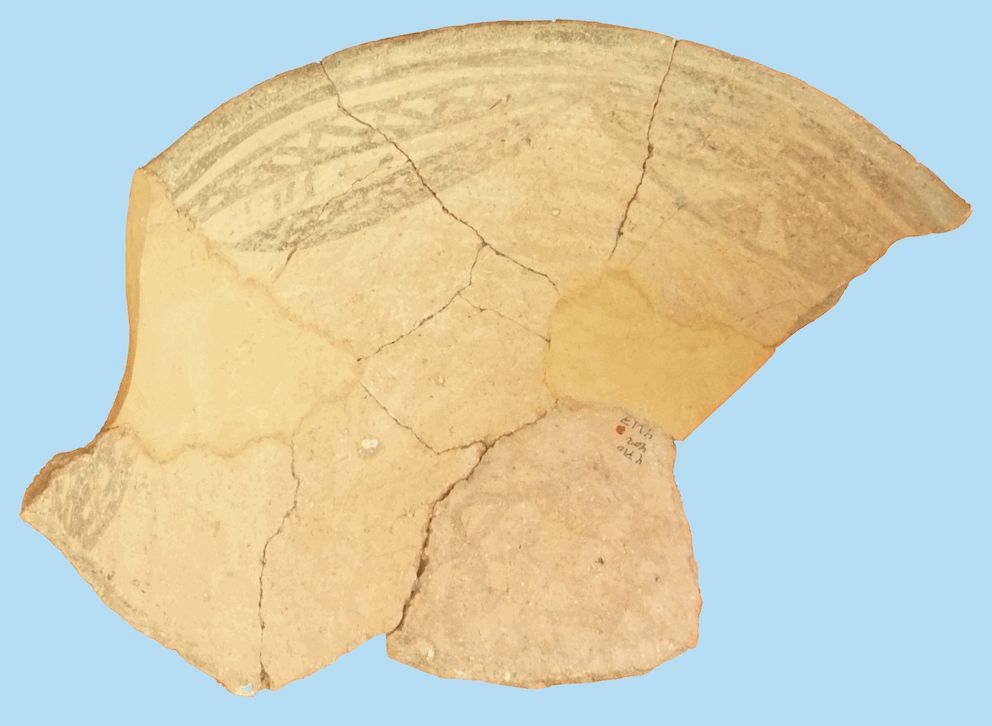
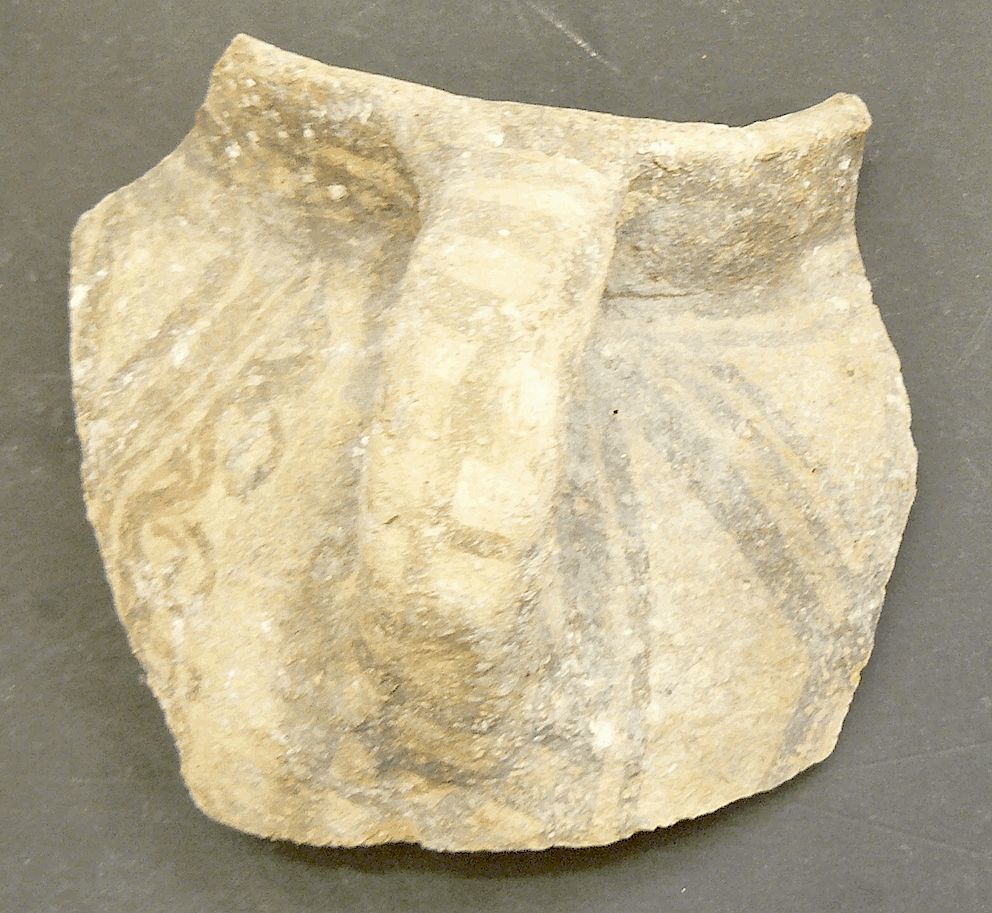
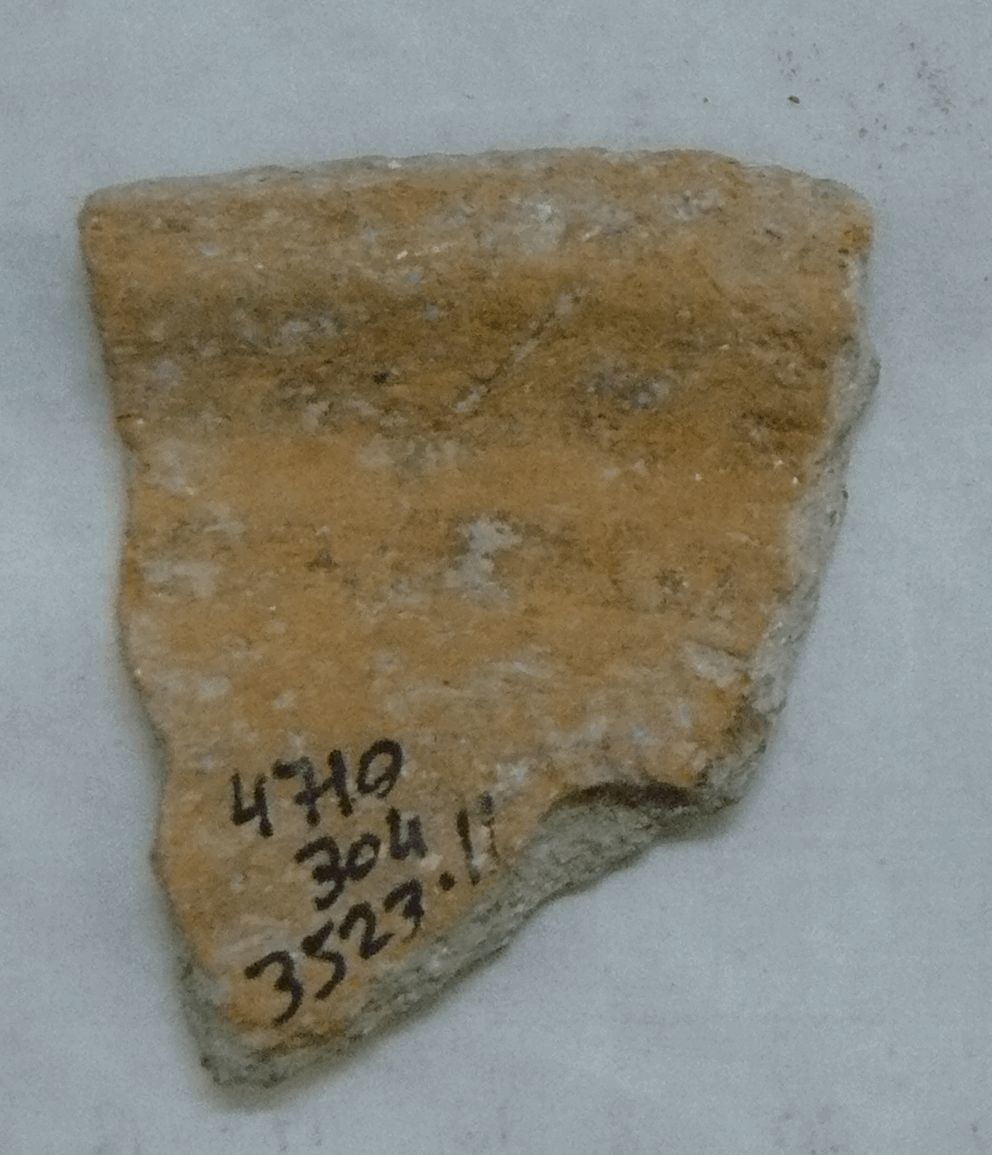
Handmade Geometrically Painted Wares (HMGPW), Handmade Jugs and Jars with Geometric Painted Decoration (Avissar and Stern 2005, pp. 113-116), Geometric Painted Handmade Bowls (Avissar and Stern 2005, pp.88-90), Painted Tupperware (Whitcomb 1988), Linear Red-Painted Ware (Brown 1987); Handmade Painted Coarse Ware and Early Handmade Painted Ware (Walmsley and Grey 2001)
Afula (Israel/Jezreel Valley)
Beth She'an, Scythopolis (Israel/Beth She'an Valley)
Et-Taiyiba (Israel/Galilee)
Kfar Kanna, Jebel Khuweikha (Israel/Galilee)
Khirbet Arisa (Israel/Carmel Mountains)
Legio/Lejjun (Israel/Jezreel Valley)
Mt. Carmel, St. Mary (Israel/Carmel Mountains)
Safed (Israel/Galilee)
Tamra (Israel/Jezreel Valley)
Tel Gush Halav (Israel/Galilee)
Tel Yoqneam (Israel/Jezreel Valley)
Tiberias (Israel/Galilee)
Jerusalem, Old City/East Jerusalem (Israel-Palestinian Authority/Central Highlands)
Tell es-Safi/Gath (Israel-Palestinian Authority/Southern Coastal Plain)
Bayda (Jordan/Southern Highlands)
Gharandal (Jordan/Southern Highlands)
Khirbat Nuqayb al-Asaymir (Jordan/Wadi 'Arabah)
Petra (Jordan/Southern Highlands)
Tall Hisban (Jordan/Central Highlands)
Tall Jawa (Jordan/Central Highlands)
al-Wu'ayra (Jordan/Southern Highlands)
