
Ptolemaic Black Slipped ware
Egypt/Upper Egypt, Egypt/Fayoum, Egypt/Delta/Lower Egypt
later 4th century BCE - early 1st century CE
Hellenistic/Ptolemaic, Roman

Ptolemaic Black Slipped Ware from workshop area at Buto/Bouto, in the Delta. Courtesy of Aude Simony and Guy Lecuyot.
General Information
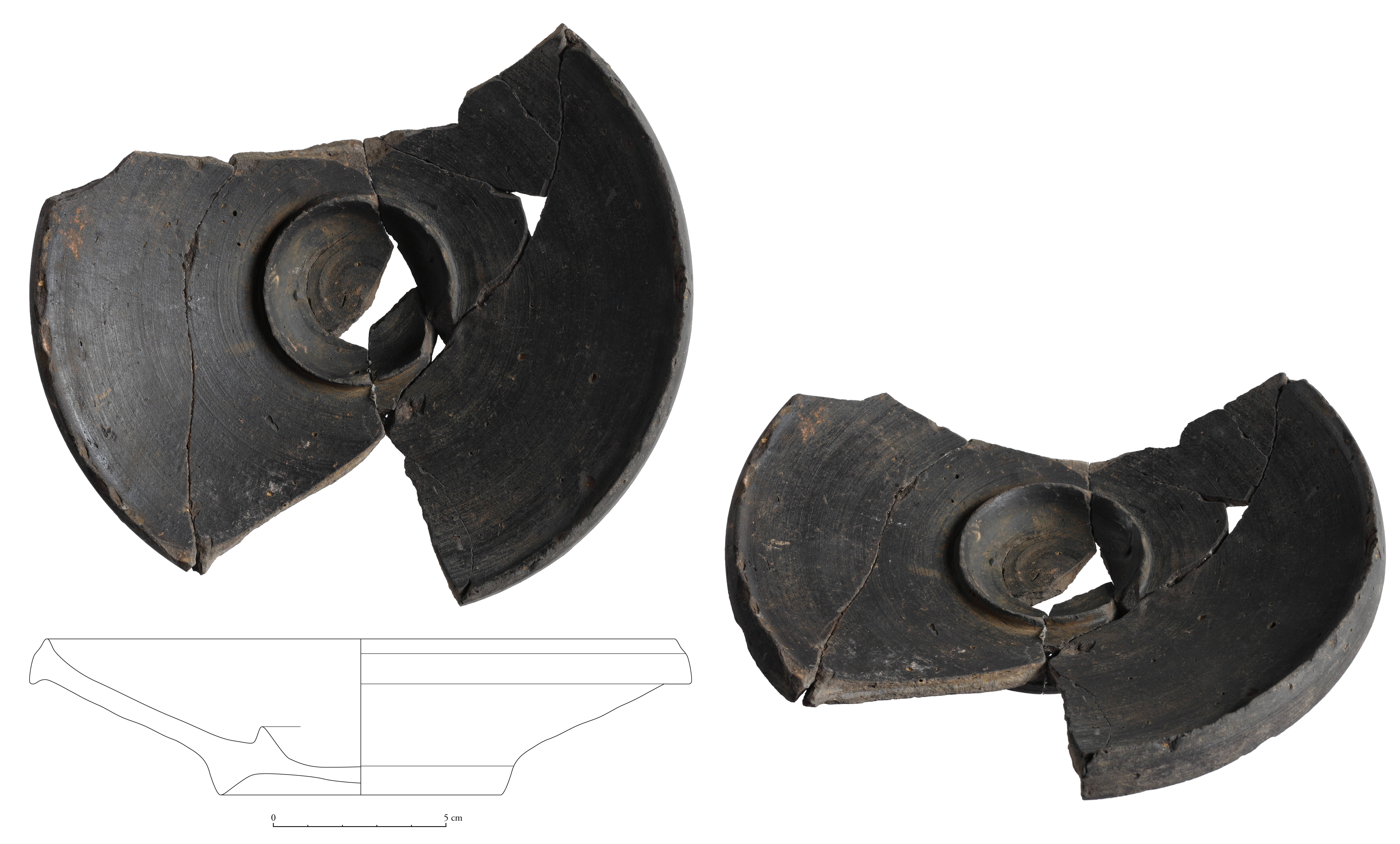
Ptolemaic Black Slipped ware has long been recognized as the product of a new industry of the Ptolemaic period. Using this ware exclusively to manufacture tableware shapes intended for individual dining, such as saucers and small bowls, potters were attempting "to replicate the black-polished wares of Greek origin" (Gill 2012, 15). PBSW is attested throughout the Nile Valley, both in Upper and Lower Egypt and as far south as Qasr Ibrim in Nubia, and it has been recognized and defined for at least a century. Petrie termed it "Memphis Black Ware" (Petrie, MacKay, and Wainwright 1910, 44); however, it should be noted that no evidence for production of this ware has yet been found at Memphis. At Qasr Ibrim this is identifed as Ware RBB, an alluvial clay with burnished black surface, and at Mendes this is described as a “black fabric with a black burnished slip” and is again categorized as an alluvial type. At Coptos, this ware was identified as Terra Nigra, a dark grey fabric covered by a dull grey-black slip. Over the last century, especially within the last twenty years, PBSW finds "demonstrate an increasing area of distribution for this ware...[but] add little to the issue of where PBW was produced" (Gill 2012, 16).
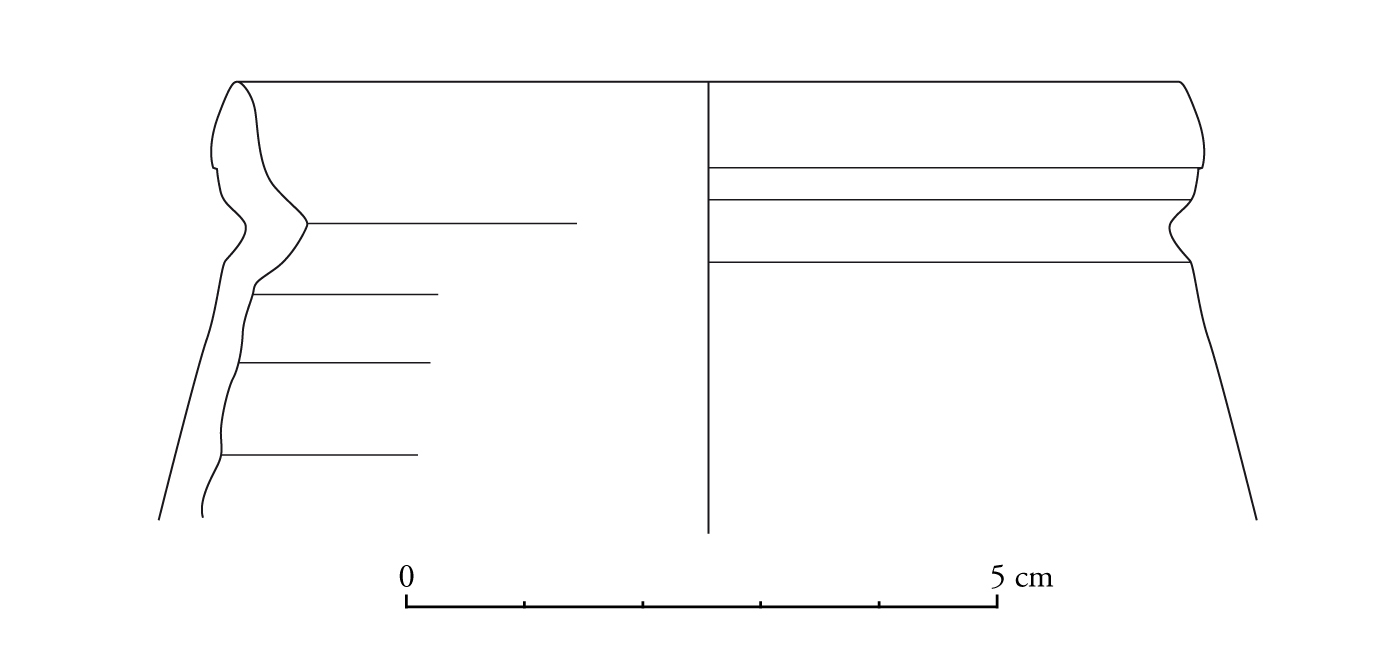
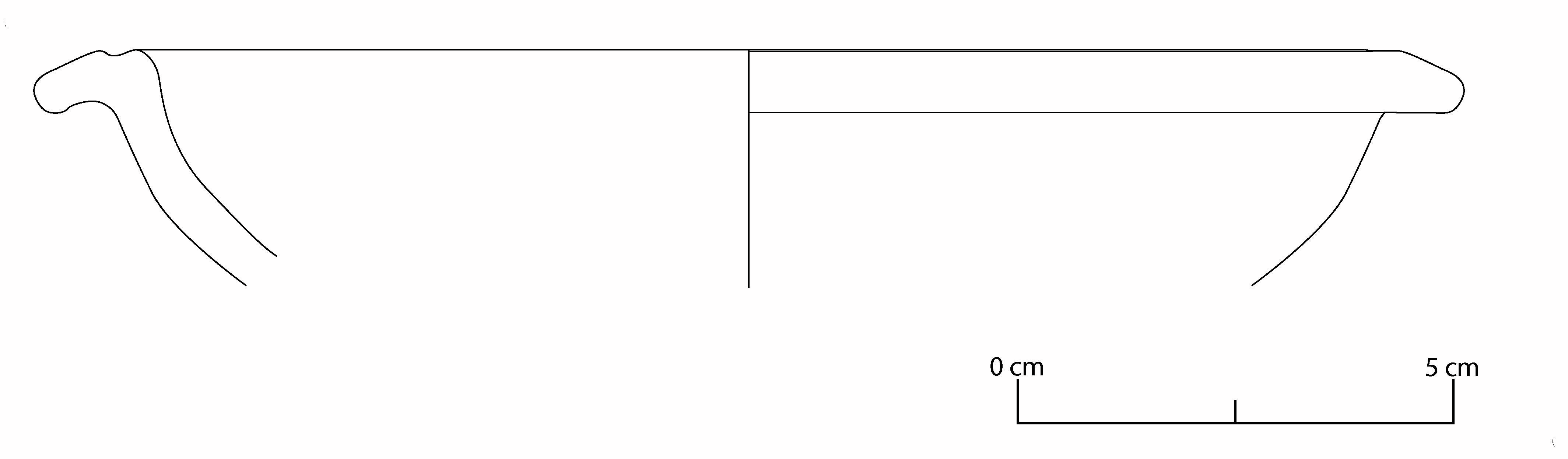
The range of terms that are generated in the literature are a result of differing interpretations and regional variation in fabric and surface finish; however, "the vessels are similar enough for us to consider them as a single ware-group" (Gill 2012, 16). In synthesizing this literature, Gill defines PBSW in terms of four characteristics: black- or grey-fired fabric that is a result of firing in a reduction atmosphere, generally some form of polish or burnish (across all part of the vessel), local Egyptian fabric (marl, silt or oasis clay), and standard forms (particularly small bowls and plates) (Gill 2012, 16).
At Coptos, it first appears in the late 4th century BCE in the earliest Hellenistic assemblages, though a precise date for its beginning has been difficult to secure (Herbert and Berlin 2003, 27; Gill 2012, 16). In most cases, "the date provided for PBW vessels is no more specific than 'Ptolemaic'" (Gill 2012, 160). Again at Coptos, the dramatic drop-off of in the Roman phases suggests that either importation or production had ceased by that time; however, evidence from Dime/Soknopaiou Nesos may suggest that production continues into the early 1st century CE.
At Karnak, they are called "Egyptian black wares" (David et al. 2016). These productions are relatively rare and appear in late levels, after the 2nd century BCE.
Production of black-slipped vessels began in the far south, at Syene/Aswan, in the 3rd century BCE and became very popular in the late 3rd to 2nd century BCE, although here the ware only makes up a very small percentage of the pottery assemblage from Syene. The shapes mainly include cups and plates and occasionally also beakers and pitchers. This production is distinguished on the LCP as Aswan Ptolemaic Black Slipped ware.
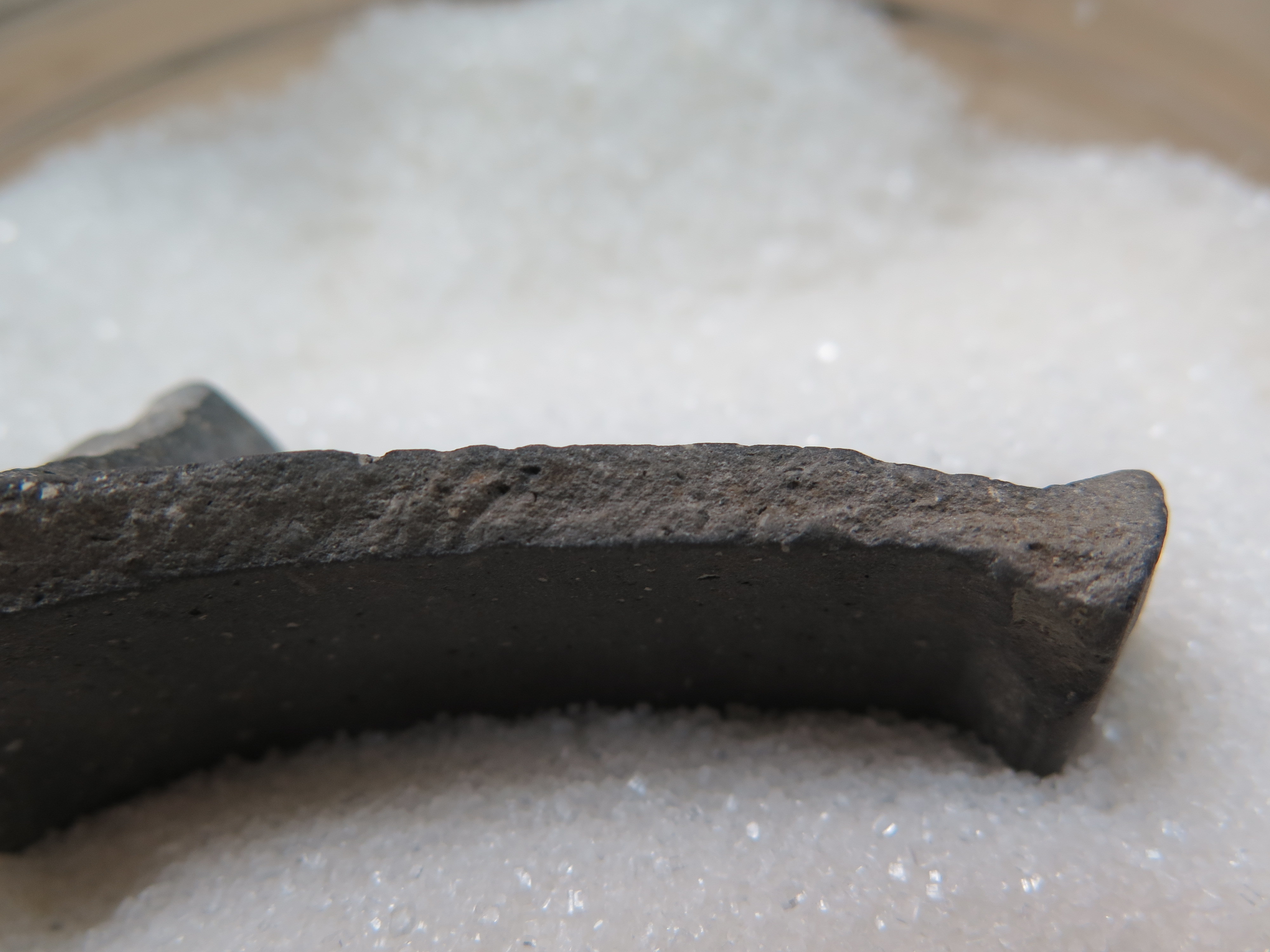
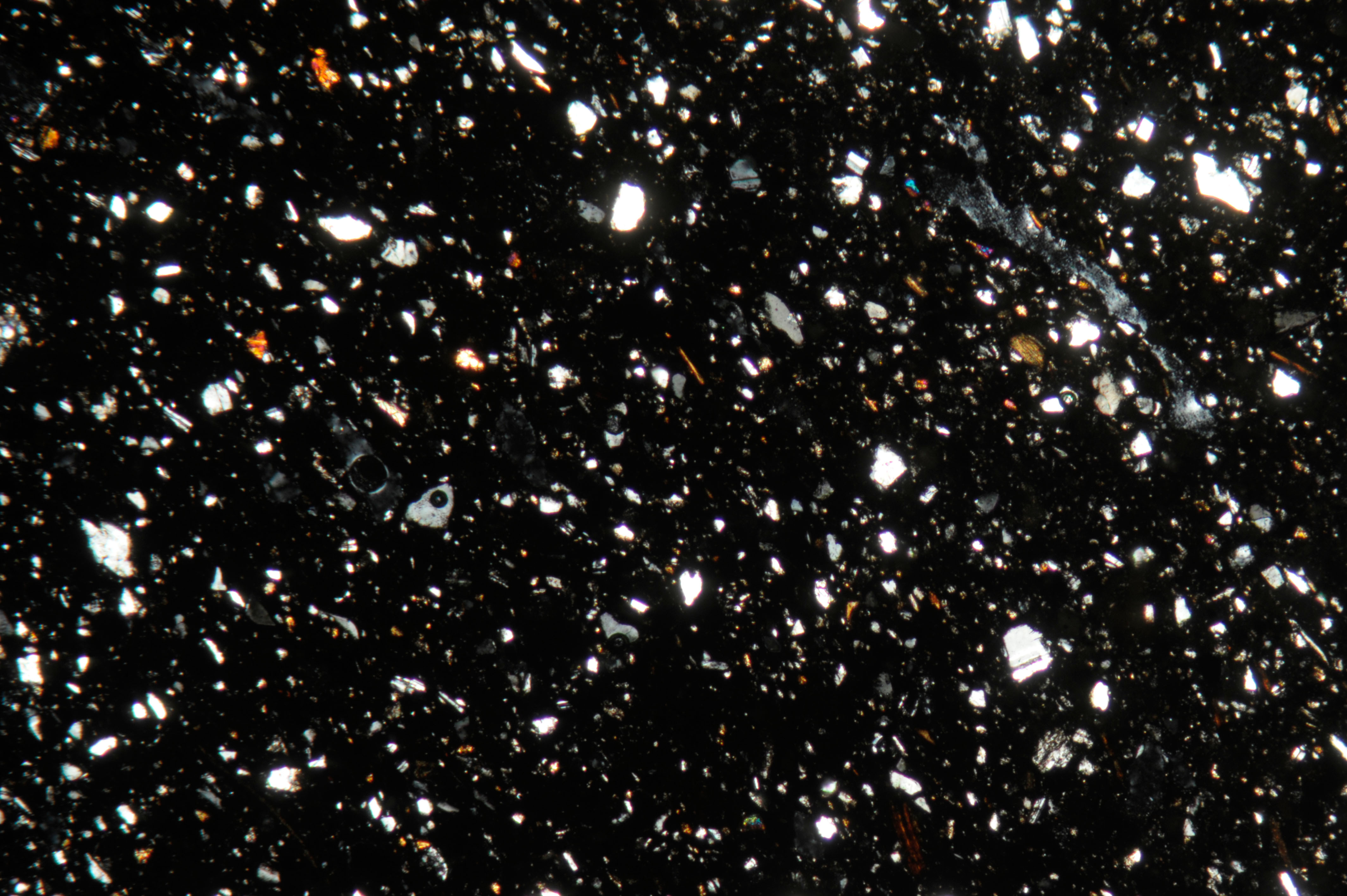
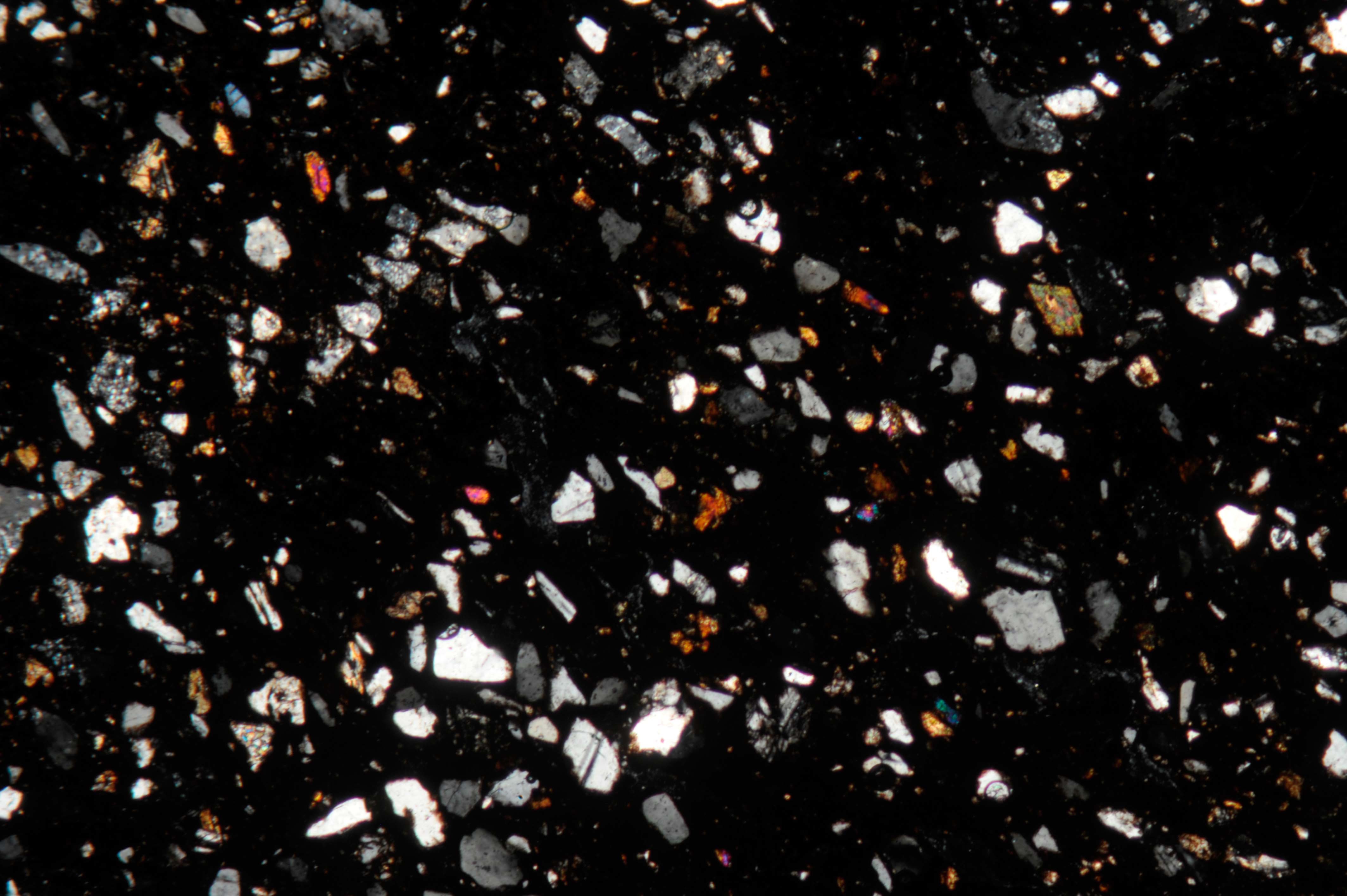
Ptolemaic Black Slipped ware is a hard, gritty, and granular ware, containing some lime and other small inclusions, but no chaff. The inclusions of some examples, including those from Dime/Soknopaiou Nesos, consist of a considerable presence of mica, few fine grains of quartz, fine vegetable inclusions, and white particles. Petrographic analysis reveals calcite on one of the two samples from Coptos, suggesting that PBW was likely made there with a marl fabric (Rautman, no. 12, infra). PBW is distinguished by having been fired in a reducing kiln, which gives the clay a black/dark grey/dark blue appearance, and it always features a black polish or burnish.
Chemical analyses of PBSW from Syene/Aswan have shown that the paste is a Nile Silt with occasional, naturally occurring calcareous inclusions.



Abu Rahal, Abu Rahal Hill (Egypt/Eastern desert/Red Sea Coast)
Abu Rahal West (Egypt/Eastern desert/Red Sea Coast)
Al-Qarah al-Hamra (Egypt/Fayoum)
Aswan, Syene (Egypt/Upper Egypt)
B'ir Samut (Egypt/Eastern desert/Red Sea Coast)
Coptos (Egypt/Upper Egypt)
Dime, Soknopaiou Nesos (Egypt/Fayoum)
Luxor/Karnak, Temple of Ptah (Egypt/Upper Egypt)
Luxor/Thebes West, Temple of Millions of Years of Amenhotep II (Egypt/Upper Egypt)
Samut Gold Mining Settlement (Egypt/Eastern desert/Red Sea Coast)
Tell Timai (Egypt/Delta/Lower Egypt)
al-Kanaïs (Egypt/Eastern desert/Red Sea Coast)
‘Abbad, Abu Gehâd (Egypt/Eastern desert/Red Sea Coast)
Maresha/Marisa (Israel/Shephelah)
