
Third-first centuries BCE (mainly late second-beginning of first century BCE).
Khan/Hostel/Inn/Caravanseri
Israel/Shephelah
Middle Hellenistic, Late Hellenistic
Occupational debris
Krater
R-KR1A, vertical out-flaring wide neck and thickened rim decorated with a pie-crust design, two coil handles are attached from rim to shoulder
Reddish-yellow (5YR7/3); core: pink (5YR7/6); red slip (?); burnt
—
Dining/Drinking/Serving
pie-crust decorated rim, slip and paint variations.
Wheel made
—
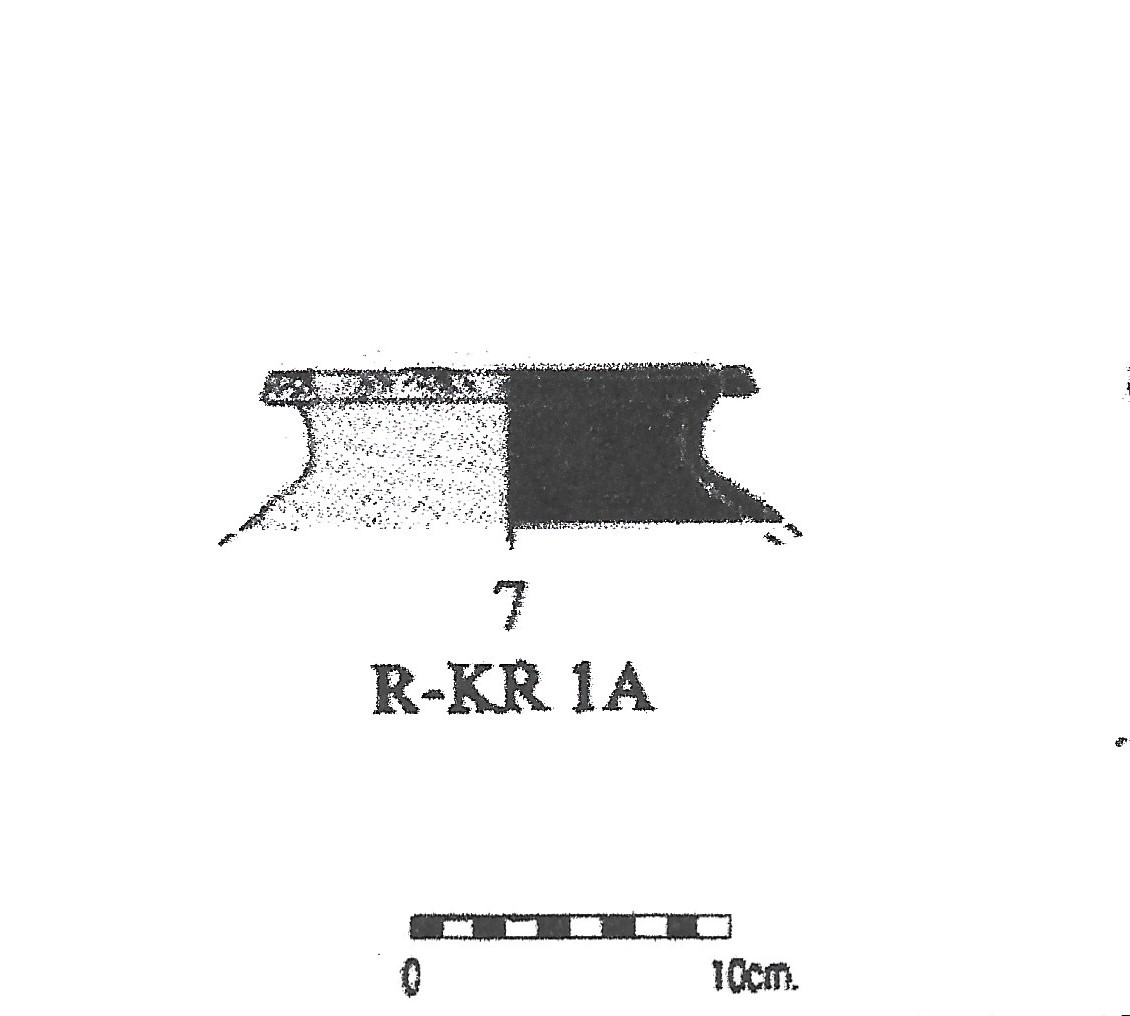
KRATERS, R-KR1A
Description: Krater with vertical out-flaring wide neck and thickened rim decorated with a pie-crust design. Based on similar vessels, two coil handles are attached from rim to shoulder. They are made in a pink ware turning to gray ( the outer surface is reddish-yellow due to firing conditions. They are decorated with various slip and paint variations. The type includes two variations distinguished by different neck heights and different decoration. Two types: type R-KRIA With short wide vertical neck. Red slip covered the entire vessel. Occurrence: R-KRIA: Although morphologically the parallels cited below correspond to the short neck type, they appeared to be undecorated. Maresha, third-second centuries BCE (Levine 2003:91-92, fig. 6.5:65). Tel Dor, type KRIl, third-second centuries BCE (Guz-Zilberstein 1995:297, fig. 6.14:9). Tel Anafa, first century BCE-first century CE (Berlin 1997a:138, PW412).
From-Debora Sandhaus.2011.The Pottery from Khirbet er-Rasm: The Typology of the Pottery from the Hellenistic, Roman and Later Periods.pp:117-118
Courtesy of Prof. Avraham Faust and Prof. Adi Erlich/Kh. er-Rasm Expedition
