
Israel/Jordan/Lebanon/Highlands/ferruginous clay/calcareous sand quartz silt and sand/dolomite silt (Terra Rossa)
Israel-Palestinian Authority/Central Highlands, Jordan/Central Highlands
Terra rossa
Netzer formation
A reddish matrix, with clay containing mainly limestone, chalk, rounded quartz sand, quartz silt, dolomite silt, chert and clay pellets. Feldspar mica and chert appear rarely. The matrix is sometimes opaque under crossed polarized light indicating a firing temperature over 850 degrees. There are several sub-groups of it according to differences in some of the components, with some sub-groups lacking the quartz sand, having more microfossils or more dolomite. This fabric encompasses terra rossa related clays developing from dust on hard limestone rocks, with not much chalk. Appearance of rounded quartz sand in some of the samples may relate to exposed outcrops of the Netzer formation that contain layers of quartz sand originating from sandstone in Jordan during the Turonian epoch. This fabric has been linked to Chemical Group JleB (Ben-Shlomo and Mommsen 2018) provenanced to Jerusalem. Clay derived from terra rossa soils in the central hills of Israel and Jordan, similar to the petro-fabric Israel/Shephelah/ferruginous clay/calcareous sand quartz silt, but with dolomite silt.

Reddish soil on the upper steps of the limestone bedrock between cypress trees, 20 cm from surface. Location: Jerusalem area, above Ramat Shlomo, Just west of the eastern (smaller) exit to Ramat Shlomo from Yigal Yadin Road in the northern area of modern Jerusalem (Ben-Shlomo 2019, fig. 6.19.1).

Reddish soil on the upper steps of the limestone bedrock between cypress trees, 20 cm from surface. Location: Jerusalem area, above Ramat Shlomo, Just west of the eastern (smaller) exit to Ramat Shlomo from Yigal Yadin Road in the northern area of modern Jerusalem (Ben-Shlomo 2019, fig. 6.19.2).

Reddish to light brown soil in a section just west of western (larger) exit to Ramat Shlomo from Yigal Yadin road. In the section, a sloping westward vein of softer yellowish/reddish/ purple soil was noted, possibly representing a sandy layer in the Turon-Nezer Formation (Ben-Shlomo fig. 6.19.3).

Reddish to light brown soil. Location: Jerusalem, just west of the eastern (smaller) exit to Ramat Shlomo from Yigal Yadin Road, in the northern area of modern Jerusalem; this is a section through the limestone. The sample is 0.7–1 m above the bedrock (2–3 m from the surface) in a section sloping up a westward vein of softer yellowish soil (possibly a sandy layer in Turon/ Nezer formation). Its thickness is 15–40 cm (Ben-Shlomo 2018, fig. 6.18.7).



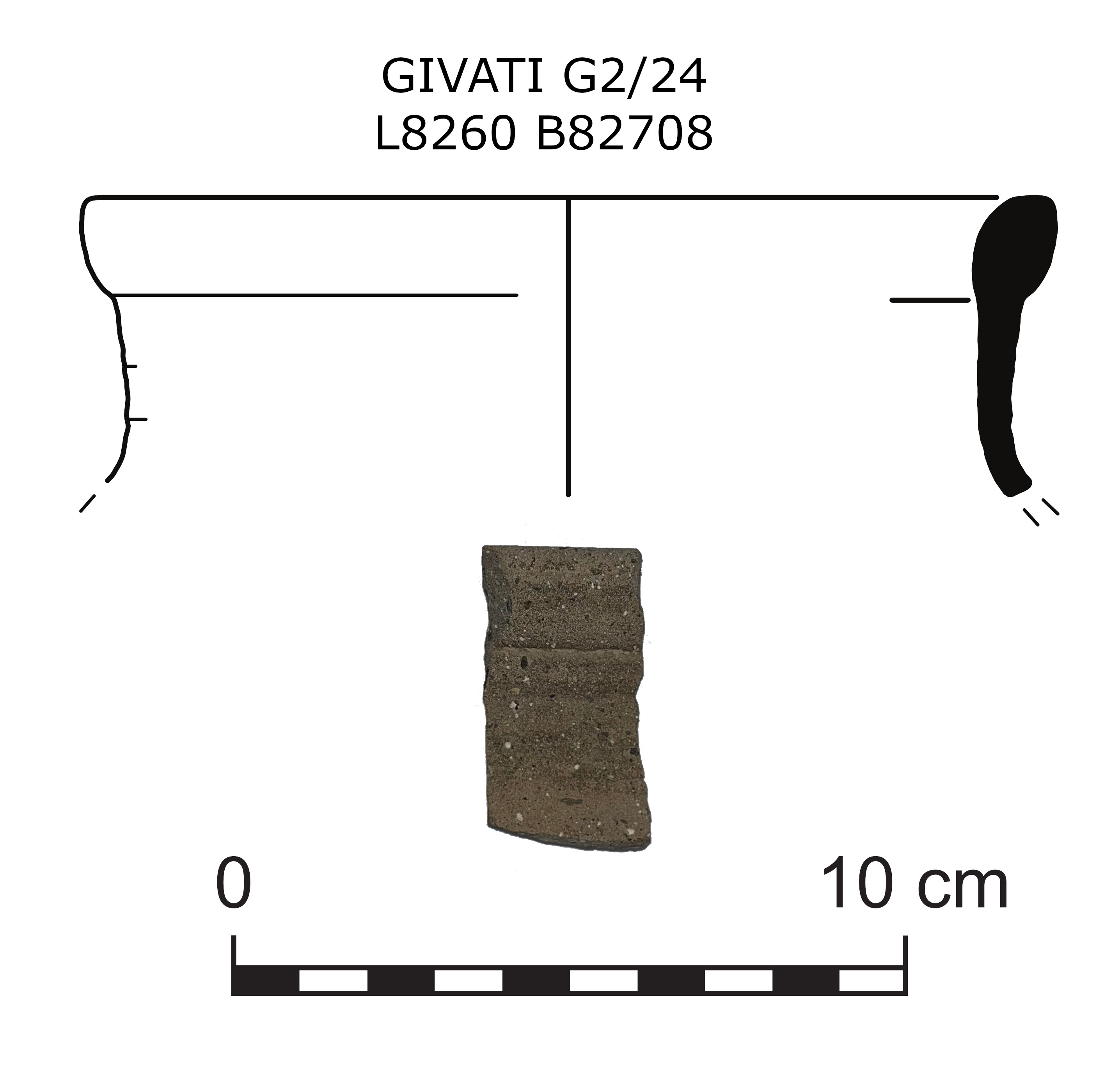
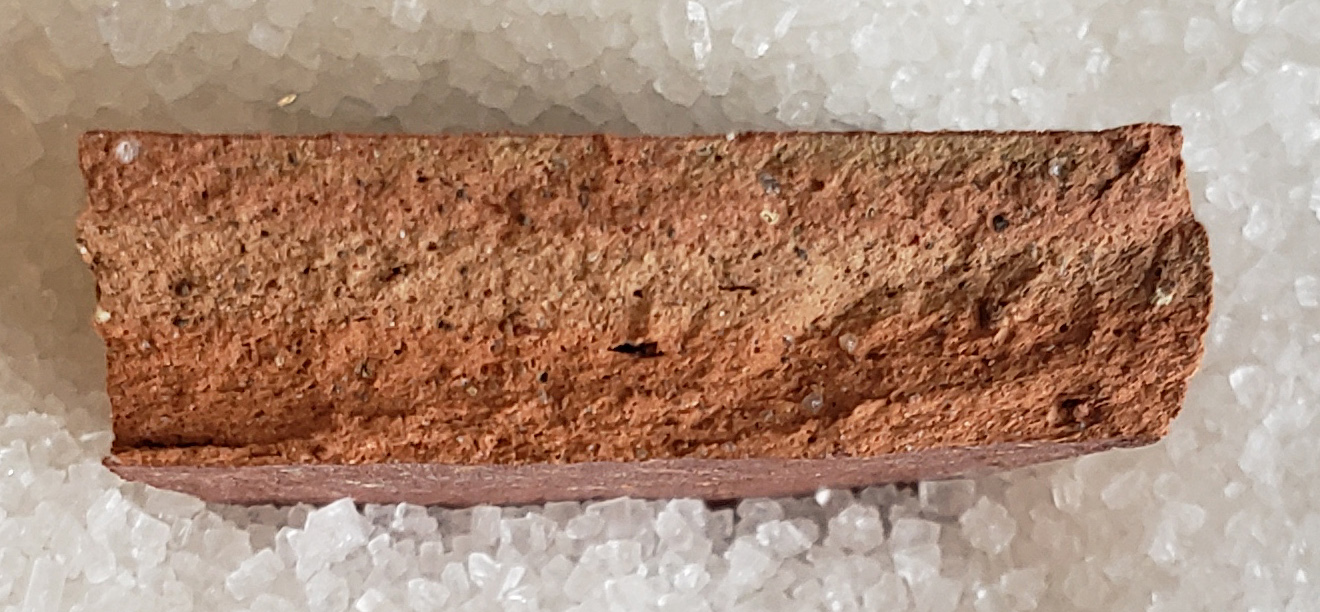
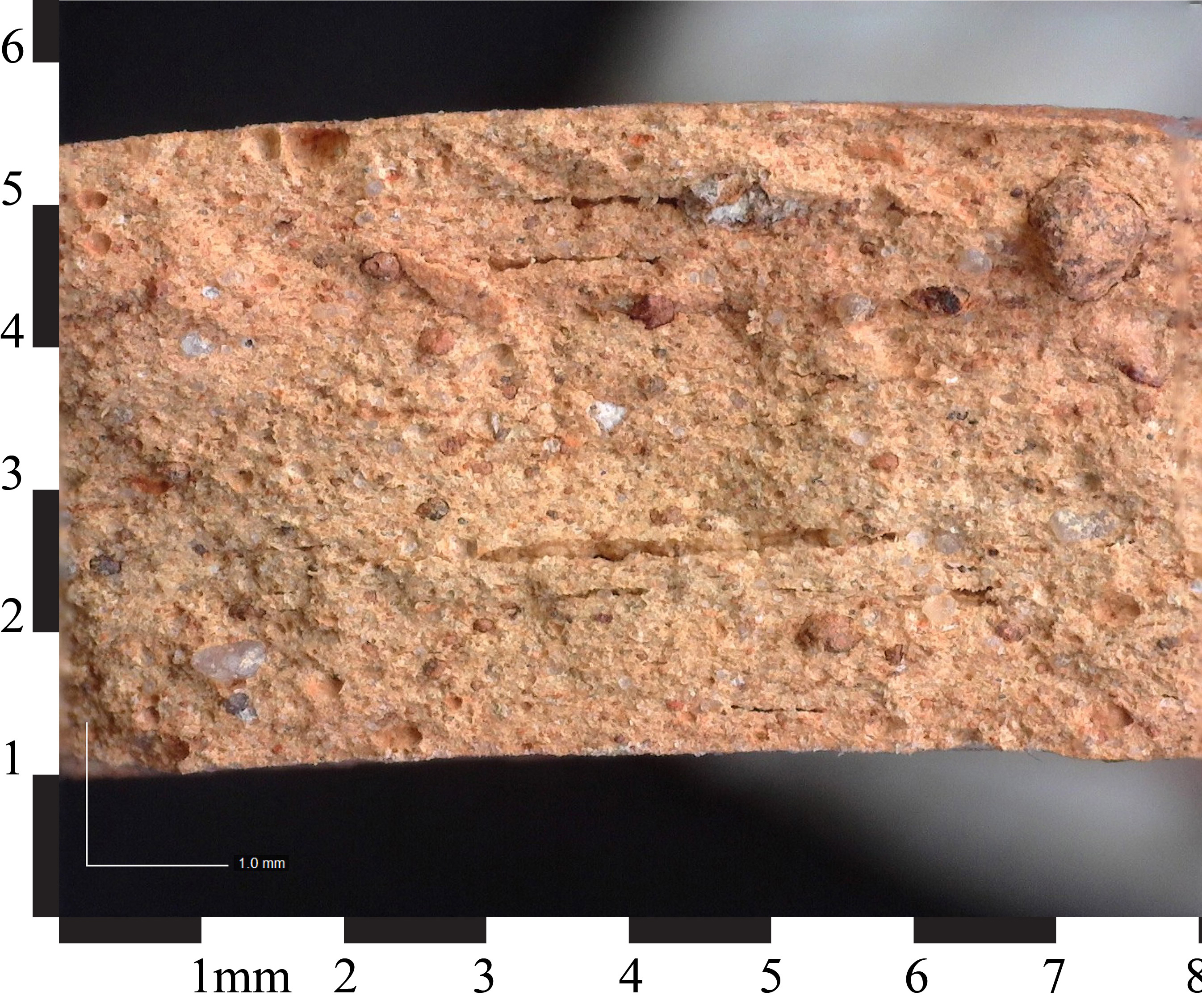
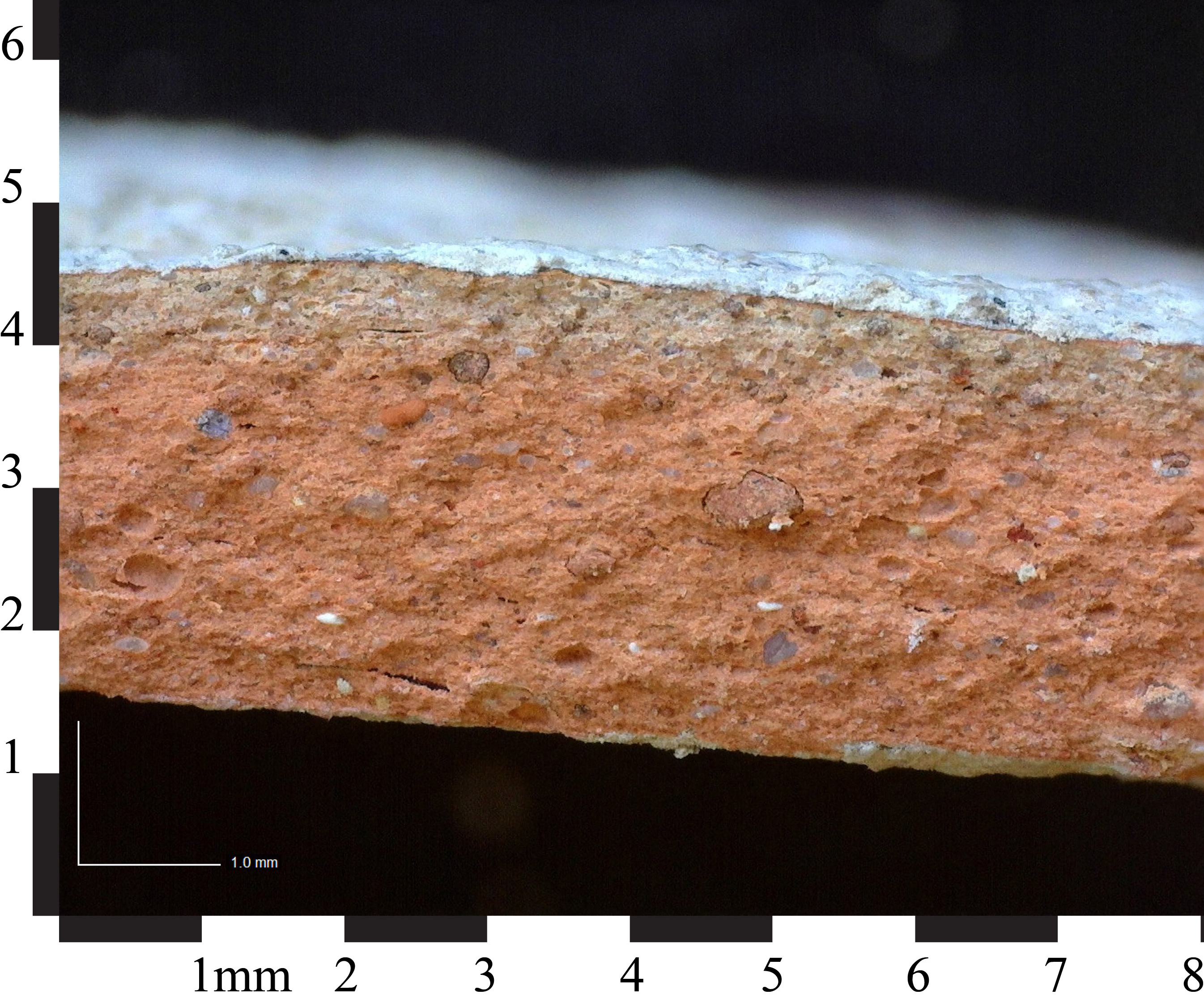
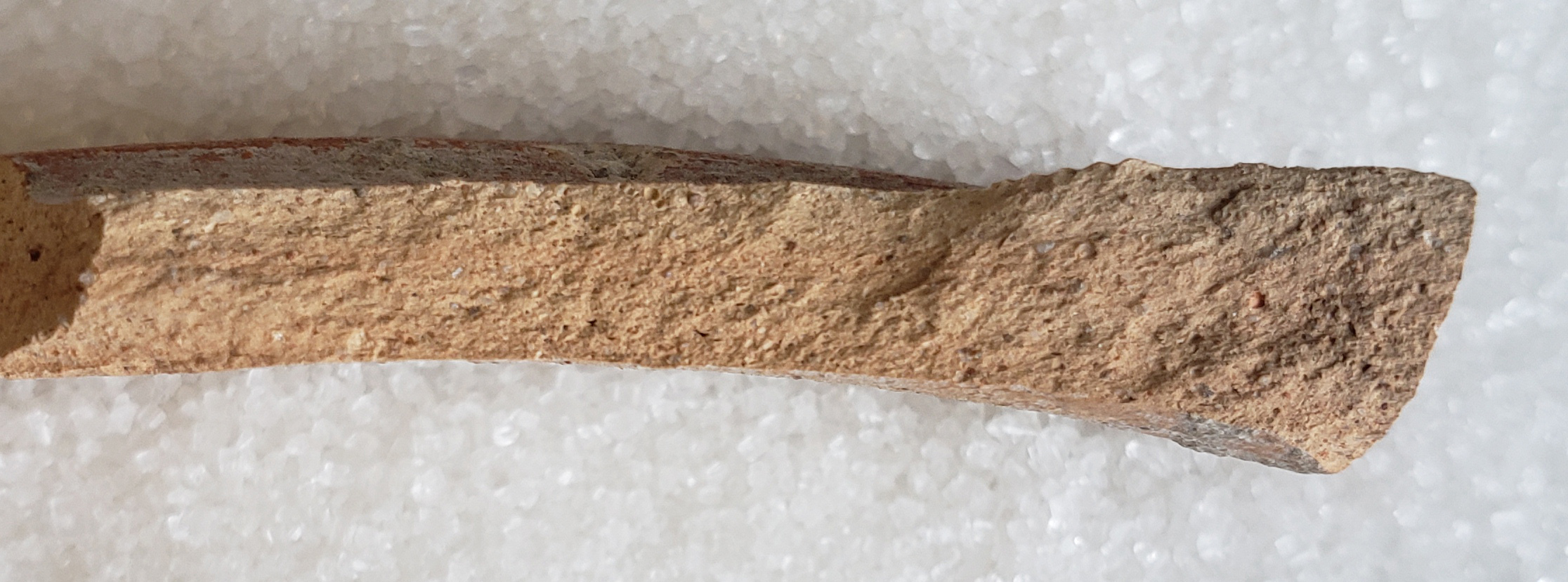
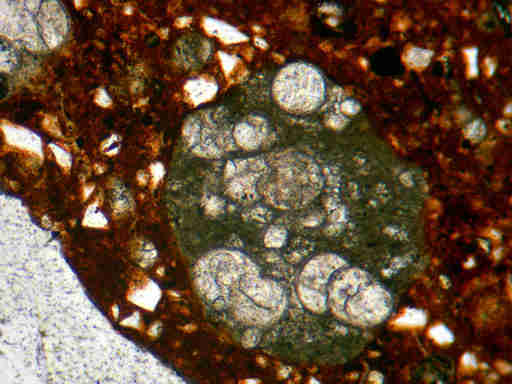

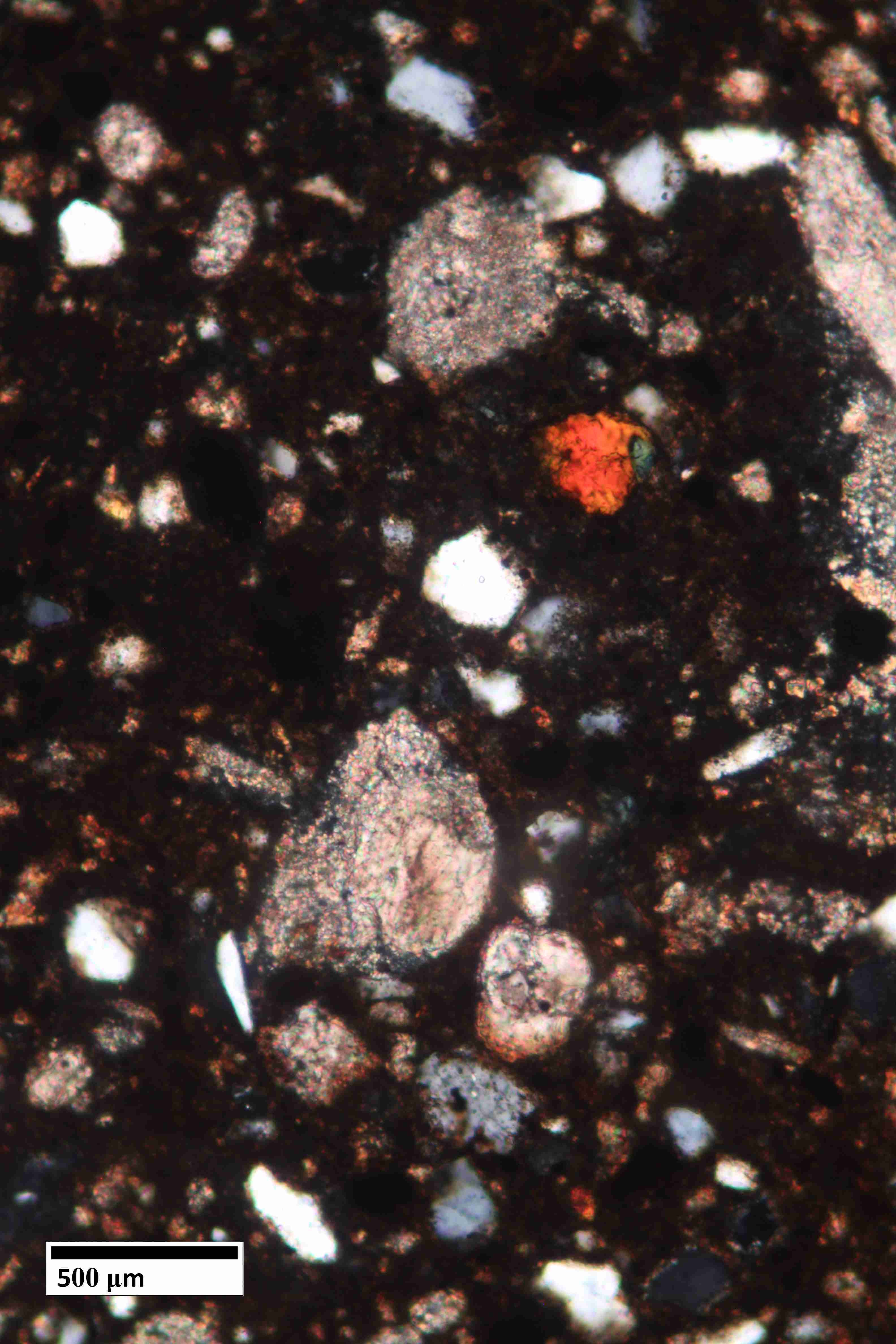
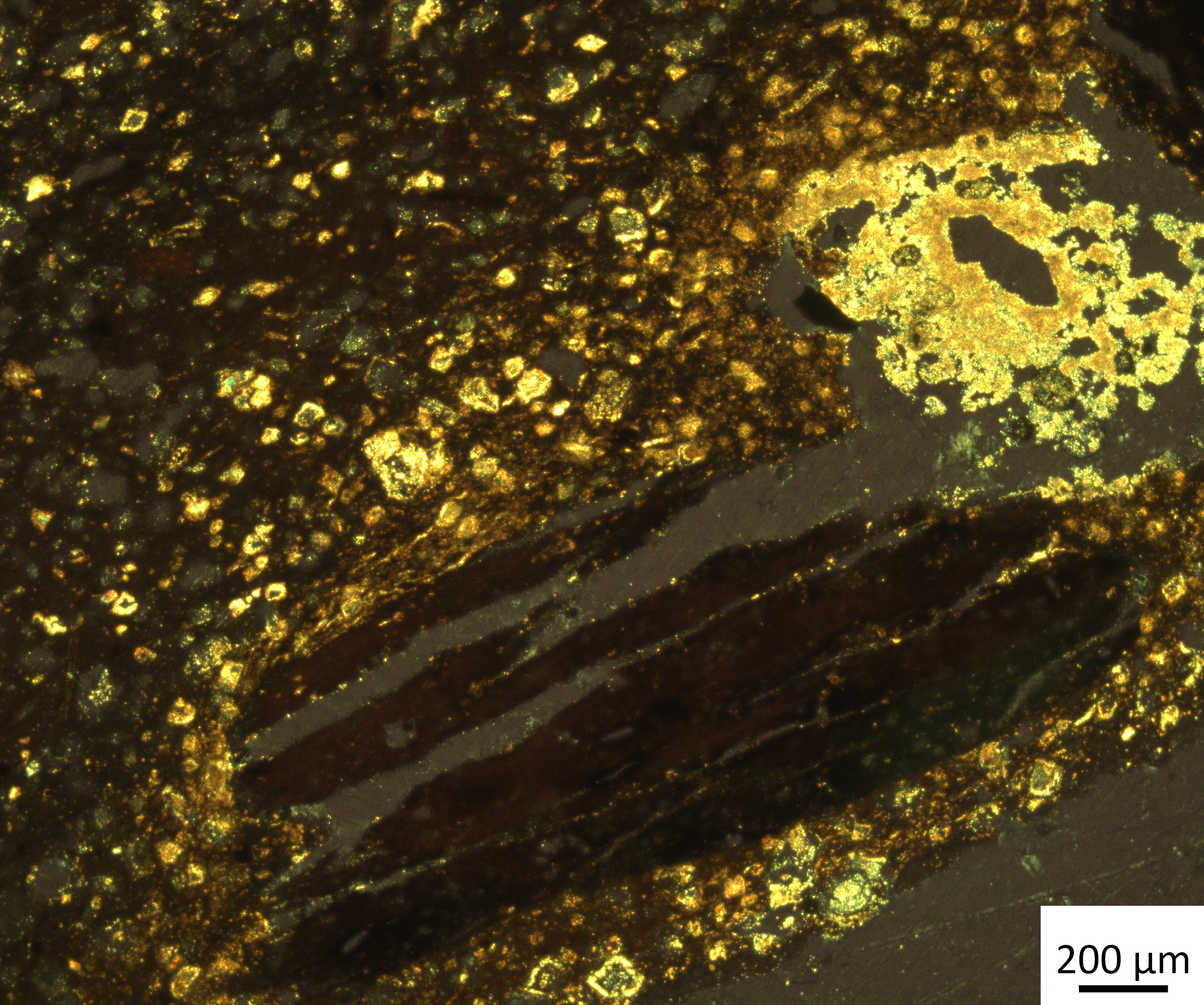
The clay matrix tends towards pink (7.5YR 7/4), branching in both reddish (2.5YR 6/6) and yellowish (5YR 6/4) directions depending on firing conditions. Clay particles are densely packed and inclusions are evenly distributed. Approximately 10% of the clay body consists of various tiny to very small inclusions. In order of frequency, inclusions consist of tiny (between 0.10 and 0.18 mm) angular white translucent mineral bits (quartz?) throughout the matrix (ca. 5% of the clay body); very small (between 0.14 and 0.25 mm) rounded black bits of what is likely basalt, based on its vesicular texture that is visible under magnification (ca. 2% of the clay body); small (between 0.35 and 0.87 mm) sized rounded bits of red sandstone (ca. 2% of the clay body); and tiny (between 0.09 and 0.17 mm), rarely medium (0.5 mm) round or elongated opaque white bits (probably lime, making up ca. 1% of the clay body). Very small round voids are present in section, caused by impressions of small red sandstone bits that remained embedded in other sherd.
A reddish matrix, with clay containing mainly limestone, chalk, rounded quartz sand, quartz silt, dolomite silt, chert and clay pellets. Feldspar mica and chert appear rarely. The matrix is sometimes opaque under crossed polarized light indicating a firing temperature over 850 degrees. There are several sub-groups of it according to differences in some of the components, with some sub-groups lacking the quartz sand, having more microfossils or more dolomite. This fabric encompasses terra rossa related clays developing from dust on hard limestone rocks, with not much chalk. Appearance of rounded quartz sand in some of the samples may relate to exposed outcrops of the Netzer formation that contain layers of quartz sand originating from sandstone in Jordan during the Turonian epoch. This fabric has been linked to Chemical Group JleB (Ben-Shlomo and Mommsen 2018) provenanced to Jerusalem. Clay derived from terra rossa soils in the central hills of Israel and Jordan, similar to the petro-fabric Israel/Shephelah/ferruginous clay/calcareous sand quartz silt, but with dolomite silt.
5th-2nd c. BCE
Achaemenid Persian, Early Hellenistic, Middle Hellenistic
Arad (Israel/Negev)
Khirbet er-Rasm (Israel/Shephelah)
Tel Azekah (Israel/Shephelah)
Tell Qasile (Israel/Central Coastal Plain)
