
Lebanon/Lower Cretaceous Shale/Cretaceous Lime and Sandstone
Lebanon/Northern Coast, Lebanon/Biqa Valley, Lebanon/Southern Coast, Lebanon/Lebanon Mountains
—
Lower Cretaceous Shale/potentially mined from rock and mixed with minor amounts of clay from Cretaceous lime and sandstones
This petrofabric contains fine grained moderate to coarse sand sized shales (ARFs), which occurred rarely to moderately in the samples. They are most commonly highly rounded, but sometimes elongate. They often contain coarse silt sized quartz and sometimes carbonates and Fe-Ti oxide phases. They are most commonly iron rich, but contain variable amounts. An iron content of 5-10% is frequent A lesser fraction of non-iron bearing shales, probably composed of kaolinite, can be found in some samples. These fragments can be identified as they are white even in partially oxidized or reduced zones. Overall, these shales are poorly compacted and poorly lithified, as further indicated by splitting that takes place along the long axis of many of the elongated ARFs. The elongated shales often show a preferred orientation. Well-rounded grains of quartz that were found in both spherical and more elongated shapes occur occasionally to moderately. Quartz most commonly occurs in fine to medium sand sized grains that are anhedral, although some larger grains do occur. Many samples contained larger fragments of quartz rich sandstones. Pieces of micritic lime mudstone and siltstones occur in varying amounts but are generally rare. They occur in medium or coarse sand sized grains. Some finer rounded grains of fine sand sized calcite occurred in trace amounts. Highly weathered basalts occurred rarely in a few samples. Rounded anhedral grains of microcline also occurred in trace amounts in some samples, as did rounded grains of zircon and tourmaline.
This petrofabric is associated with the P200 and P201 fabrics identified for EBA combed ware jars from Egypt (see Sowada et al. 2020; Sowada et al. 2021a, 2021b; Badreshany et al. 2022)
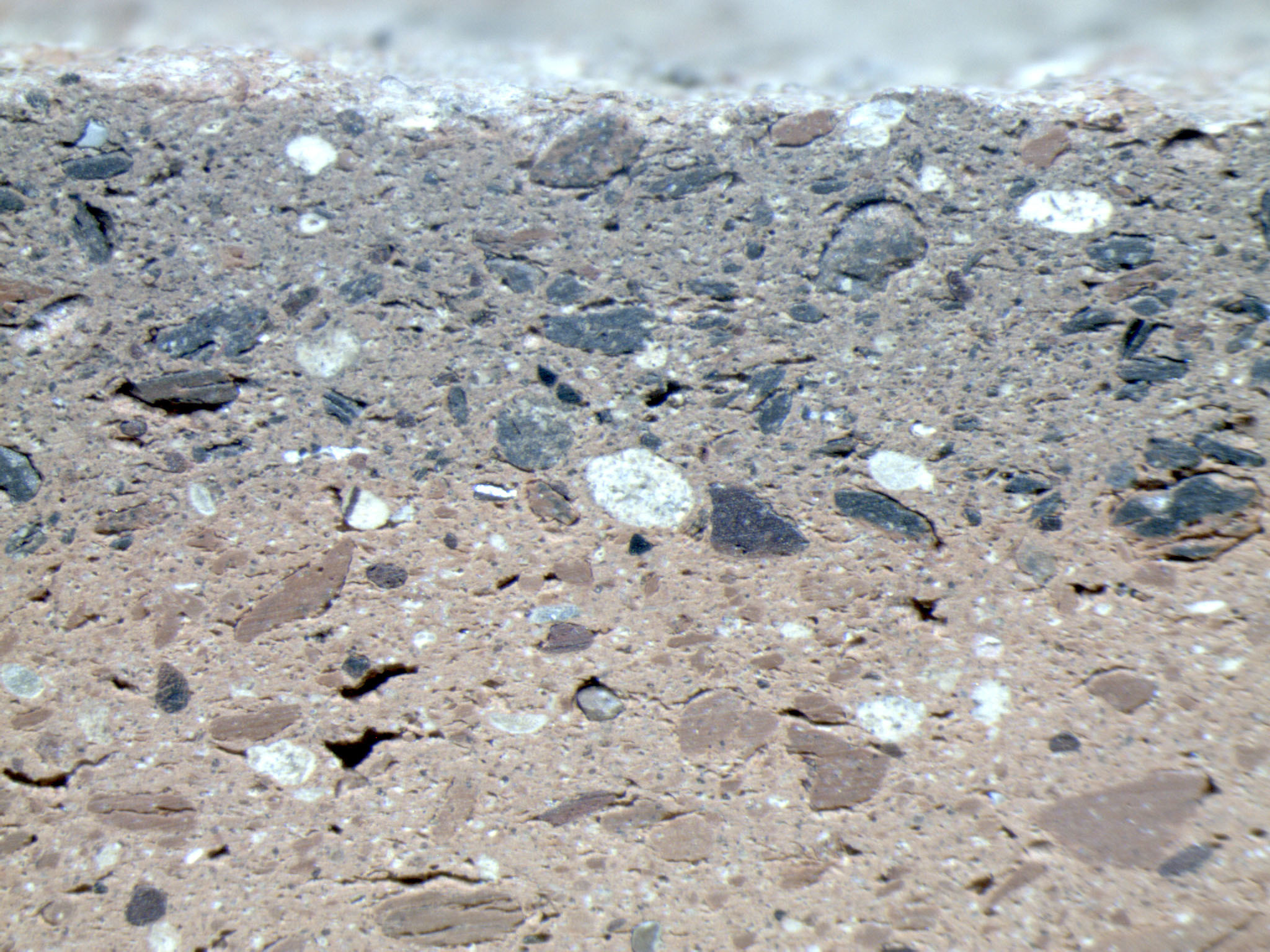
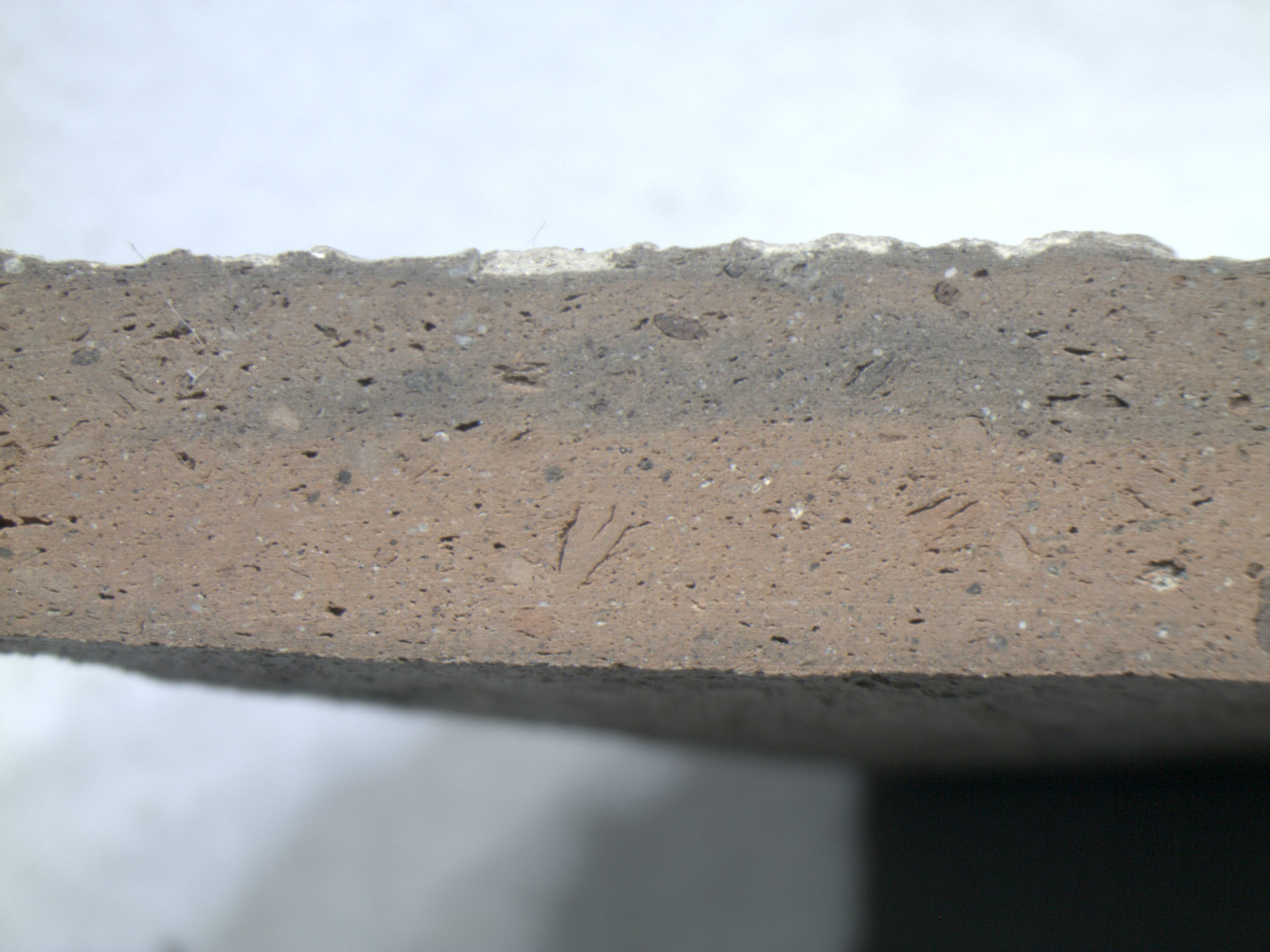
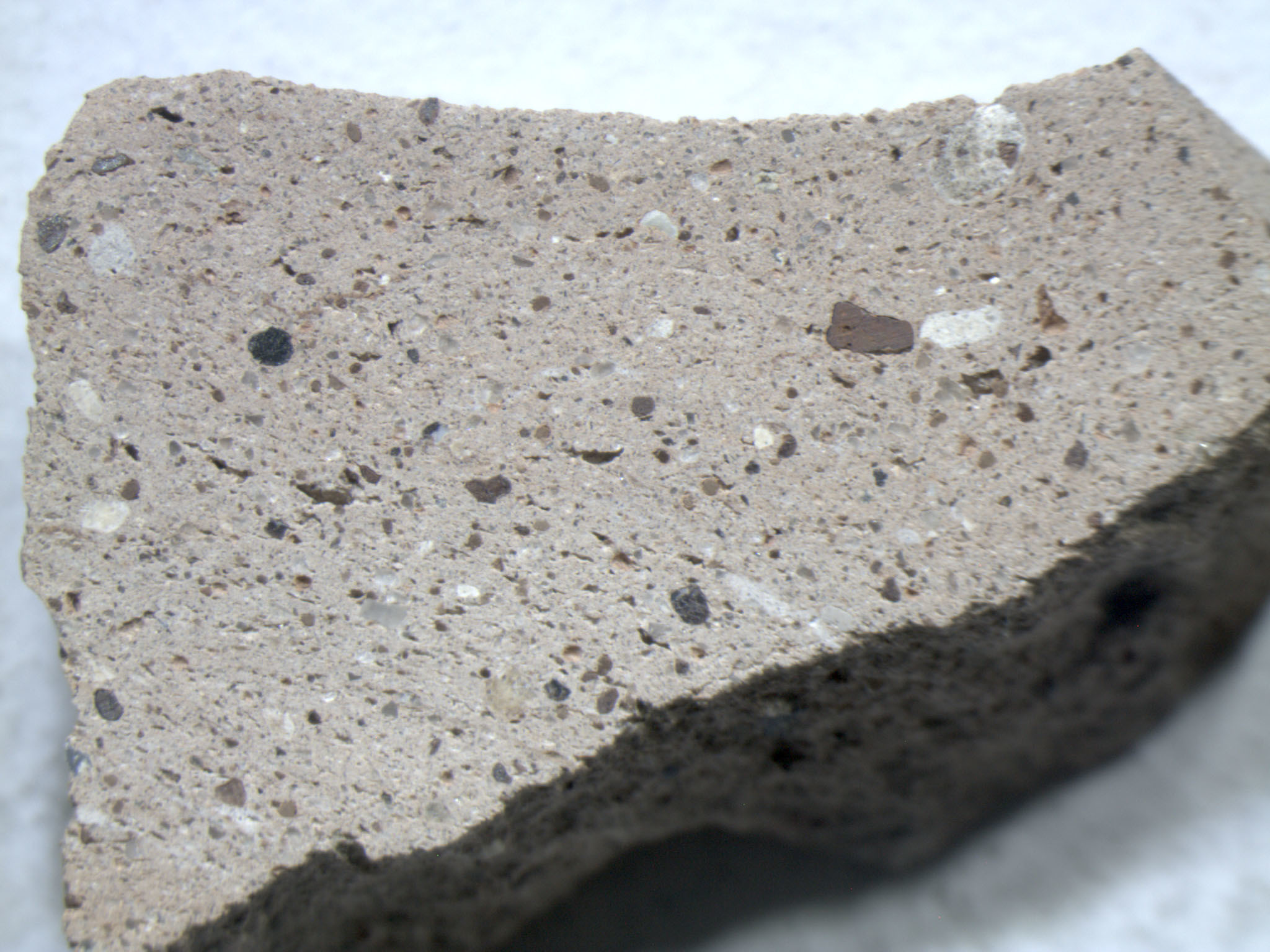
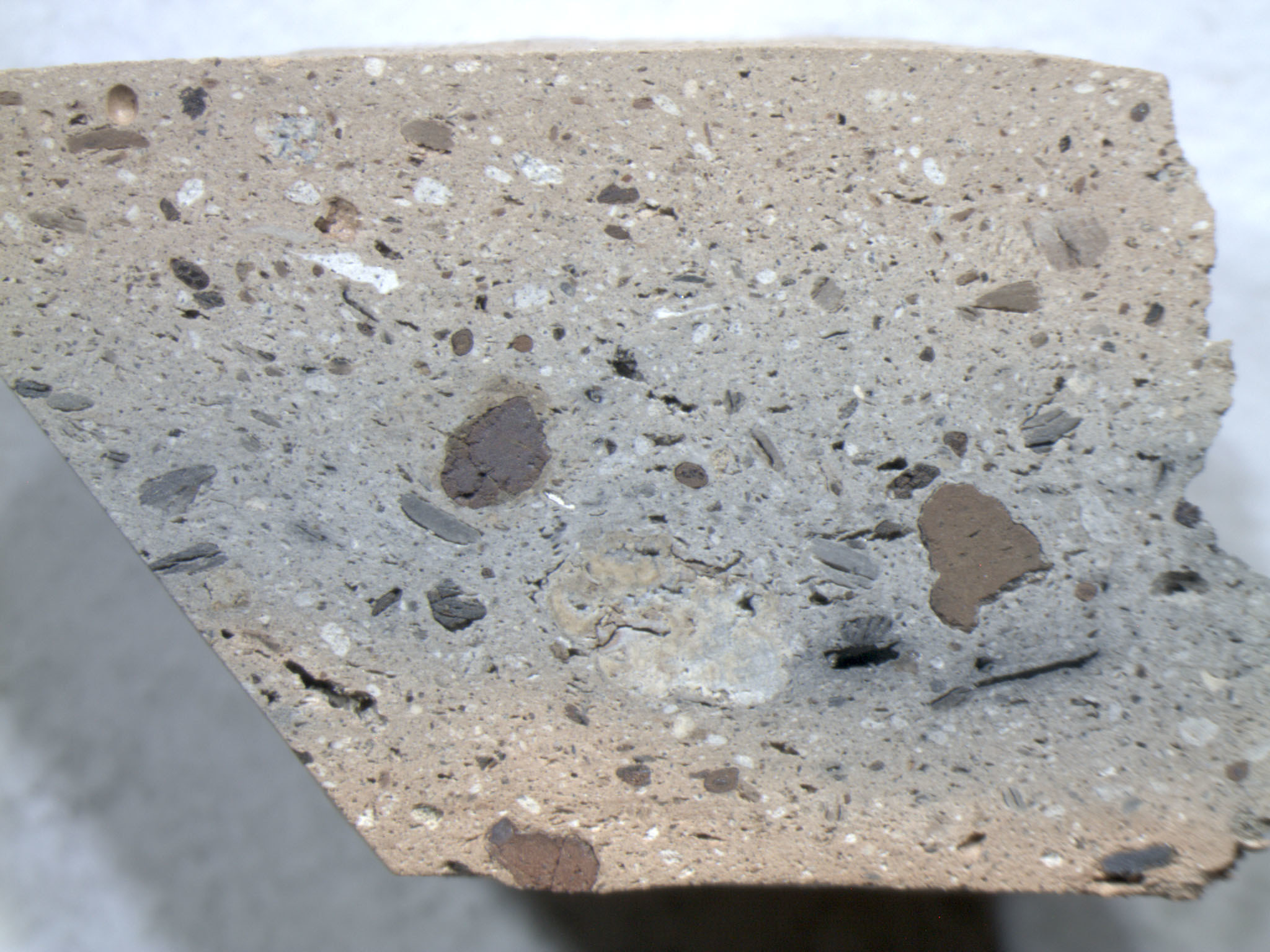



This petrofabric contains fine grained moderate to coarse sand sized shales (ARFs), which occurred rarely to moderately in the samples. They are most commonly highly rounded, but sometimes elongate. They often contain coarse silt sized quartz and sometimes carbonates and Fe-Ti oxide phases. They are most commonly iron rich, but contain variable amounts. An iron content of 5-10% is frequent A lesser fraction of non-iron bearing shales, probably composed of kaolinite, can be found in some samples. These fragments can be identified as they are white even in partially oxidized or reduced zones. Overall, these shales are poorly compacted and poorly lithified, as further indicated by splitting that takes place along the long axis of many of the elongated ARFs. The elongated shales often show a preferred orientation. Well-rounded grains of quartz that were found in both spherical and more elongated shapes occur occasionally to moderately. Quartz most commonly occurs in fine to medium sand sized grains that are anhedral, although some larger grains do occur. Many samples contained larger fragments of quartz rich sandstones. Pieces of micritic lime mudstone and siltstones occur in varying amounts but are generally rare. They occur in medium or coarse sand sized grains. Some finer rounded grains of fine sand sized calcite occurred in trace amounts. Highly weathered basalts occurred rarely in a few samples. Rounded anhedral grains of microcline also occurred in trace amounts in some samples, as did rounded grains of zircon and tourmaline.
This petrofabric is associated with the P200 and P201 fabrics identified for EBA combed ware jars from Egypt (see Sowada et al. 2020; Sowada et al. 2021a, 2021b; Badreshany et al. 2022)
