
Israel/Galilee/Local soil and dolomitic sand
Israel/Galilee
Local soil and dolomitic sand
Cenomanian Sakhnin Formation
Cenomanian Sakhnin Formation is exposed in numerous locations on Galilee, and is composed of crystalline limestone and dolomite. At the points, where faults cut through the rocks, the dolomite of Sakhnin Formation appears as white to light yellow siltstone/sandstone composed of micro-crystals of dolomite (size of grains from silt to 0.3 mm) cemented with small quantity of calcareous mareial. This silt-sandstone is brecciated, and the cracks are infilled with crystalline calcite. At some points where this silt-sandstone reaches the modern surface, it is eroded to light brown calcareous sand. The alternative is breccia of pink crystalline dolostone with white dolomite cement (Personal observation by Anastasia Shapiro at Dishon, Near Kfar Kanna and other lacations in Galilee). The definition of the rocks was provided with the aid of hydrochloric acid, steel needle and binocular microscope.
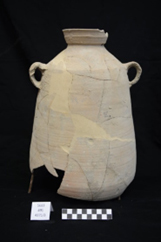
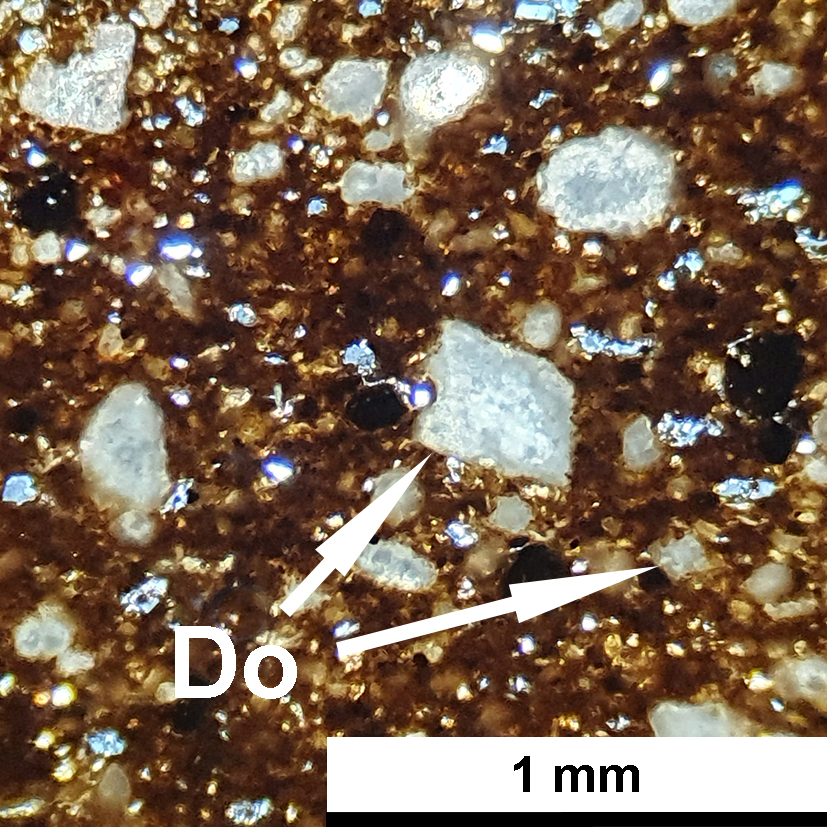
Cenomanian Sakhnin Formation is exposed in numerous locations on Galilee, and is composed of crystalline limestone and dolomite. At the points, where faults cut through the rocks, the dolomite of Sakhnin Formation appears as white to light yellow siltstone/sandstone composed of micro-crystals of dolomite (size of grains from silt to 0.3 mm) cemented with small quantity of calcareous mareial. This silt-sandstone is brecciated, and the cracks are infilled with crystalline calcite. At some points where this silt-sandstone reaches the modern surface, it is eroded to light brown calcareous sand. The alternative is breccia of pink crystalline dolostone with white dolomite cement (Personal observation by Anastasia Shapiro at Dishon, Near Kfar Kanna and other lacations in Galilee). The definition of the rocks was provided with the aid of hydrochloric acid, steel needle and binocular microscope.


