
Egypt/Mixed Clay
Egypt/Nile River Valley
Mixed clays
Quaternary deposits (possibly some Paleogene to Neogene)
This is NOT a single petro-fabric. Mixed clay petro-fabrics have a Nile clay component and another non-Nile clay component. The term mixed does not specify whether the pastes are from natural secondary clay deposits of mixed character or from a potter intentionally mixing clays to create a paste. This diverse paste can include: predominately Nile clay with lesser quantities of marl (calcareous clay), predominately Nile clay with finely dispersed calcareous material, predominately shale clays with lesser quantities of Nile clay and/or calcareous material, and predominately marl clay with lesser quantities of Nile clay.
Based on petrographic analyses to date, it is has been identified in many periods including the Predynastic, Early Dynastic, Old Kingdom, New Kingdom, and later times. See also Egyptian Nile Clay, Egyptian Marl Clay, and Egyptian Shale Clay Petro-fabric information.
Petrography can help clarify the specific raw materials and amounts in mixed clay fabrics. Petrographic analysis of a wide range of “marl clay” samples from many locations and periods has shown that while there are some “pure” marl clay pastes, most also include Nile silt, in amounts ranging from 5 to 50%. Some mixes may have been made by potters; ethnographic research with modern Egyptian potters shows that they commonly added Nile silt to marl clay to create a more workable paste, since marl clays are found as hardened deposits and are thus difficult to work with.
However, potting practices, natural mixing, and deposit variability make further sub-division and specific provenance identification of Egyptian mixed clay fabrics a challenge.(see also ASW-Marl_04 and ASW-Nile_06 in Peloschek 2015)
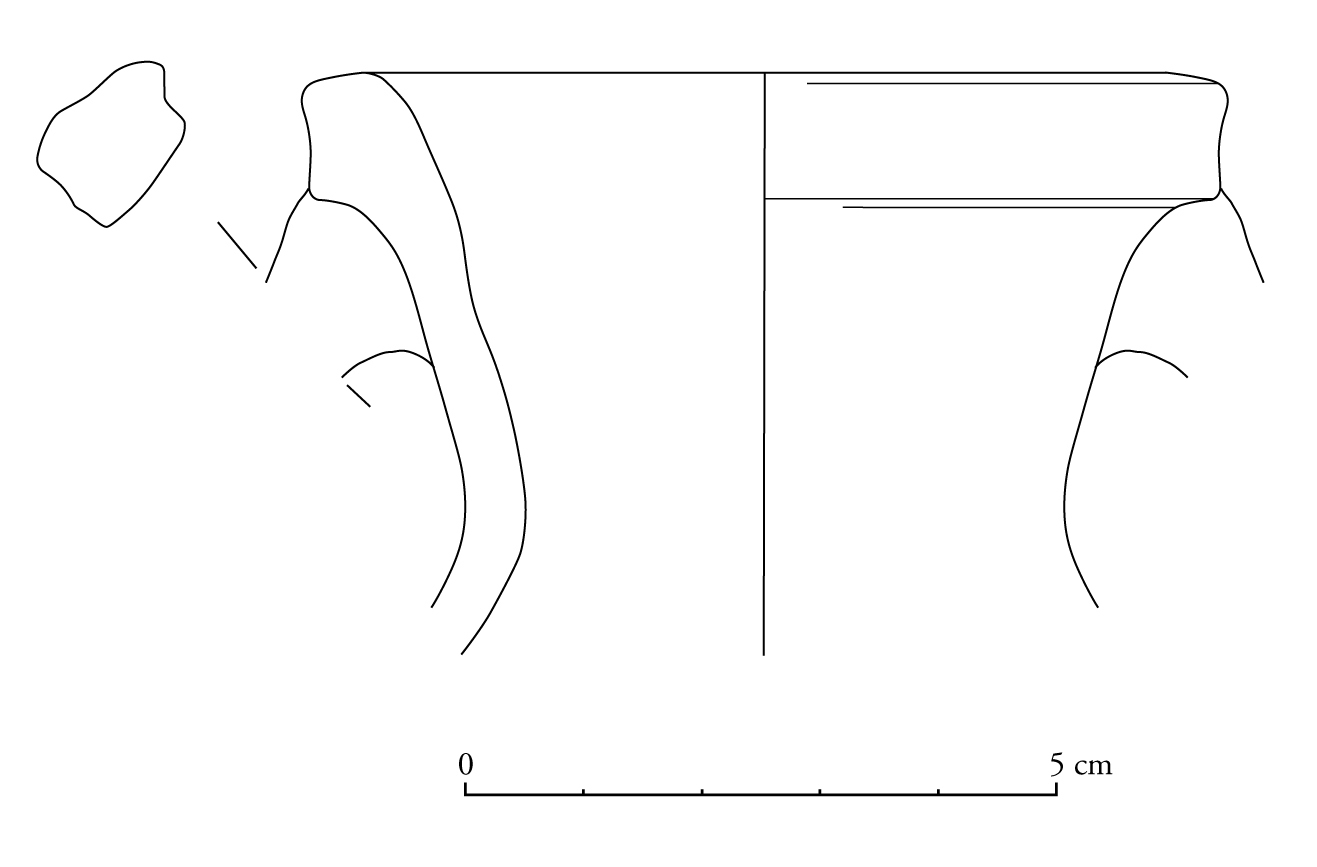


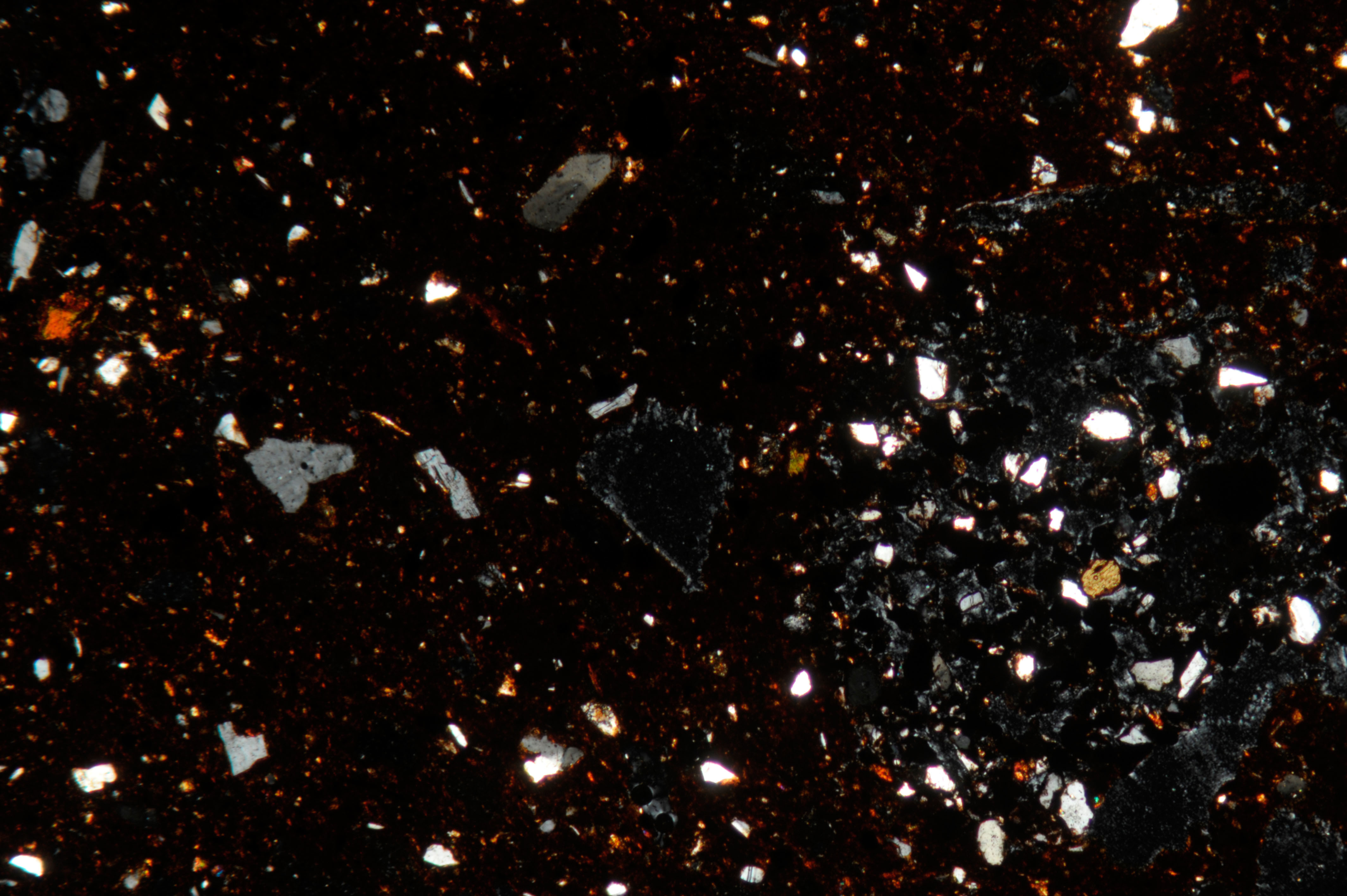


When calcareous material is present, it can range from weathered clayey limestone that is finely dispersed and decomposing (due to firing) to more solid micritic limestone fragments. Calcareous clay, i.e., marl, can be a component and in rare cases marl clay pellets are present. Overall, the amount of calcareous material will vary.
Nile clay is also typically present and its amount varies. It often appears as common silty quartz, with rare potassium feldspar, microcline, plagioclase, muscovite, biotite, iron oxides, opaques, pyroxene, amphibole, and rock fragments. Some mixed clay fabrics have Nile clay pellets that can be diagnostic.
The presence of shale clay can be challenging to assess, but generally appears as non-calcareous, iron-rich material lacking the silty inclusions typical of Nile clay. Its amount can vary. Often these fabrics are fairly consistent in texture petrographically, so they appear more as natural secondary clay deposits i.e., distal end of wadis where the Nile flood plain is located. However, it remains difficult to distinguish mixed clay fabrics derived from these natural mixed deposits from clay fabrics that could be the result of a potter mixing material to create a paste. [Modern potters have been known to add Nile clay to marl clay to make a more workable paste from stiffer marl clays]
This is NOT a single petro-fabric. Mixed clay petro-fabrics have a Nile clay component and another non-Nile clay component. The term mixed does not specify whether the pastes are from natural secondary clay deposits of mixed character or from a potter intentionally mixing clays to create a paste. This diverse paste can include: predominately Nile clay with lesser quantities of marl (calcareous clay), predominately Nile clay with finely dispersed calcareous material, predominately shale clays with lesser quantities of Nile clay and/or calcareous material, and predominately marl clay with lesser quantities of Nile clay.
Based on petrographic analyses to date, it is has been identified in many periods including the Predynastic, Early Dynastic, Old Kingdom, New Kingdom, and later times. See also Egyptian Nile Clay, Egyptian Marl Clay, and Egyptian Shale Clay Petro-fabric information.
Petrography can help clarify the specific raw materials and amounts in mixed clay fabrics. Petrographic analysis of a wide range of “marl clay” samples from many locations and periods has shown that while there are some “pure” marl clay pastes, most also include Nile silt, in amounts ranging from 5 to 50%. Some mixes may have been made by potters; ethnographic research with modern Egyptian potters shows that they commonly added Nile silt to marl clay to create a more workable paste, since marl clays are found as hardened deposits and are thus difficult to work with.
However, potting practices, natural mixing, and deposit variability make further sub-division and specific provenance identification of Egyptian mixed clay fabrics a challenge.(see also ASW-Marl_04 and ASW-Nile_06 in Peloschek 2015)
6th century BCE - 1st century CE
Late Period, Hellenistic/Ptolemaic, Roman
Aswan, Syene (Egypt/Upper Egypt)
Rawd al-Buram (Egypt/Eastern desert/Red Sea Coast)
This description was compiled during the LCP Egyptian Ceramic Petrography workshop at IFAO in September 2017.
