Background: While no LRA1 kiln structure has been found at Amathus, wasters and the results of ceramic petrography strongly corroborate Empereur and Picon’s proposal of LRA1 production at the site (Empereur and Picon 1989: 242)
Location: Unknown, but hypothesized to be on the "slopes of the acropolis" (Empereur and Picon 1986: 242)
Number of kilns: Unknown
Period of activity: mid-6th - early 7th c. CE
Description of facilities: Unknown
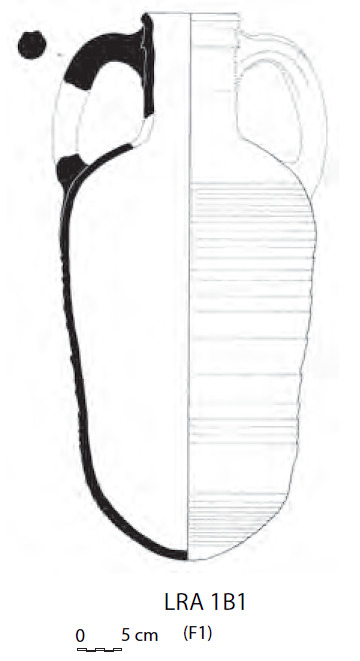
Typology: LRA1 Type B (including a smaller 'sub-module', see Pieri 2005a), and Type C (Empereur 2018: 183-185).
Local fabric: The local clay can vary from grey to green to beige, with black inclusions visible to the naked eye. Macroscopic fabric observations, while useful, should not be used as strong evidence to specifically correlate LRA1s of unknown origin with Amathus, as the fabric is nearly identical to that of Zygi-Petrini and potentially another unknown workshop (Gillett 2023). While petrography cannot consistently distinguish between the products of Amathus and Zygi, it can separate their products from the other 15 LRA1 workshops (see the petrofabric here).

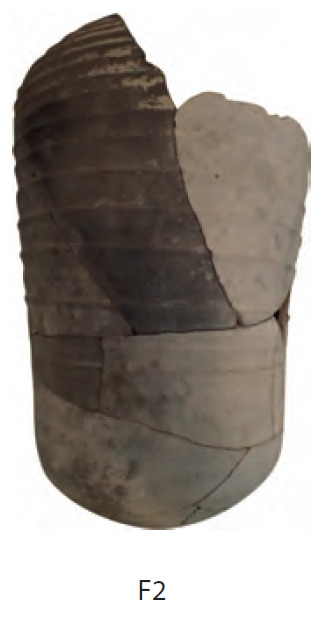
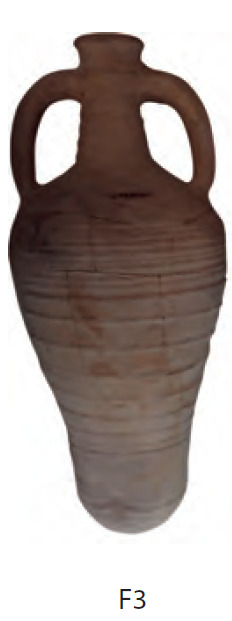
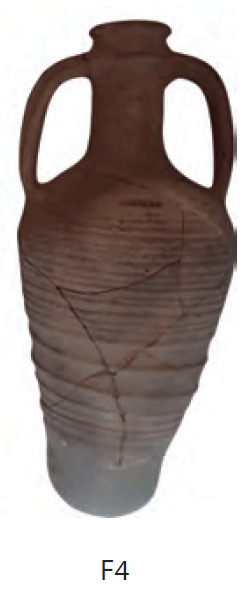
Photos and associated drawings of several amphoras thought to have been produced at Amathus (Empereur 2018: Fig. 3)

Fluvial gray clayey soil sitting on the Pakhna Formation near Amathus (photo by Grady Gillett)

A deposit of fine-grained Moni bentonitic clay near Amathus, which produced quality ceramic briquettes in experimental studies (photo by Grady Gillett)

The black sand of Amathus, likely used as temper in their ceramic industry (photo by Grady Gillett)