
Jerash Cutware (Kerbschnitt)
Jordan/Northern Highlands
Late 8th to 9th century CE
Early Islamic - Umayyad/Abbasid
General Information
Jerash Cutware (also known as Kerbschnitt or engraved pottery; Early Islamic Levantine Kerbschnitt Ware) represents a distinct local production of fine and semi-fine tableware characterized by deep geometric excision (carving) executed on the clay prior to firing. While historically considered a quite rare find in the Southern Levant, recent excavations by the Late Antique Jerash Project (LAJP) have recovered a wide assemblage of at least 26 diagnostic specimens (including complete profiles) from stratified domestic contexts. Technologically, this production functions as a local, affordable ceramic surrogate for prestigious, high-status carved soft-stone (steatite/chlorite) bowls imported from al-Hijaz. The deep carving creates sharp contrasts of light and shadow, satisfying urban household demand for display items used during hospitality rituals and social/religious events (diyafa). Local Gerasene production is attested by contemporary kilns discovered at the South Decumanus (the so called Umayyad House) and on the lower terrace of the Temple of Zeus.
Manufacture: Wheel-made and Handmade (only one single handmade specimen is documented in the Late Antique Jerash Project assemblage).
Visual Fabric: Fabrics exhibit a range from fine and compact with scattered lime inclusions to coarser variants with thicker walls and a higher density of lime and mineral grits.
Firing process: Firing atmospheres vary. 1) Oxidized firing: Light red-orange to light buff (Munsell 2.5 YR 7/6, 6/6, 5/6; 5YR 6/1).
2) Reduced firing: Light grey to grey fabrics (Munsell 5YR 6/1, 5/1).
Inclusions: Tiny-to-medium scattered white lime/calcite and mineral grits. Macroscopically, the fabric closely resembles traditional Gerasene common ware productions (e.g., Jerash Orange-Red Ware and Jerash Light Grey Ware).
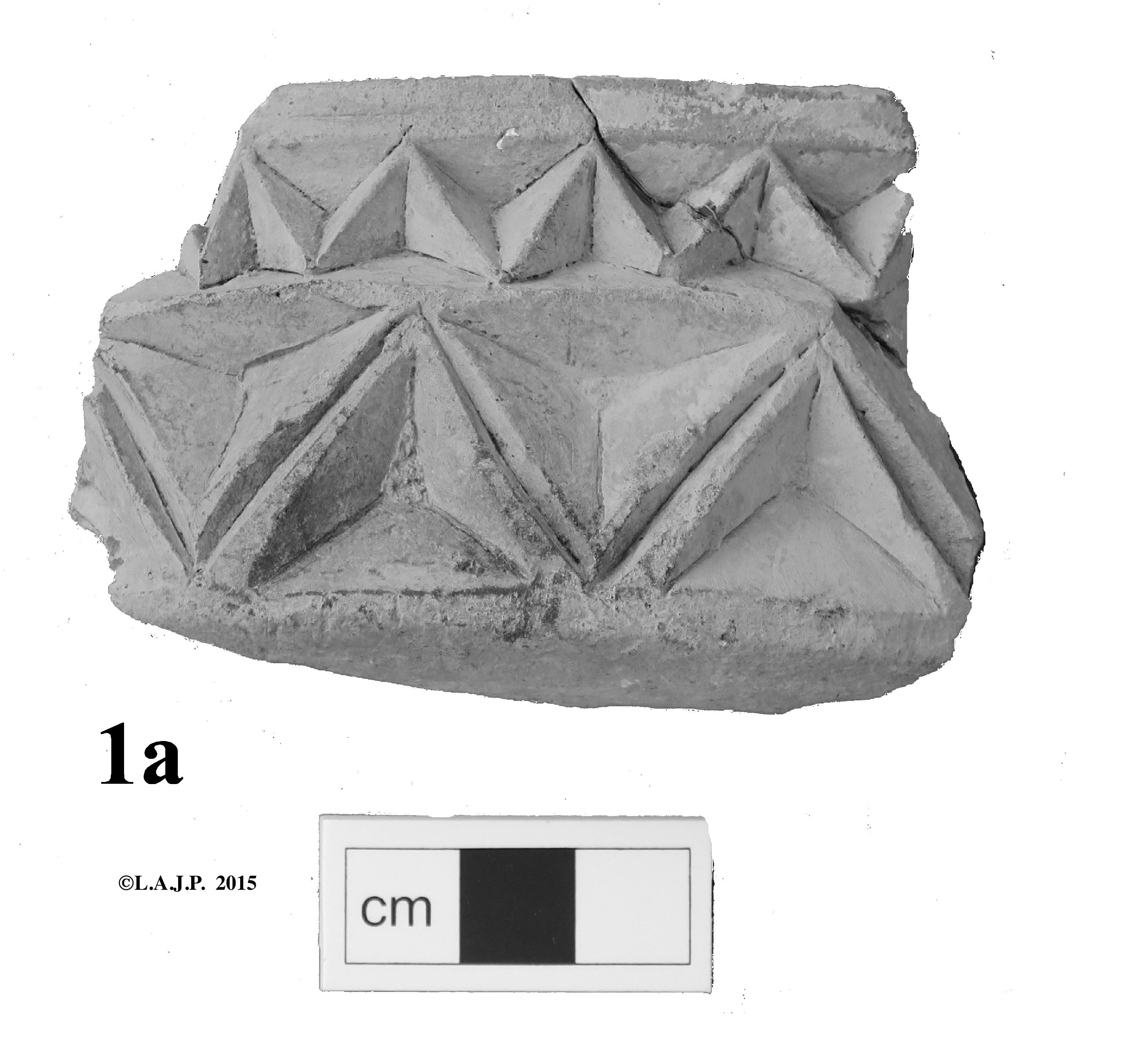
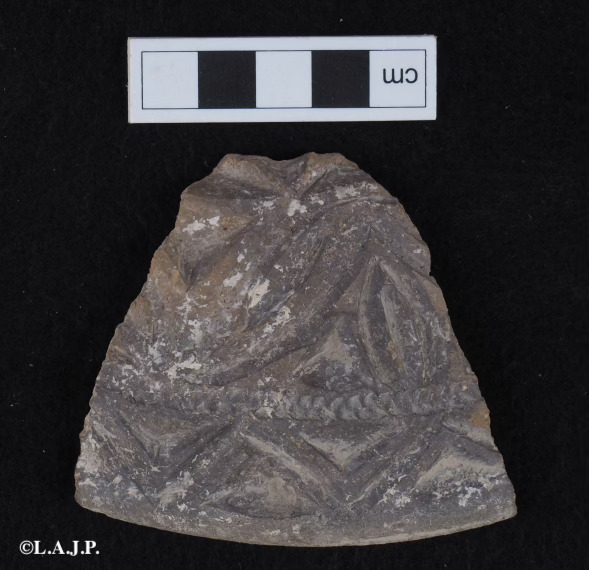
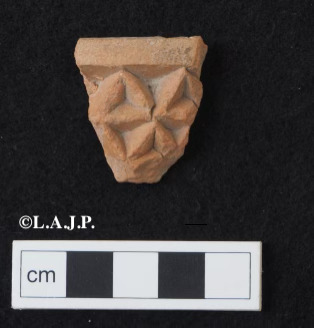
Jerash/Gerasa (Jordan/Northern Highlands)
