
Early Medieval Polychrome Splash Glazed Wares
Turkey/Central Euphrates, Turkey/Eastern Mediterranean, Turkey/Upper Euphrates, Syria/Euphrates River valley
late 9th to 13th century CE
Early Islamic - Umayyad/Abbasid, Early Medieval/Middle Islamic
General Information
The group of "Early Medieval Polychrome Splash Glazed Ware" was defined during the find processing on the Dülük Baba Tepesi (close to the modern city of Gaziantep in South-East Turkey). There, the glazed pottery showed different glazing and decoration techniques, which led to a differentiation of individual groups (e.g., "Monochrome Glazed Ware", "Polychrome Splash Glazed with Sgraffito", "Green on White Ware", "Underglaze Painted Ware" etc.). In principle, however, hardly any chronological clues can be derived from these groups. It should also be noted, that regardless of the decoration technique, vessels share the same fabric. The exception is a monochrome, green or brown glazed, strongly tempered orange to orange-brown fabric ("Monochrome Glazed Coarse Fabric"). The Polychrome Splash Glaze technique finds multiple comparisons on sites in Northern Syria, in Central Anatolia, the Eastern Mediterranean, along the Euphrates, Iran etc. It is one of the most prominent glazing techniques in the Abbasid period.
Concerning the chronology, at the Dülük Baba Tepesi polychrome splash-glazed fragments were found frequently, but unfortunately they could not be classified chronologically due to the lack of secured sequences. The monastery on the hill was at least in use until the 12th century CE. Therefore, the duration of the ware-family can be determined at the earliest from the end of the 8th until the 12th century CE according to the results on the Dülük Baba Tepesi.
The fabric can be described as light buff, yellow-buff, pinkish buff to orange-buff in colour. It is moderately tempered with mineral inclusions of red, white and brown colour. The texture is sandy and very dense and the fabric is medium-hard to hard-fired. Frequently, the direct application of the glaze on the untreated surface was not usual; regularly the glaze was applied onto a thin whitish slip. The colour of the glaze ranges from all shades of green, yellow to amber,light-brown to dark-brown.
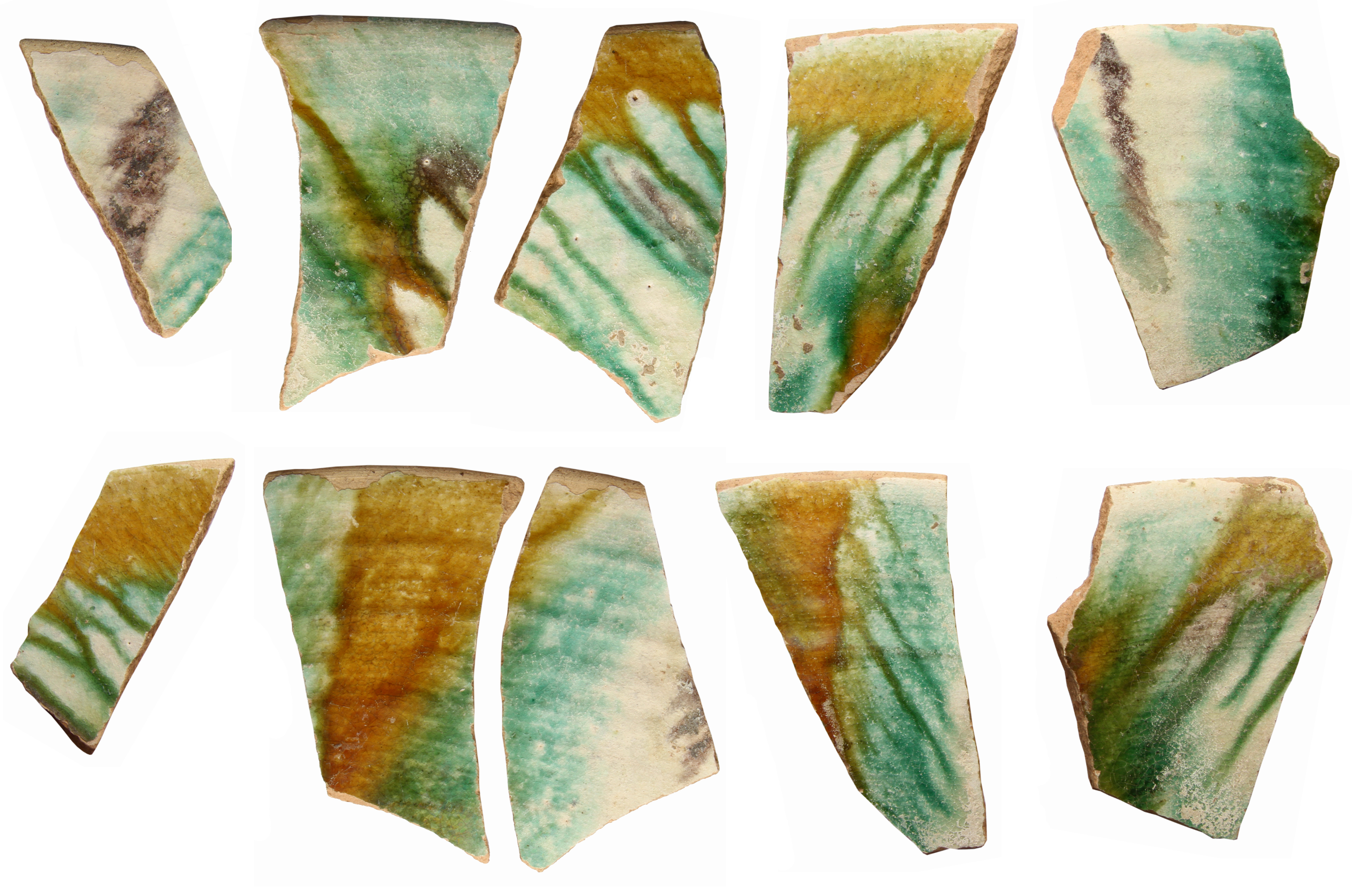
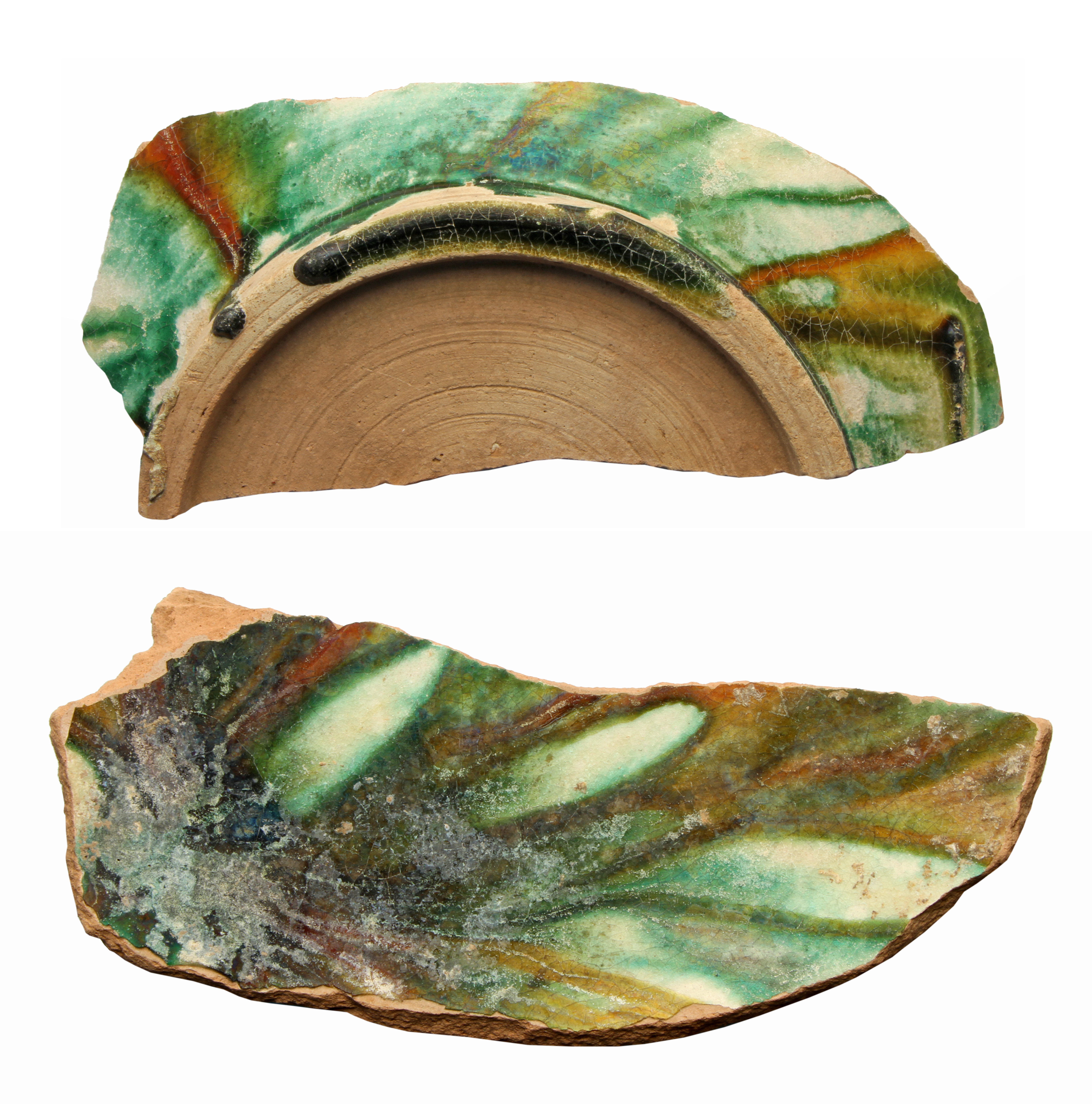
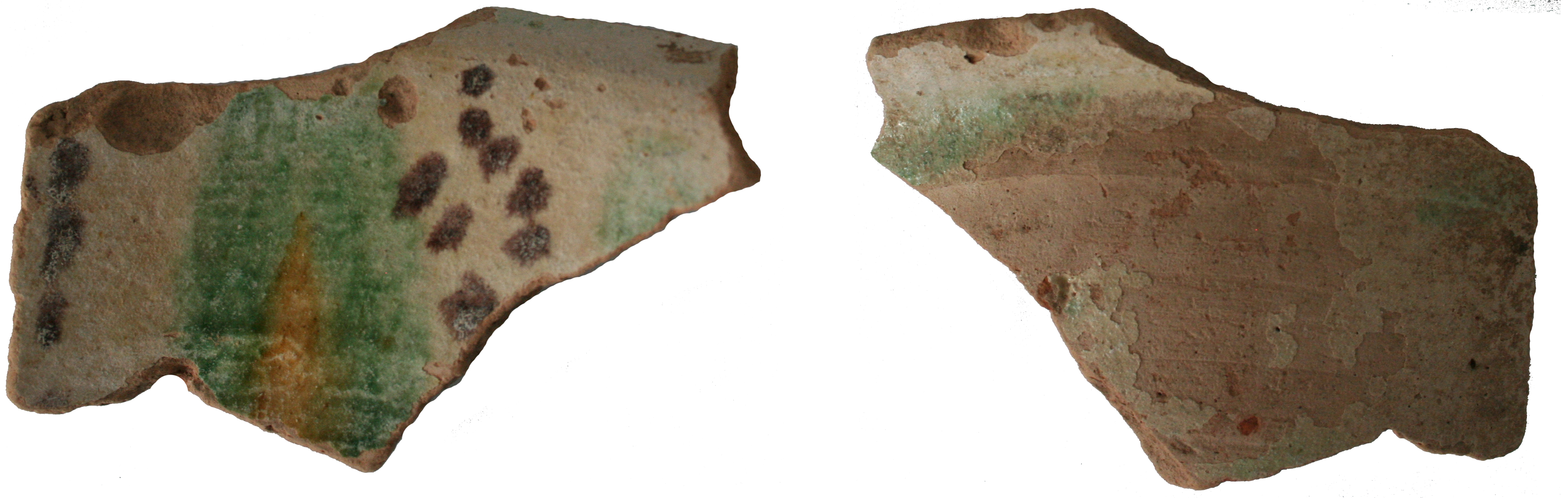
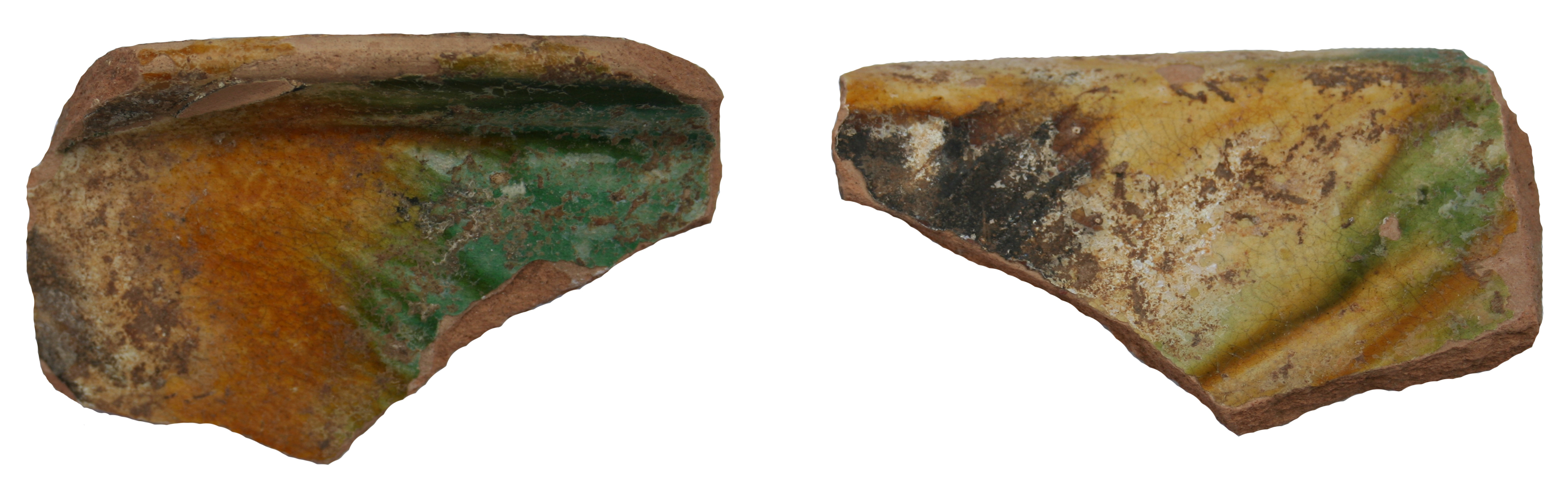
Turkish Early Medieval Polychrome Painted Glazed Ware (Tarsus)
Syrian early Islamic Yellow Glaze/Polychrome Painted
Doliche, Dülük Baba Tepesi (Turkey/Central Euphrates)
The characteristicum of distinction is the splash-glaze-technique. This technique is also very often combined with the sgraffito-technique (see Early Polychrome Splash-Glazed Ware with Sgraffito). The current state of research suggests that the Sgraffito-technique can be dated slightly later, but this hypothesis cannot be sufficiently confirmed due to the lack of chronologicall fine grained find contexts. Fragments of this polychrome glazed family can generally be dated from the 9th/10th to the early 12th century CE. With the ongoing Abbasid period, furthermore, there can be detected a development from randomly splashed vessels with or without sgraffito (foremost detectable at the Dülük Baba Tepesi /Gaziantep; or also at Tall Aswad; approx. 9. to early 11. cent. CE) to a decoration that uses carefully different (splashed) colours to underline specific patterns applied with sgraffito lines (for example at Samosata, Lidar Höyük and other sites at the Upper Euphrates; approx. late 11. to 13. cent. CE).
