Iznik ware
Turkey/Marmara/Iznik
late 15 c. - early 18 c.
Ottoman

Iznik ware jug with lateen-sailed boats and islands, late 16th c. (Cincinnati Art Museum). Daderot, CC0, Wikimedia.

Iznik Ware plate, Istanbul Archaeological Museum: Wikimedia

Iznik Ware jug, Cincinnati Art Museum: Wikimedia

Iznik Ware plate in the Tokyo National Museum: Wikimedia
General Information
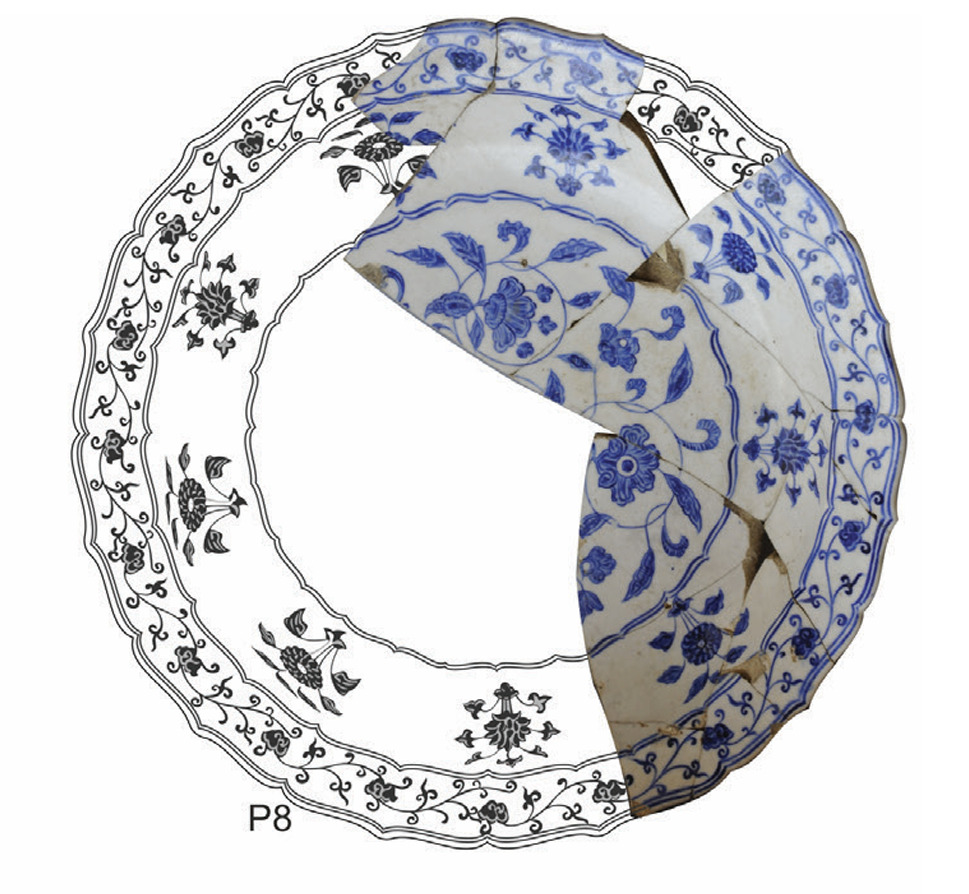
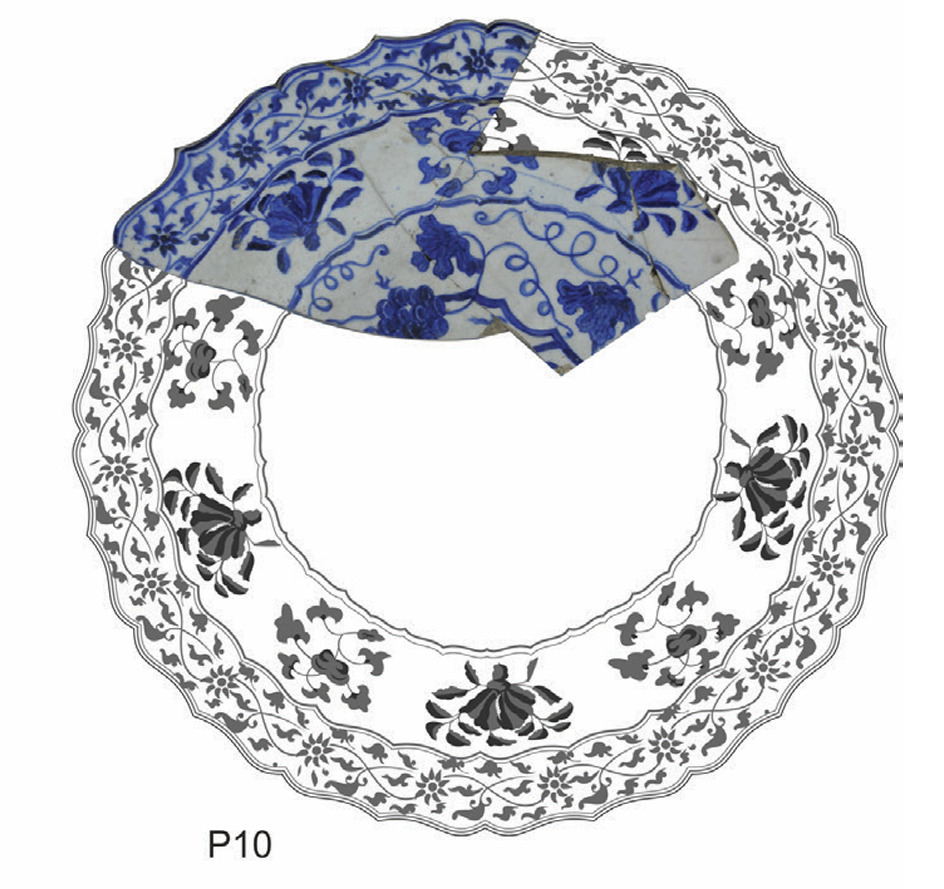
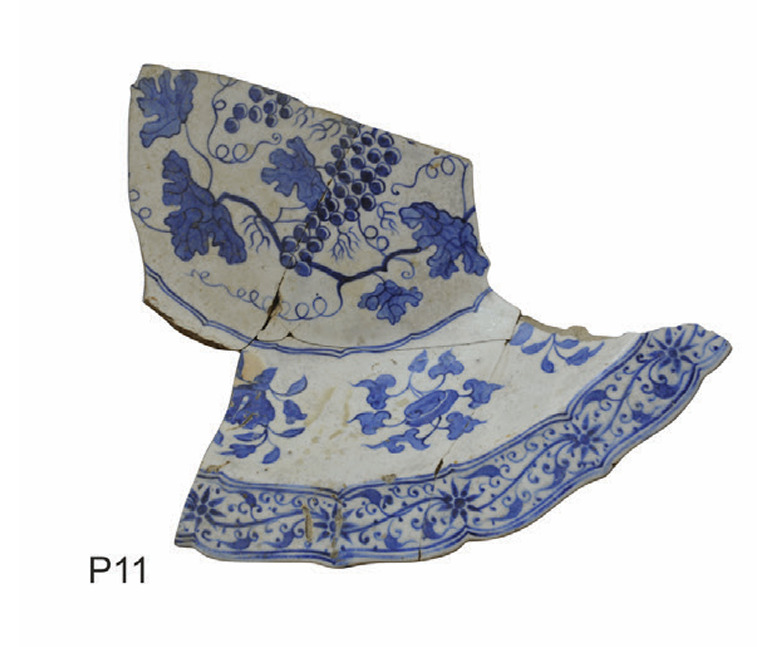
Iznik wares were fine table vessels produced in the Turkish city of Iznik beginning in the later 15th c. Production was supported by the Ottoman court, and initially focused on finely made blue-and-white styles inspired by Yuan and Ming dynasties’ blue and white porcelains. The initial blue and white color scheme soon came to include green, purple, black, and red. Vessel forms were influenced by a combination of Turkish metal vessels and Chinese shapes to create a hybrid Ottoman style. Vessels of all shapes and sizes for eating and serving food for produced, along with forms for religious functions, flower vases, and tiles. The most common form were wide dishes with a broad flat rim
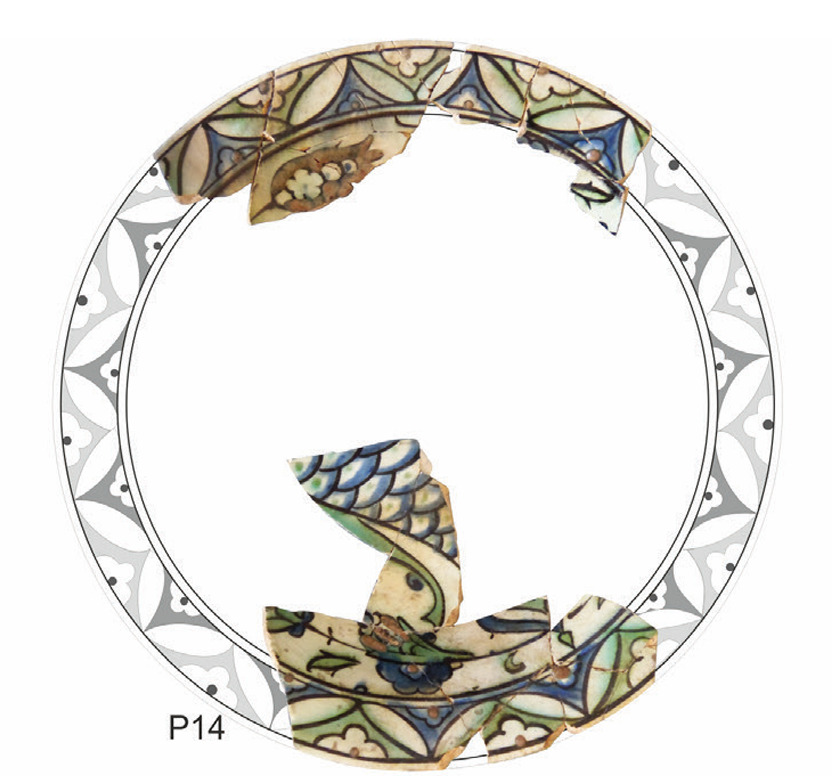
Iznik wares can be dated quite precisely by the colors and designs of specific works. In the later 15th c. Iznik wares were painted in a bold cobalt-blue on a white body under a clear glaze. Decorations were modeled on Chinese porcelains prized at the Ottoman court. In the early 16th c. turquoise blue was introduced; one group called “Golden Horn Ware” used delicate spiraling scrolls with tiny leaves and flowers, nothing large-scaled. Around 1540 manganese purple and olive green were added to the palette of blue and turquoise; in the later 16th c. a strong turquoise, emerald-green, black, and deep red were added to the spectrum of colors, and outlines are often drawn in black. At the end of the 16th c. a bright tomato red derived from iron oxide became frequent.
As a locally made version of Chinese porcelain, the floruit of Iznik ware was closely connected to the needs and support of the Ottoman court. When that support waned, so too did the quality of Iznik wares. By the later 16th century, Ottoman conquests in Egypt had secured access to the Indian Ocean. This in turn led to a more regular supply of Chinese porcelain, which carried qualities of global economic power and status. As porcelain vessels became more easily acquired by the Ottoman upper classes, the production quality of Iznik ware declined. By the early 17th c. Iznik ware vessels were coarser, the colors less vivid - the red now appeared slightly brown - and the painting became less and free.
By the early 18th century Iznik potters no longer produced vessels of quality, but instead inexpensive ceramics consumed mainly by the middle and lower classes. If Iznik wares are defined as high quality tablewares produced as an alternative to porcelain, then the ware could be said to have ceased by the 18th c. The tradition of colorful intricately decorated table wares did not disappear in the 18th century; instead manufacture expanded to other centers such as Küthaya and Çanakkale. Late Ottoman-era Turkish painted pottery no longer evoked the aura or design of Chinese porcelain, and instead came to be seen as 'folk' or 'peasant' art.*
* adapted and summarized from Lynda Carroll, “Could’ve Been a Contender: The Making and Breaking of “China” in the Ottoman Empire,” International Journal of Historical Archaeology 3 (1999), pp. 177-190.
Iznik ware vessels were made of a grayish-white clay covered with a thin white slip, and painted with abstract linear motif with stylized and symmetrical flowers, leaves, and foliage patterns.