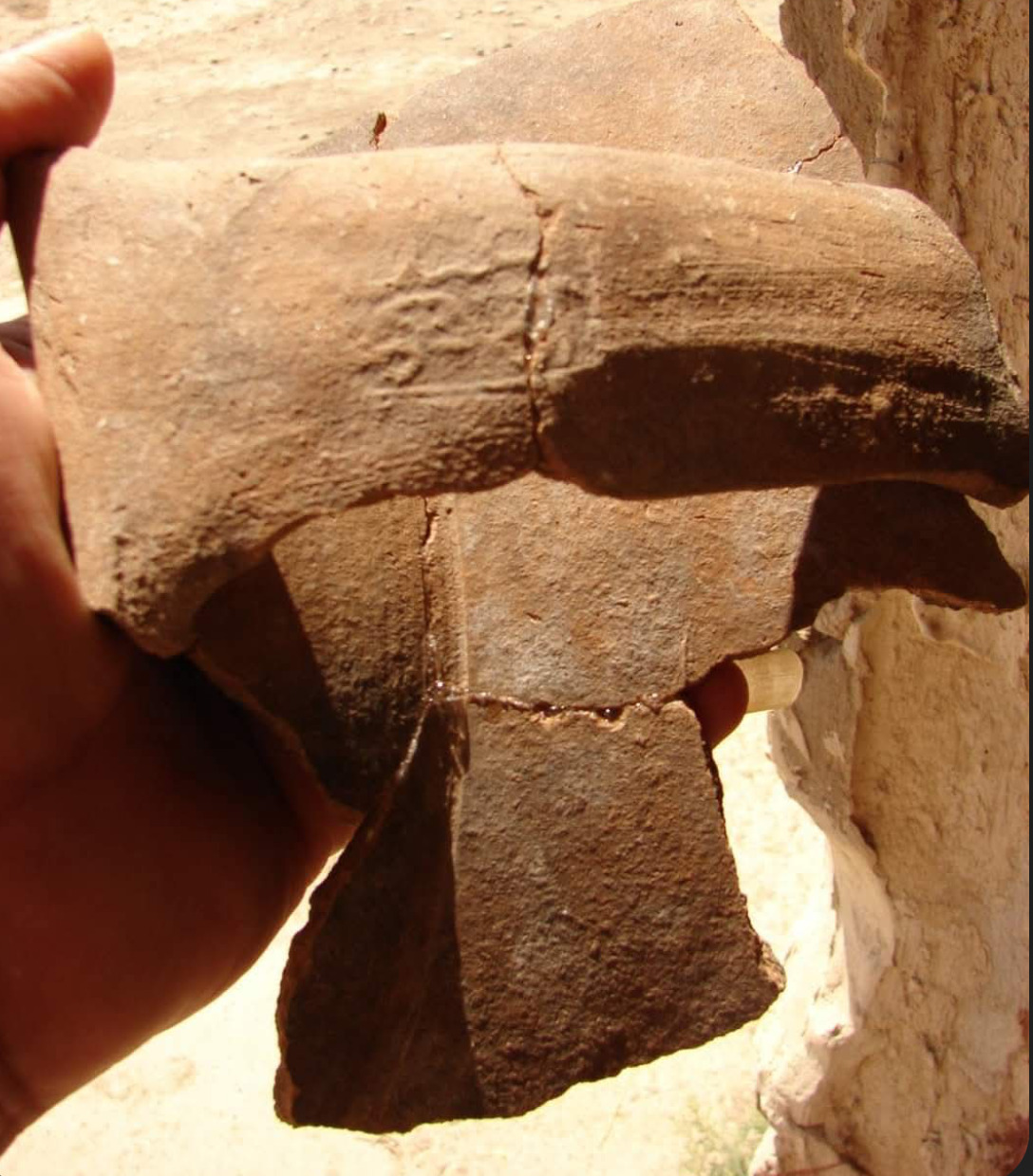
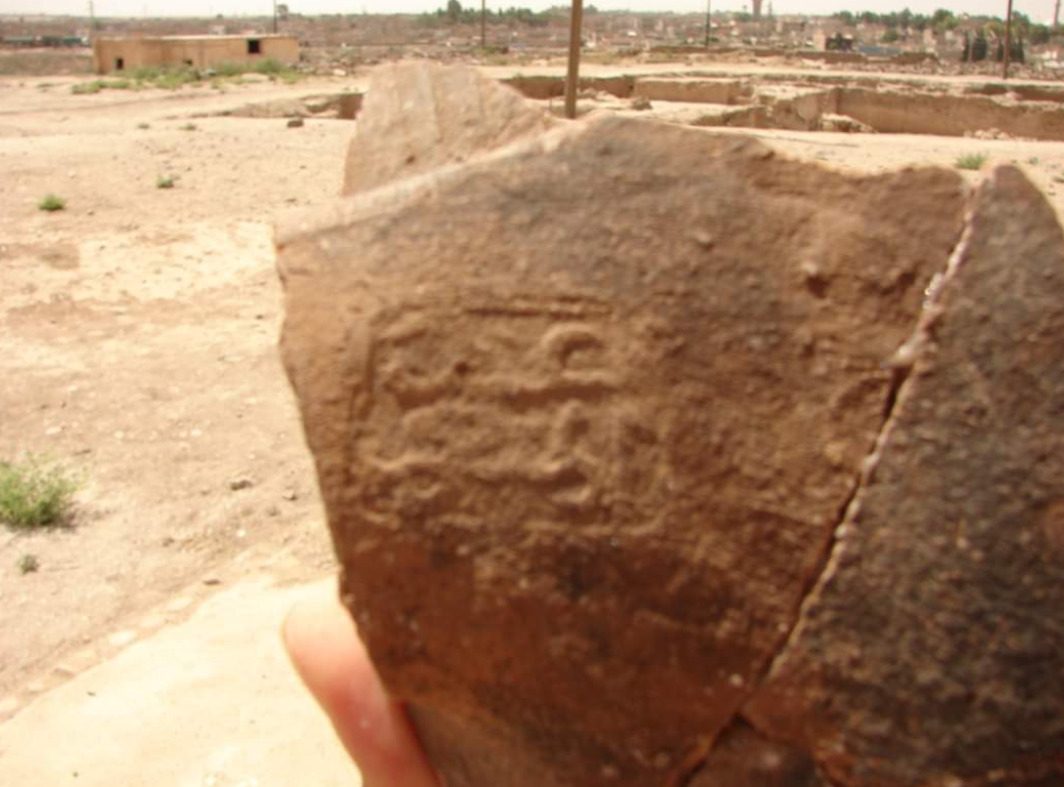
Tell Hassakah consists of two discrete areas. The highest portion of the mound covers 6 hectares while the lower city occupies an area of 54 hectares. The elevated portion of the site was used as a military base during the Mamluk - Ottoman Period, as a French military barracks during the 20* century, then after independence it became known as the Sa'ad Bin Abi Waqqas Barracks. The topmost (first) layer of Tel Hassake dates to the period of Islamic Arab civilization. The second layer dates ot the Byzantine civilization and the third layer is Roman in age. The fourth layer dates ot the Neo-Assyrian period. In the first layer, stone foundations from the time of the Mamluks were built directly on top of mudbrick and stone structures belonging to the Ayyubid Period (12th - 13 centuries AD). Glazed pottery, tannurs (bread ovens) and plastered basins were directly associated with the Ayyubid Period walls.
In modern times, pottery vessels of all sorts that were made in the vicinity were sold on the outskirts of the city (see related images), which might suggest similar activities took place in medieval and earlier times.
Fuller, Michael. “Hassakah.” The Levantine Ceramics Project. Last modified May 17, 2025. https://www.levantineceramics.org/sites/3039-hassakah-hasake .