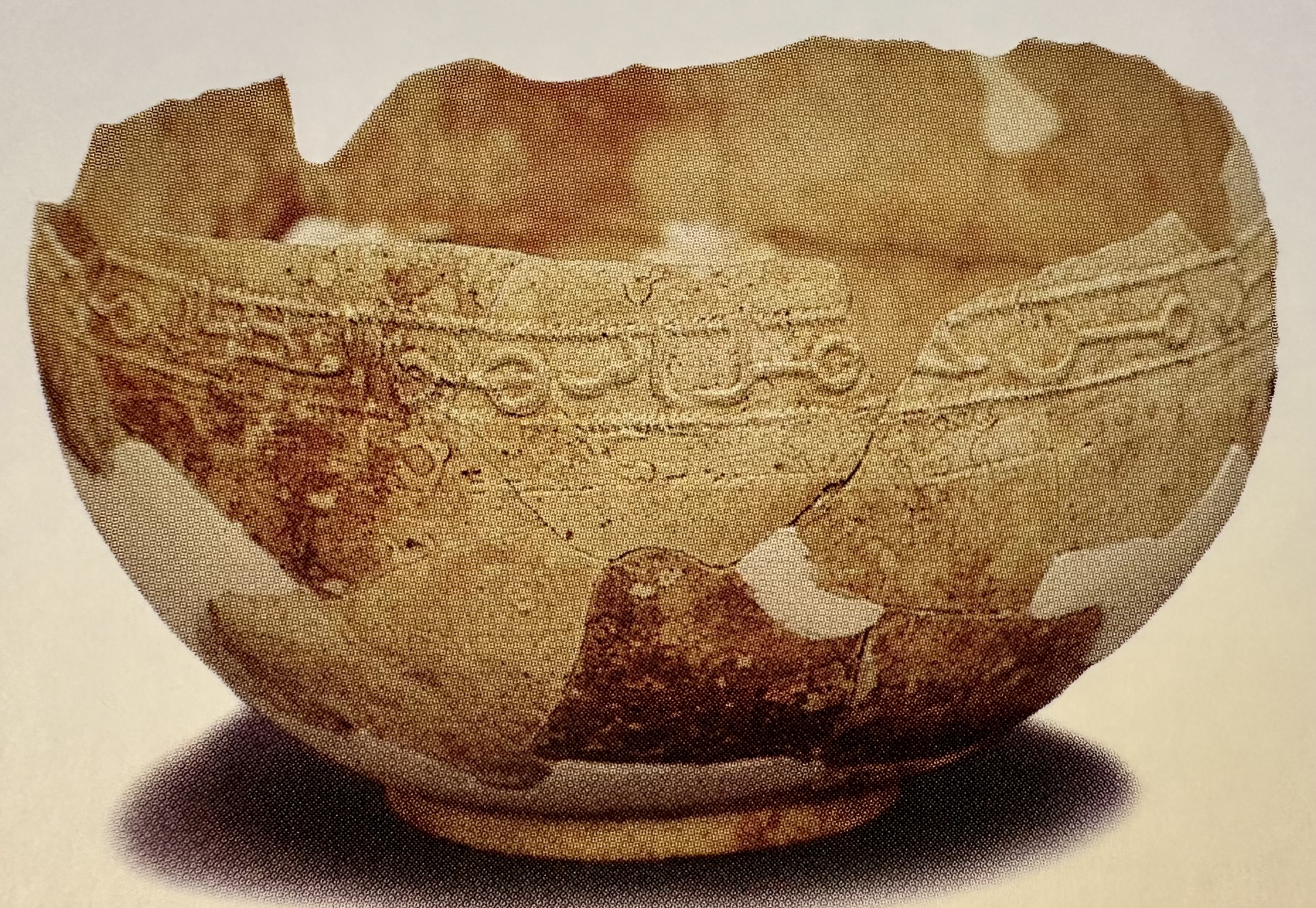
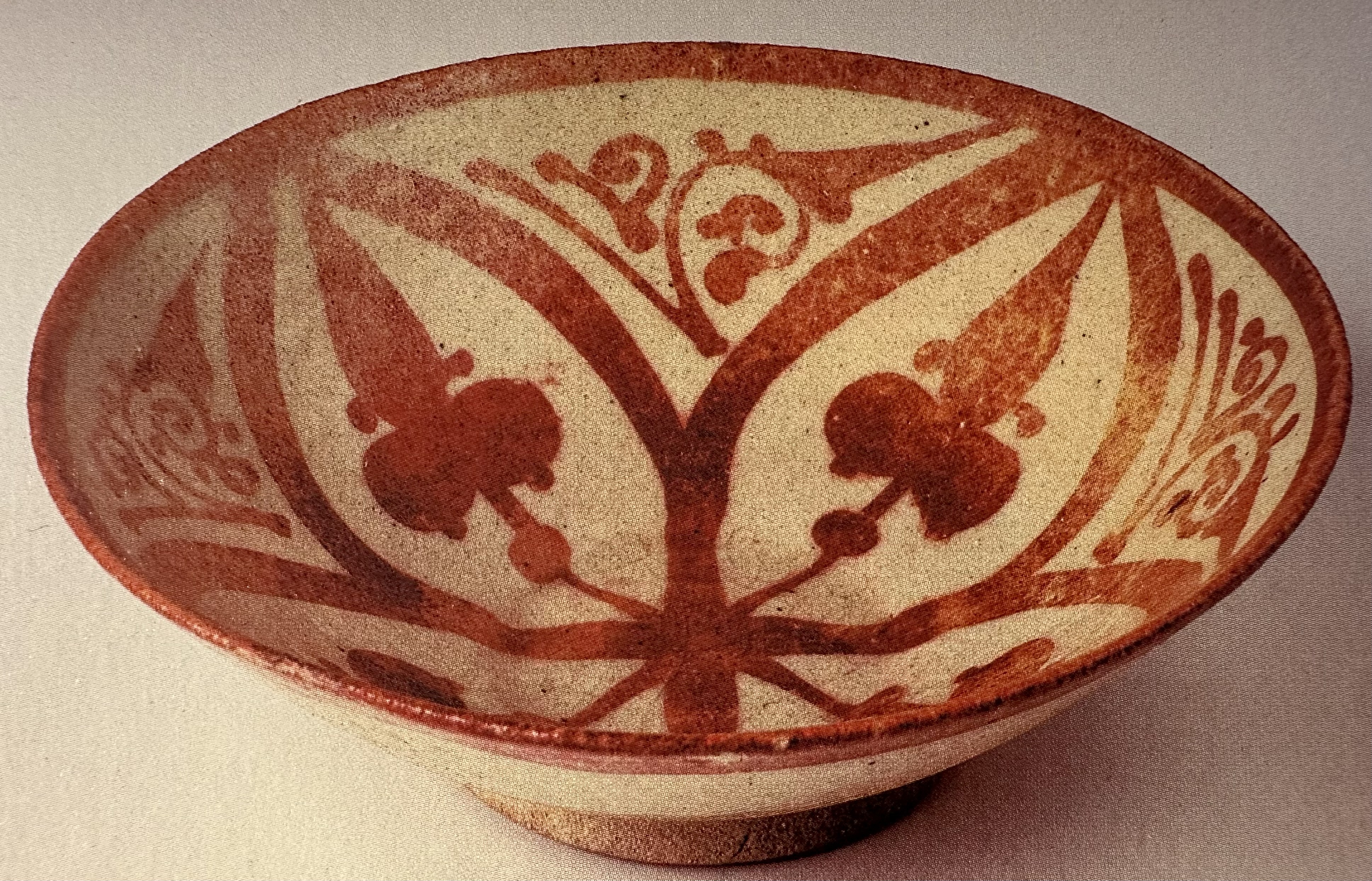
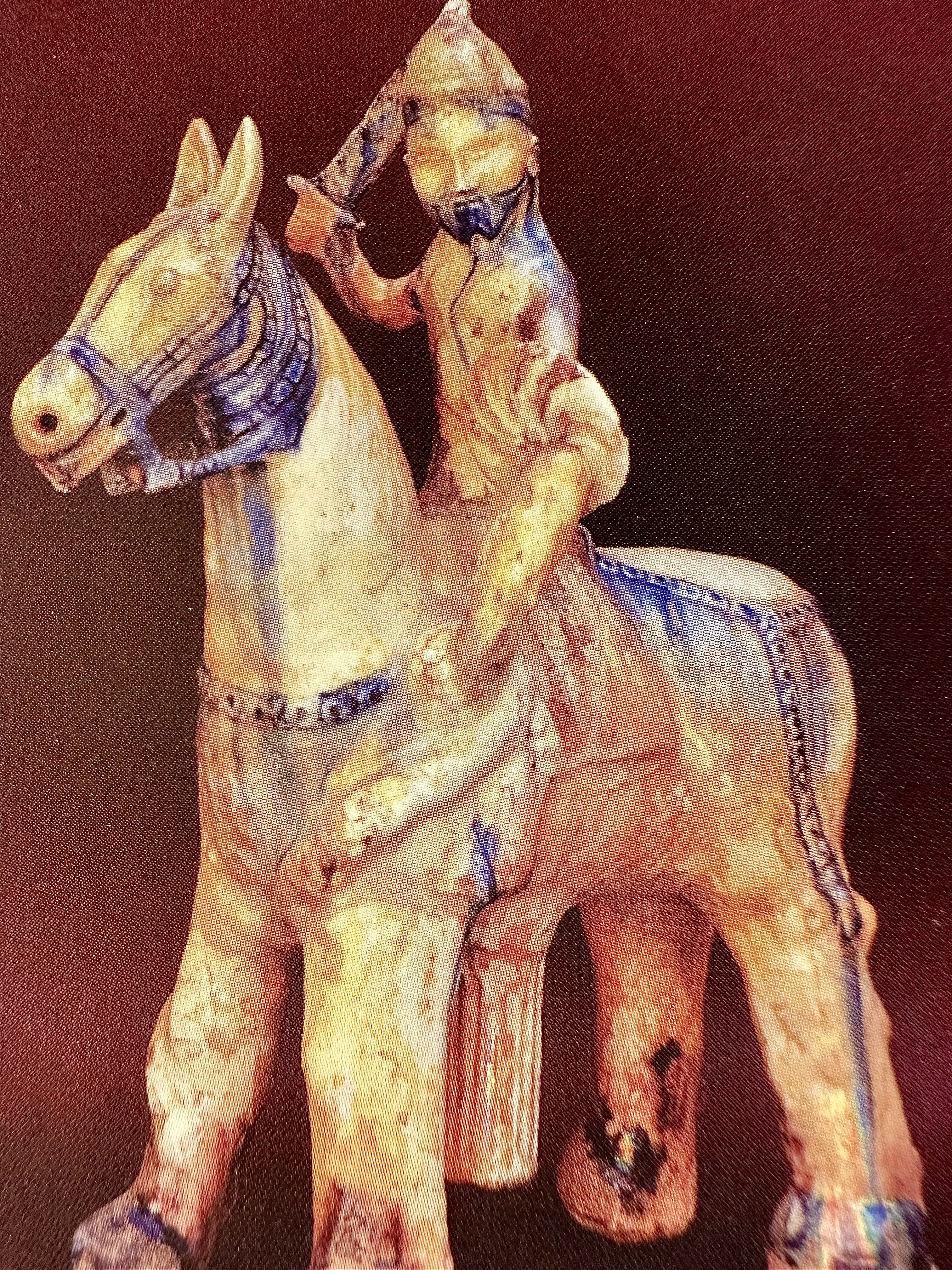
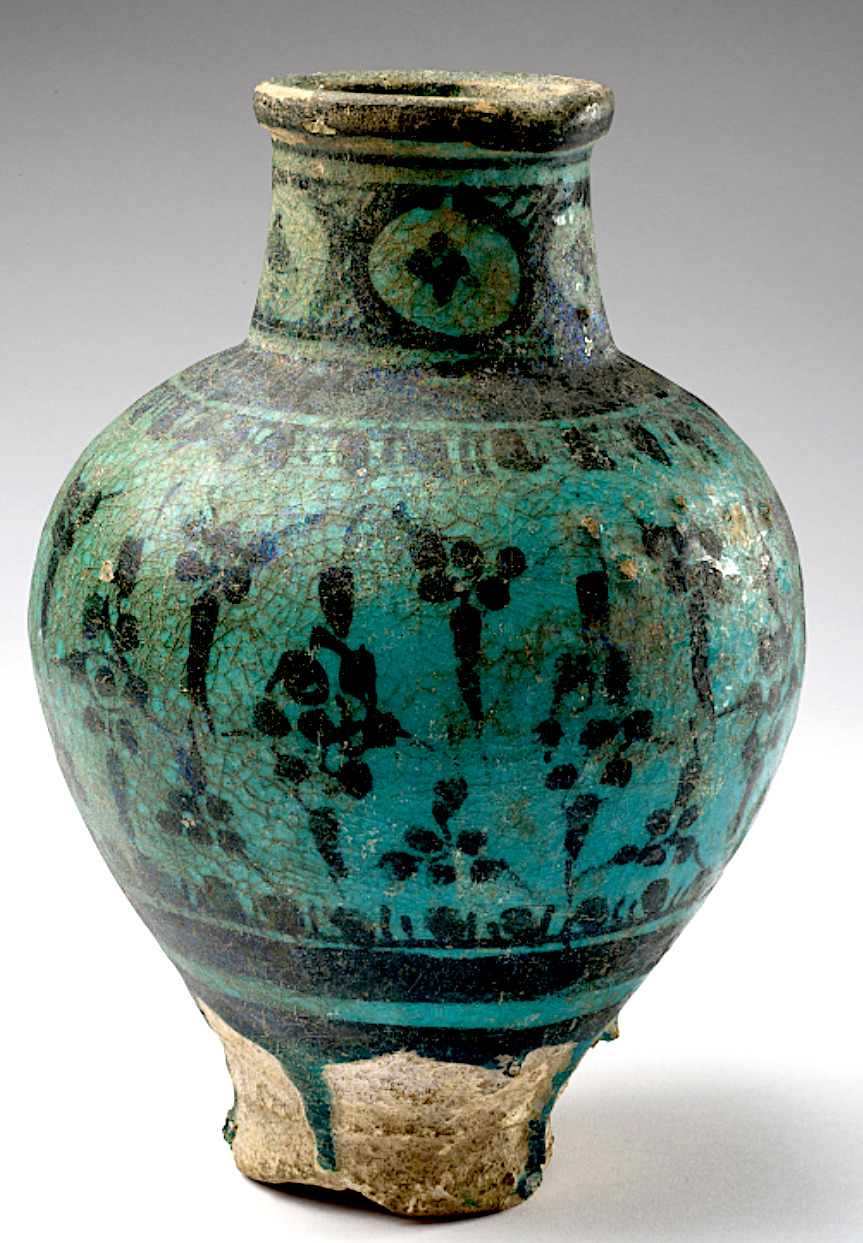
Potters in Raqqa began to produce luster and other wares in a style different to that of Tell Minis in approximately AD 1175 . Prince al-Malik al-Adil Abu Bakr lived in the city from 1201 to 1228, and constructed a palace, bath complexes, gardens and plantations. The Ottoman Imperial Museum conducted two excavation campaigns at Raqqa, in 1905-6 and 1908. Sauvaget documented a kiln in 1924 and produced great quantities of sherds and wasters of Raqqa types. Production at Raqqa is generally thought to have lasted until the sack of the city by the Mongols in 1259.
AYŞİN YOLTAR-YILDIRIM. "RAQQA: THE FORGOTTEN EXCAVATION OF AN ISLAMIC SITE IN SYRIA BY THE OTTOMAN IMPERIAL MUSEUM IN THE EARLY TWENTIETH CENTURY" Muqarnas 30 (2013), 73-93
Sauvaget, J.. "Tessons de Rakka" Ars Islamica 13 (1948), 31-45