
Israel-Palestinian Authority/Southern Coastal Plain
Early Islamic - Umayyad/Abbasid/Fatimid
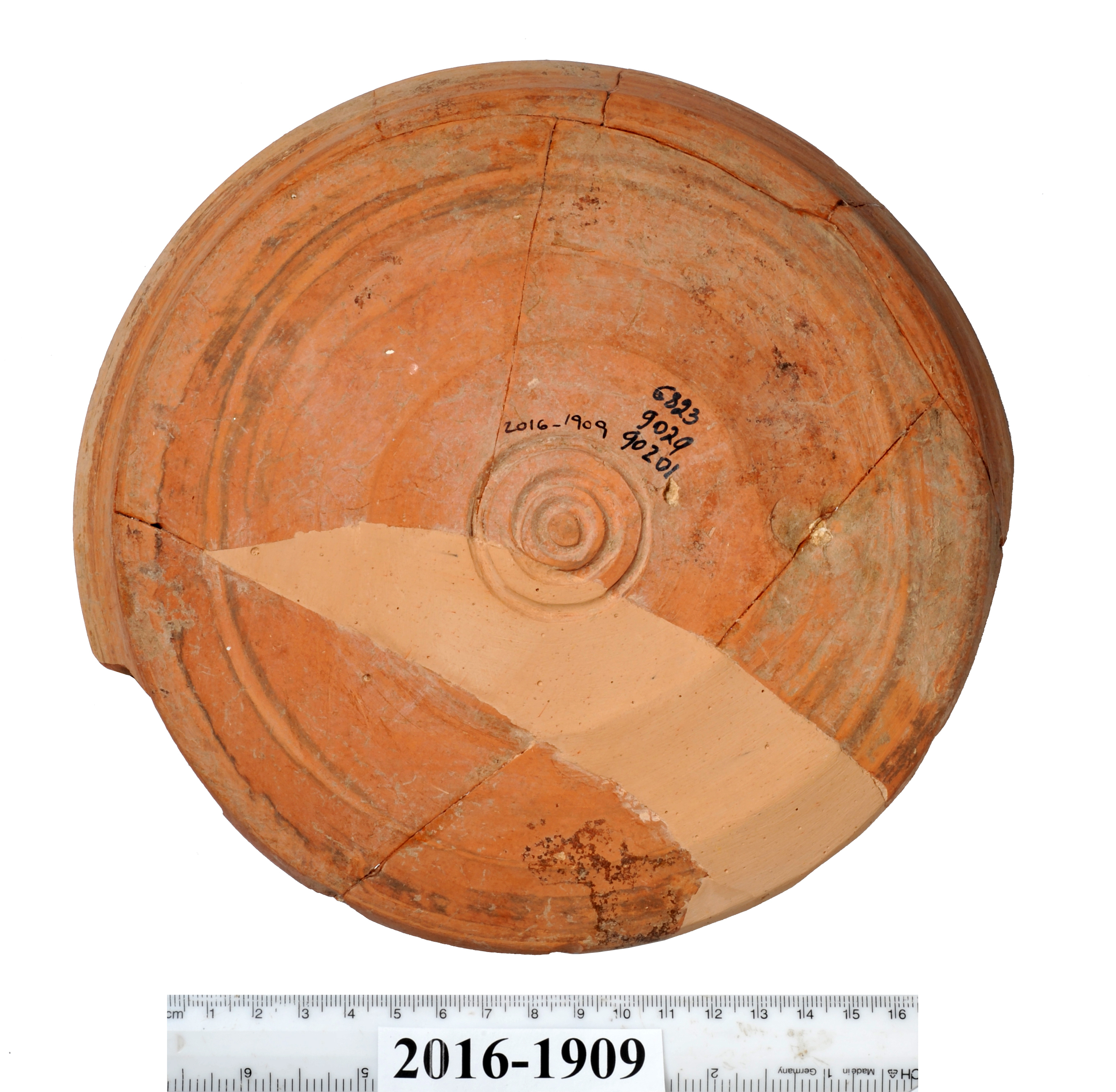
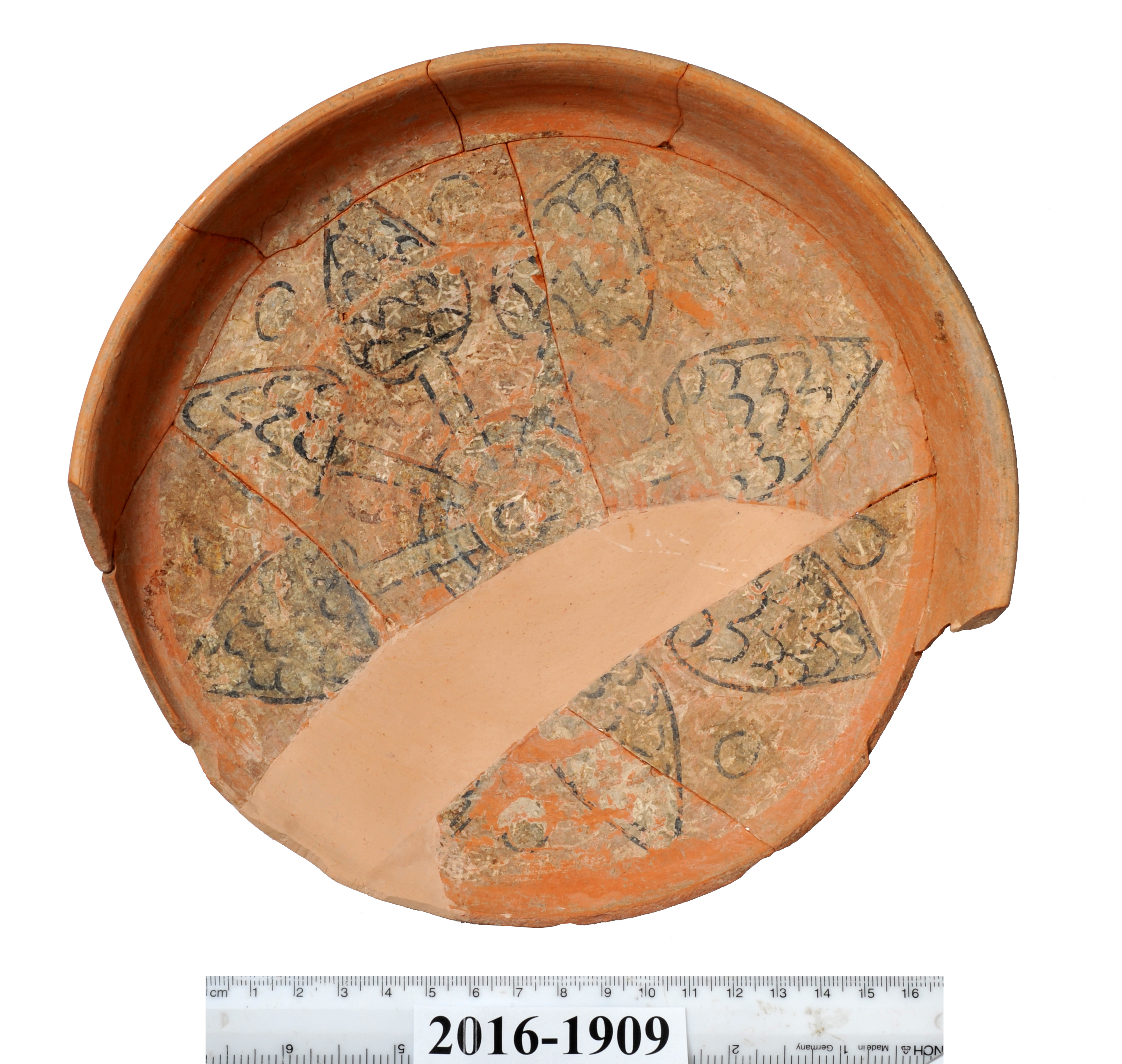
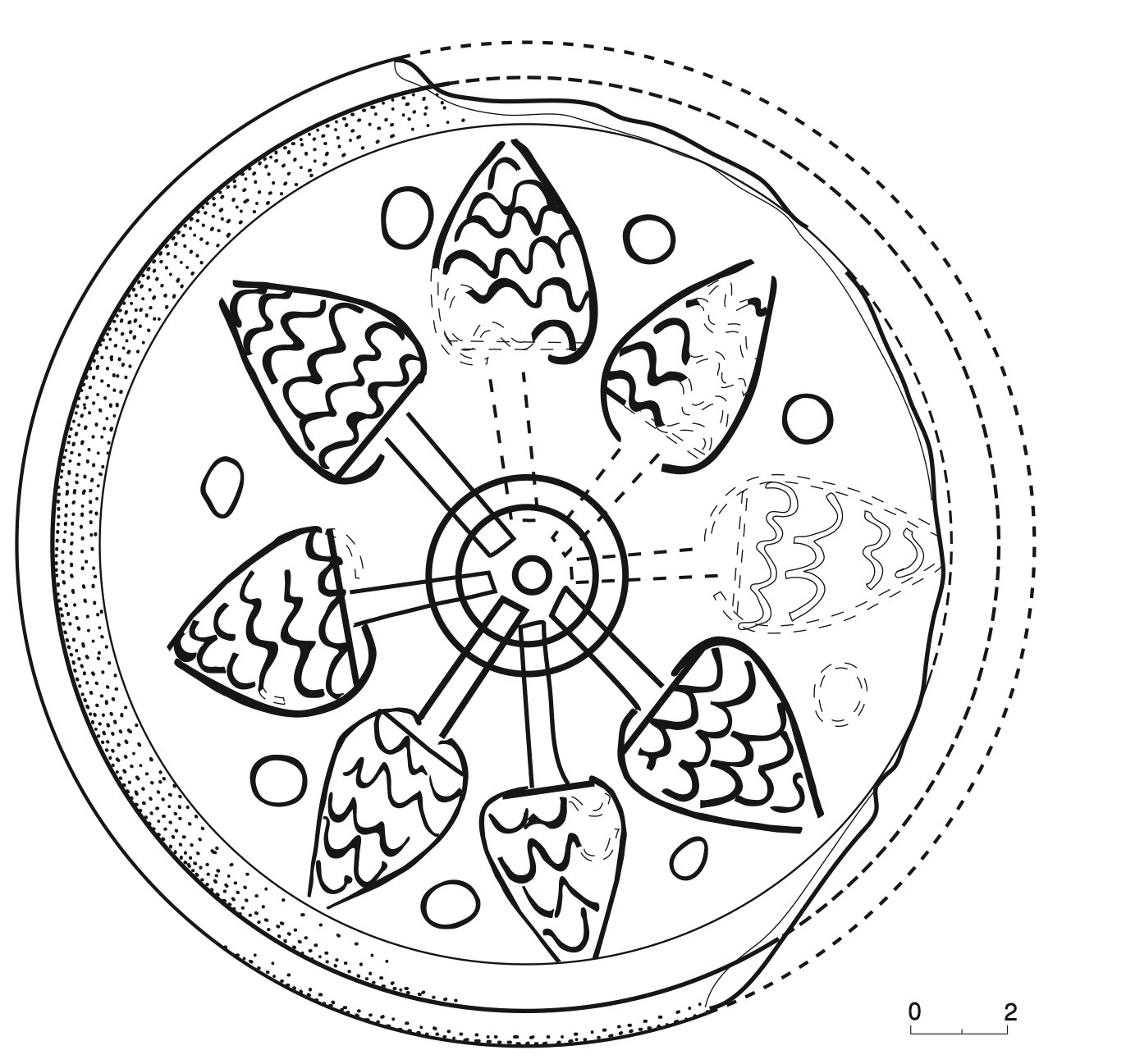
Dining/Drinking/Serving
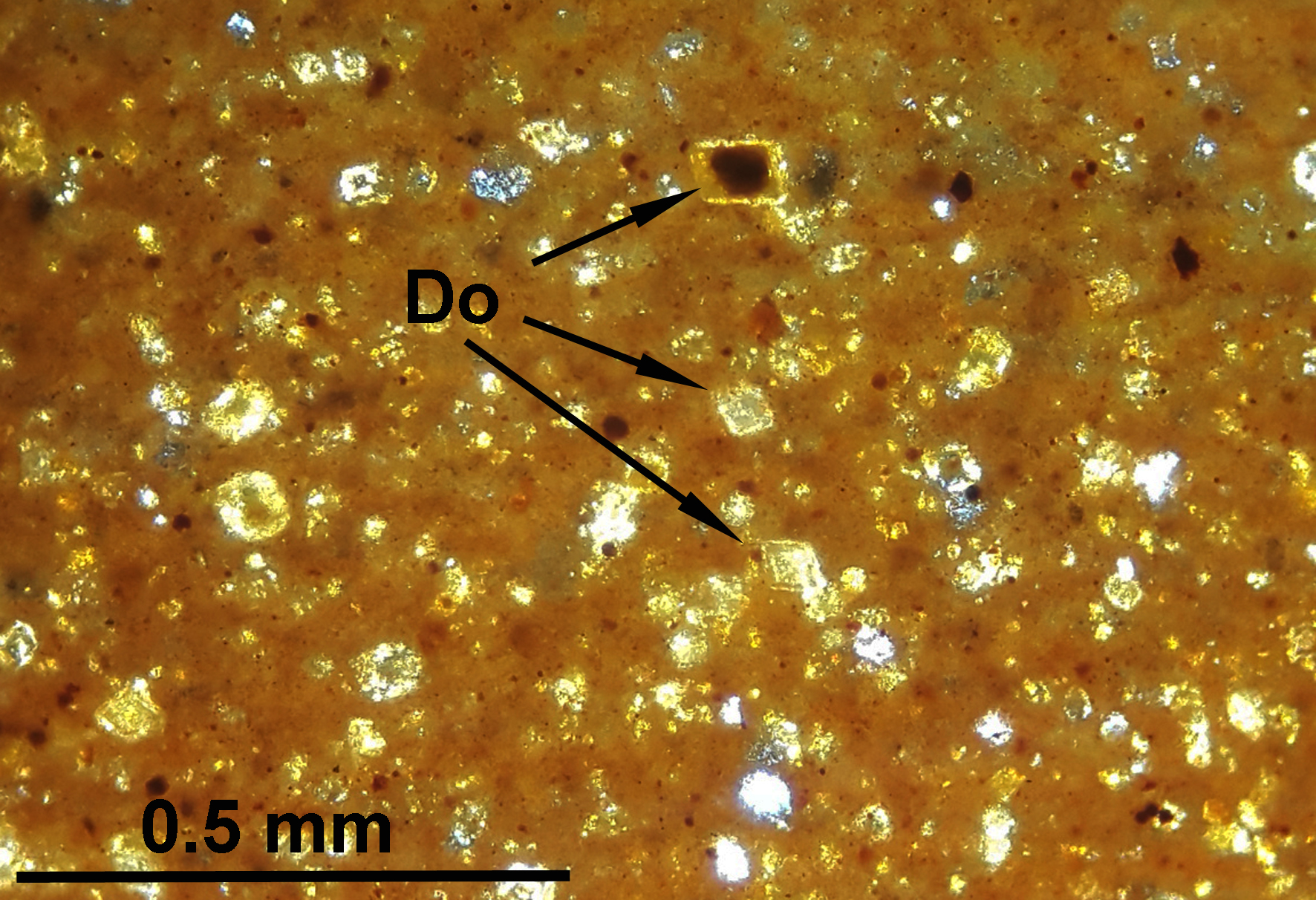
This matrix is a slightly ferruginous clay containing c. 25−30 percent of crystalline dolomitic silt, along with rare grains of quartz silt of apparently aeolian origin, and some voids as a result of organic particles burning out during firing. There are sporadic sand size (0.1−0.3 mm) speckles of iron oxides, quartz, and chalk.
The optical passivity of the clay minerals, indicating the beginning of the vitrification, and the fact that the dolomite crystals turned to calcite allow estimating the firing temperature c. 800−900ºC. The light gray core indicates a relatively short time of firing, when some of the dispersed organic matter stays in the sherd.
The lithology corresponds to the Moza marl of the Cenomanian Judea group of the Judean−Samarian anticline (Bentor 1966:48-52; Sneh, Bartov and Rosensaft 1998, Sheet 2). This marl, together with Moza clay, is the only raw material suitable for pottery production within the whole Cenomanian-Turonian sequence of the Judean−Samarian Mountains.
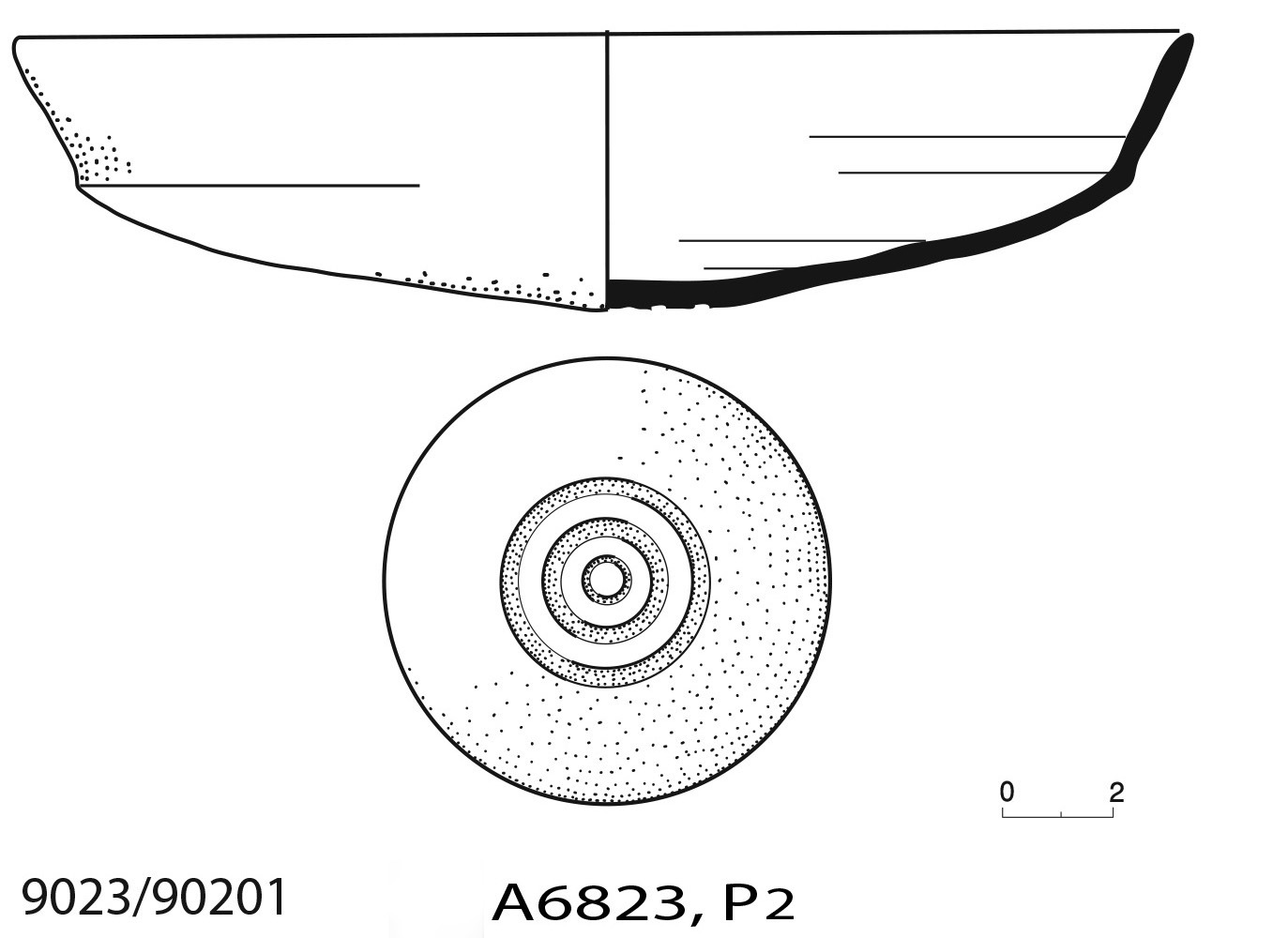
Central Judean Hills /
c. 25−30 percent of crystalline dolomitic silt
—
—
slightly ferruginous clay matrix
mid 6th - 10th centuries CE
Byzantine, Early Islamic - Umayyad/Abbasid/Fatimid
