
Israel/Carmel coastal plain
Late Hellenistic
Cooking/Food production
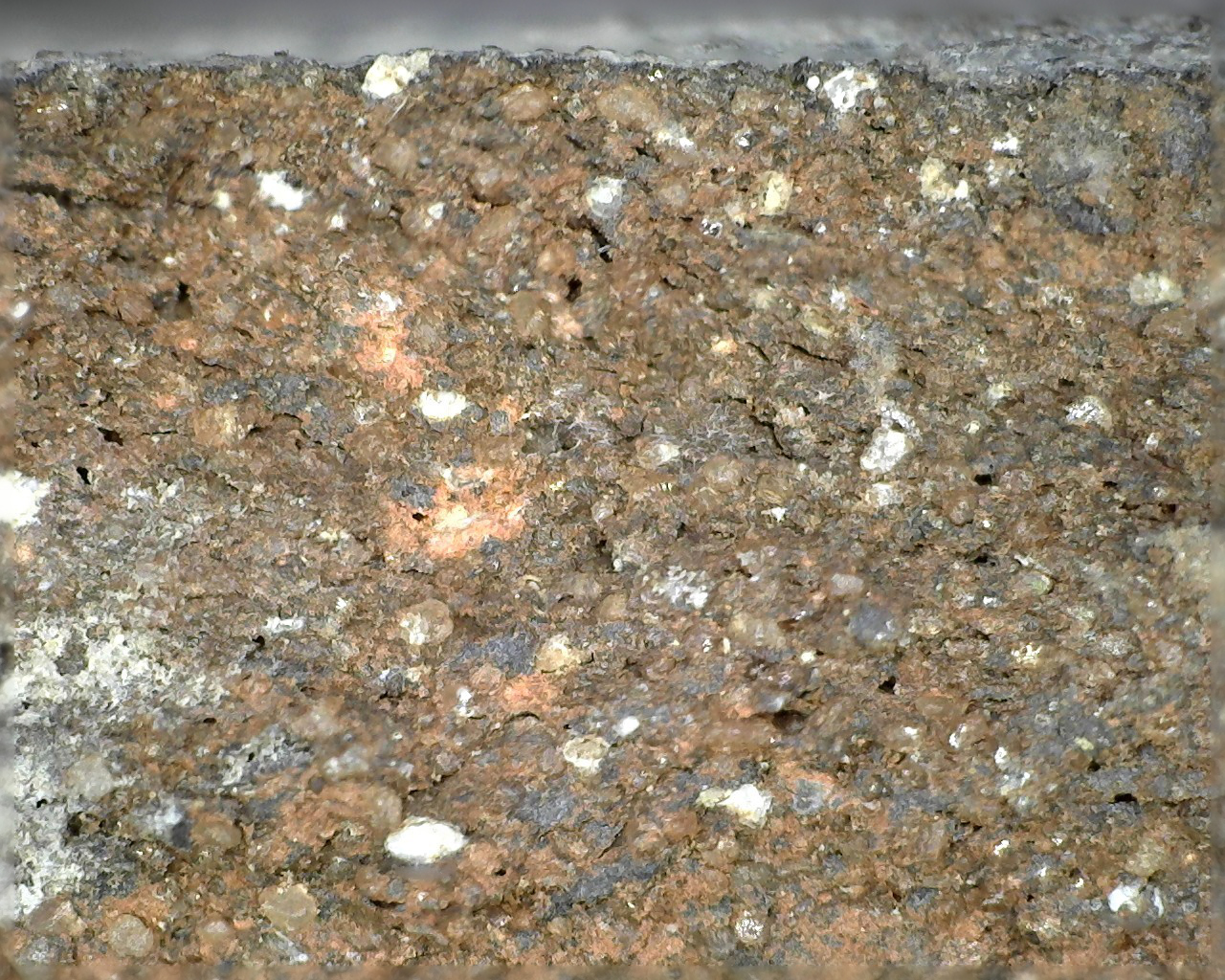
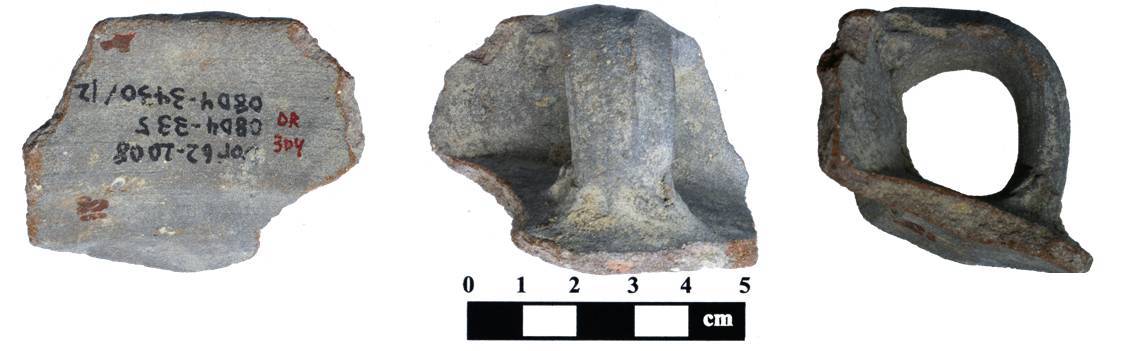
Macroscopic description: The fabric is very porous (~10%) sandy and crumbly. Dark brown. Inclusions consist of moderately sorted, subrounded brown-gray and yellow quartz inclusions (~25%); poorly sorted white subrounded to sub-angular white limestone (~15%). Traces of soot on the exterior of the vessel.
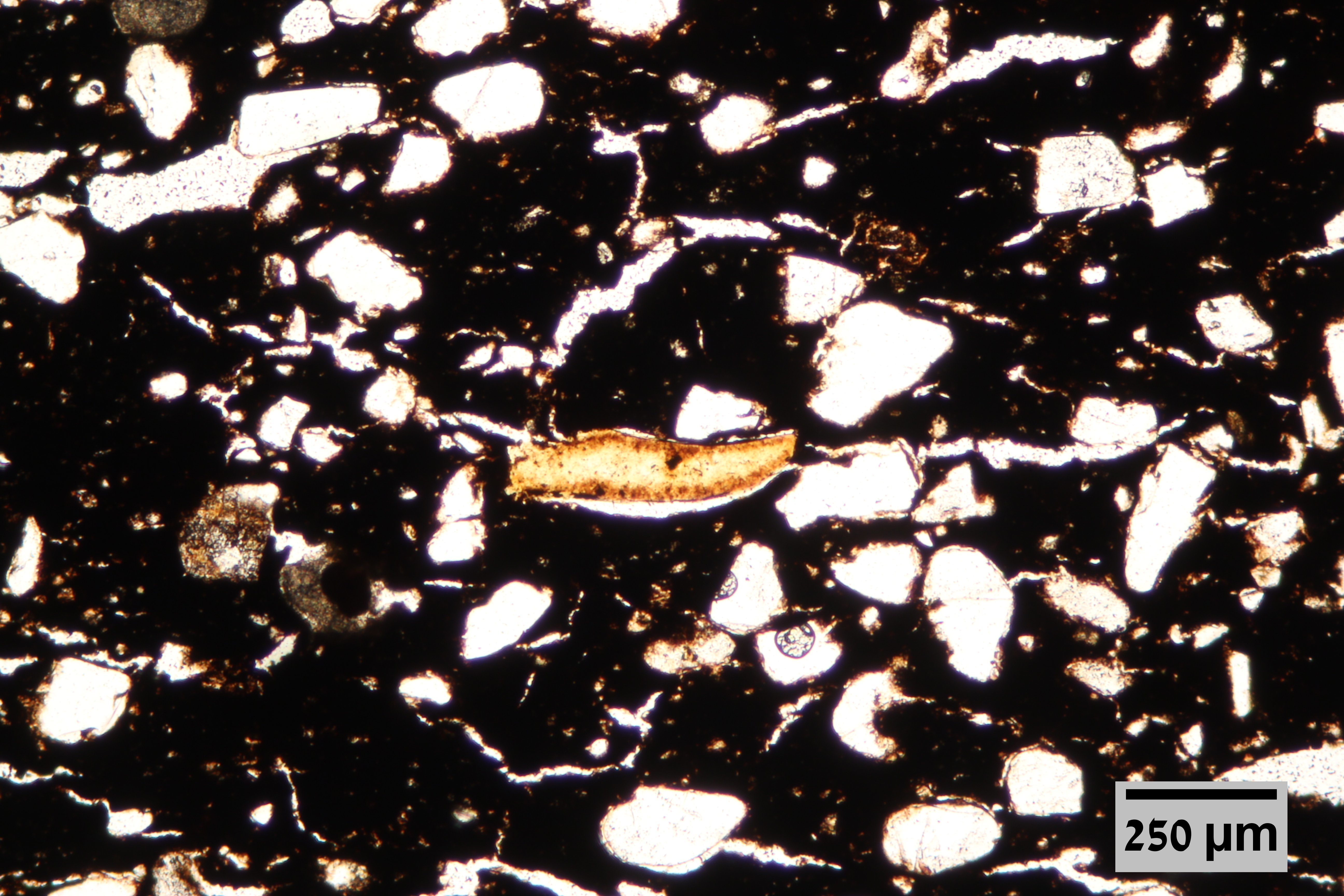
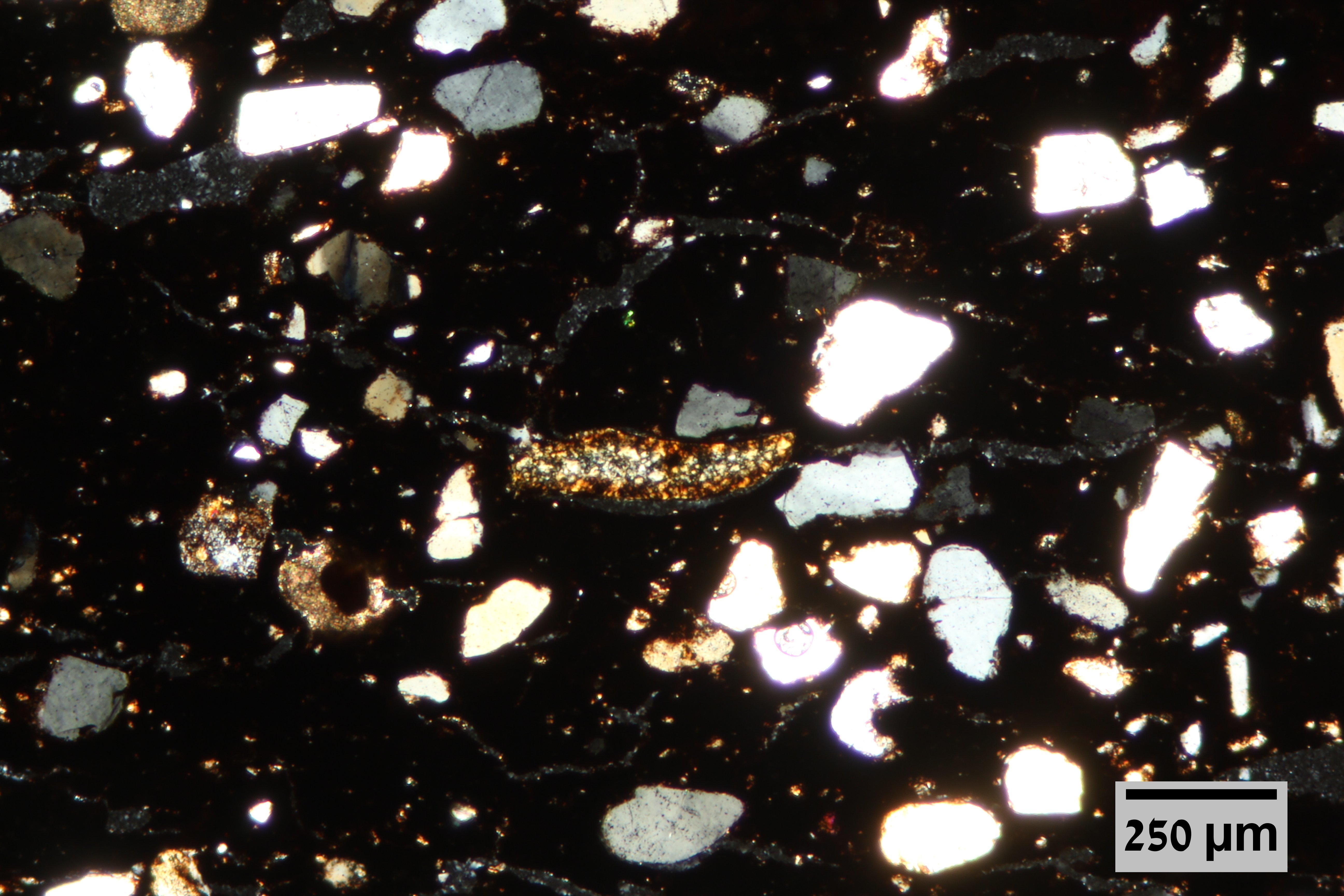
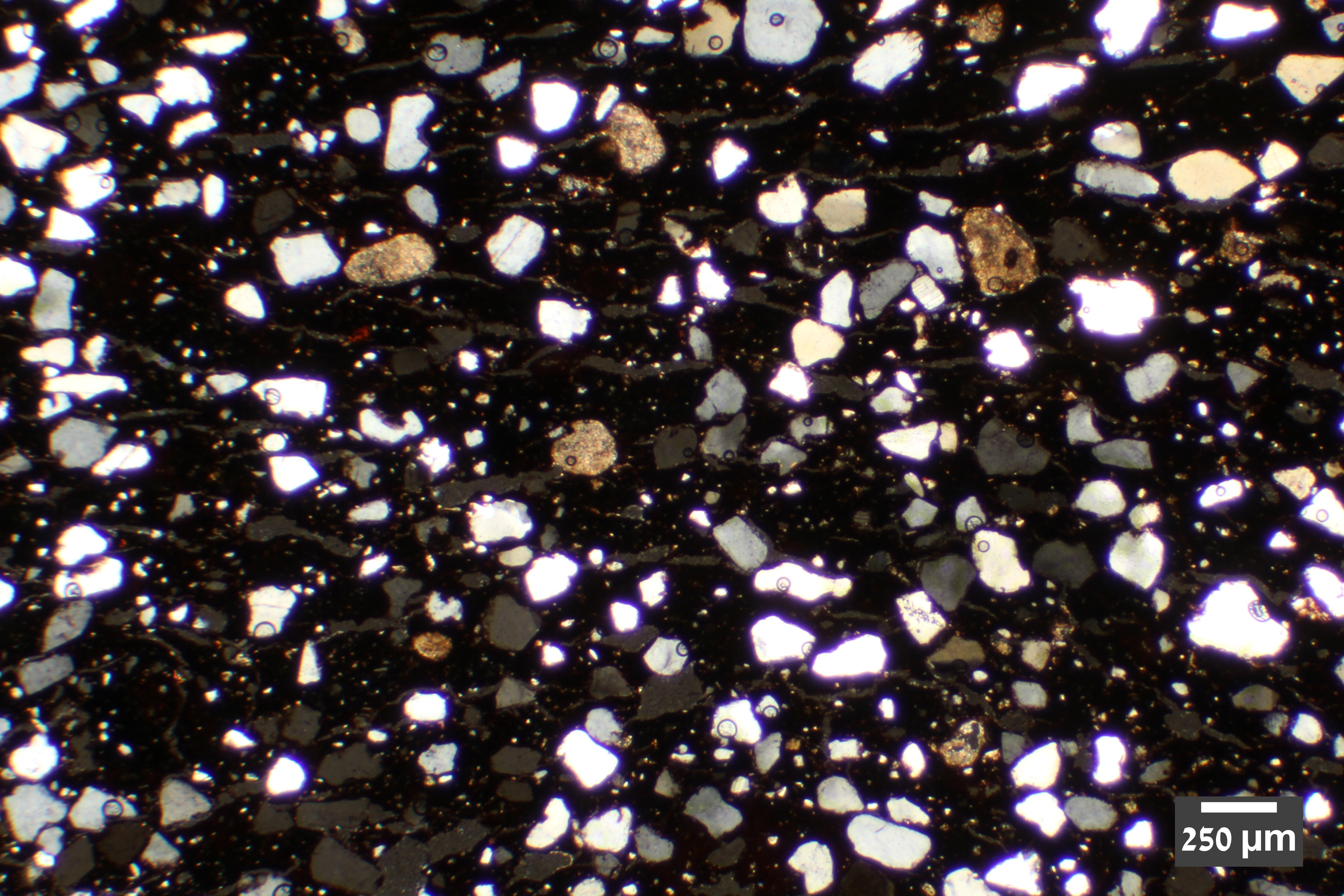
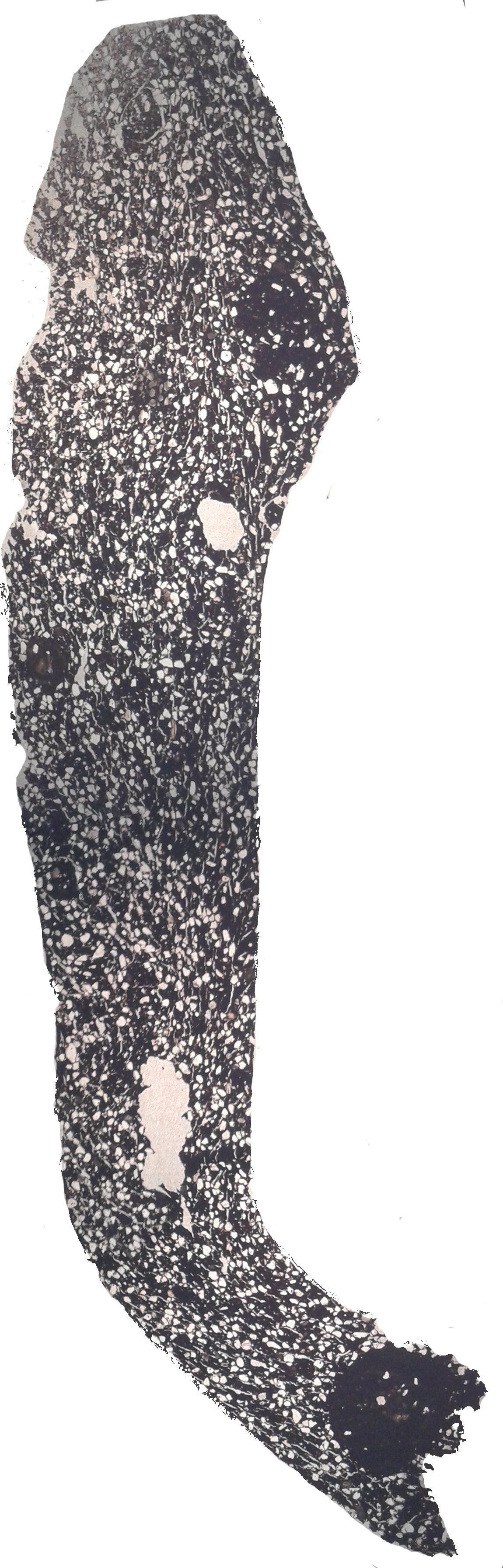
The clay is dark red to brown on XPL with low optical activity. Some clay nodules are iron-rich and with fewer inclusions. Voids are aligned parallel to the walls of the vessel as seen in the microfiche (Pl. 4.4). Some lime rock fragments are very coarse sand size.
The thin section is comprised of clay (40%) with about 25% of elongated and sub-rounded voids. Inclusions consist of sand and silt size moderately sorted subrounded and rounded quartz (30%); Occasional sand size moderately sorted subrounded and rounded lime rock fragment (3%); occasional subangular to subrounded silt size Feldspar, Olivine, Pyroxene, Hornblende, and Epidote. In center of the slide, there is a random angular sand size Polycrystalline quartz.

5th century BCE - 2nd century CE
Achaemenid Persian, Hellenistic, Roman
