
Israel/Galilee
Roman
Lighting
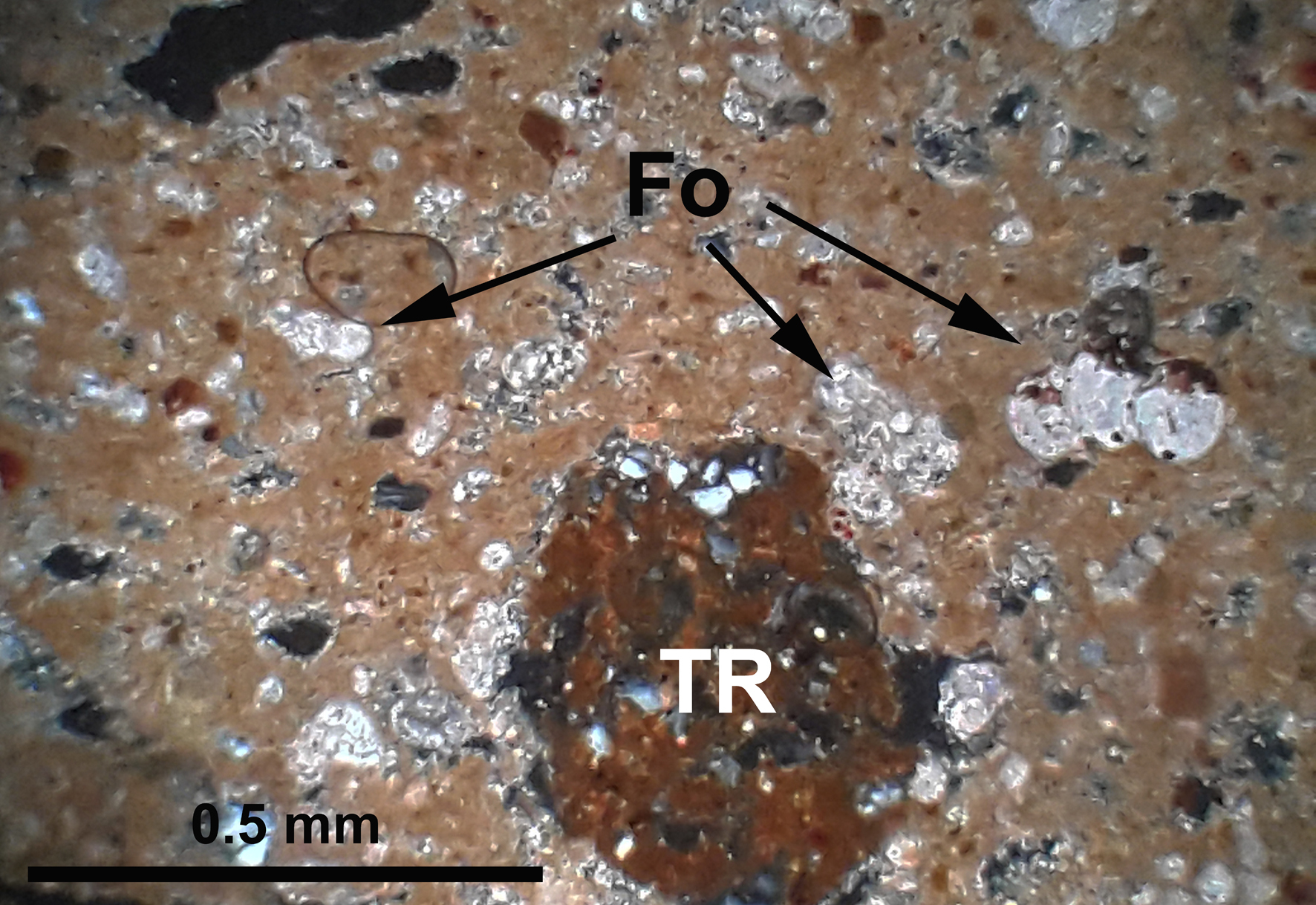
The matrix is calcareous and foraminiferous marl containing c. 1–2% of silty quartz of aeolian origin. The sand size inclusions are of two types: poorly sorted (0.05–0.4mm) nodules of ferruginous, and sometimes silty clay; the mineral inclusions are sporadic and comprise the following: gastropod shell fragments, 0.2–0.3 mm chalk/lime balls and grains of micritic limestone, irregular and sometimes large (0.5–1.5 mm) chunks of foraminiferous chalk. Some samples sporadically contain large (0.2–0.3mm) foraminifers, fragments of foraminiferous shales, and ferruginous ooliths. Firing temperature usually lower than 700º C, rarely 700–750º C.
The identifiable foraminifers are upper MaastrichtianGlobotruncanella petaloidea and others of the corresponding age. The observed lithology may be attributed to the Maastrichtian chalky marl of the Ghareb formation and overlying it Paleocene marls and shales of the Taqiye formation When fired in an oxidized atmosphere, the pottery made of these shales and marls receive light shades of brown. The ferruginous and silty nodules within the sherds offer evidence that dried and powdered terra rossa soil was added to the calcareous Ghareb and/or Taqiye marl to improve the quality of the clay.
Israel:Galilee /
lumps of Terra Rossa soil
Taqiye marl
—
foraminiferous marl
The petrographic research was provided on behalf of the excavations at Shikhin, directed by James R. Strange, Ph.D. Charles Jackson Granade and Elizabeth Donald Granade Associate Professor of New Testament Department of Religion, Samford University, and Dr. Mordechai Aviam Kinneret Institute for Galilean Archaeology Kinneret Academic College,Israel.
