
Israel/Galilee
Achaemenid Persian
Lighting
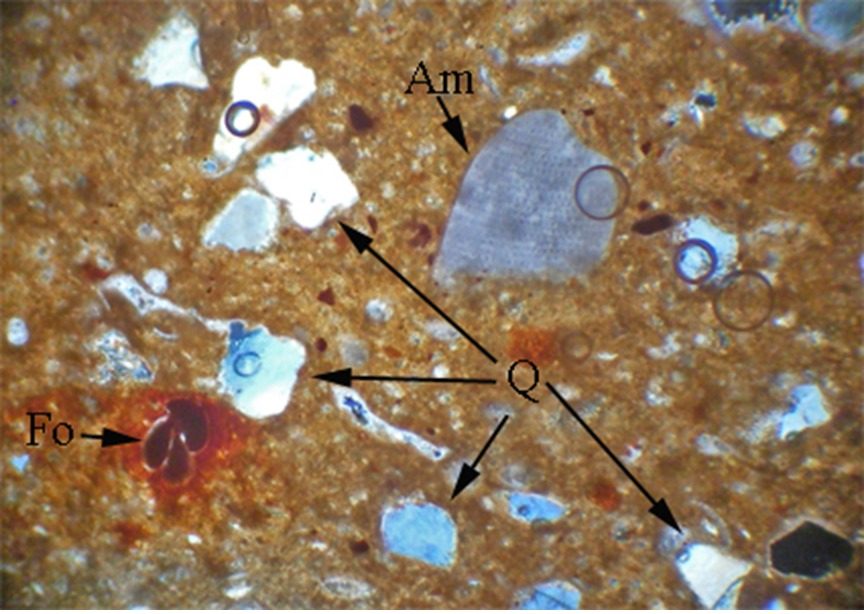
This ware is characterized by a ferruginous fine calcareous (rather than foraminiferous) matrix, nicely cleaned and properly prepared. Some dark reddish-brown bodies appear, ranging in size from silt to sand and coarse sand (1.5 mm). Almost all of these bodies have a nucleus that is ferrizated foraminifera shell. Part of the other foraminifera shells within the samples are filled with ferric material and share a reddish brown aureole. The bodies may have originated as a result of partial ferrization of some interlayer within clay deposit. Fluxing activity of iron oxides was well known by potters of the past (Gopher, 1992:13-14). Clay, rich in it, reached the cintering at lower temperature. The firing temperature is estimated from just under 700˚ C to just over 750˚ C.
Sand size material is represented by sub-rounded to sub-angular grains of quartz, feldspar, and and limestone or shell fragments with an average size of 0.2 mm. The amount of these particles varies, from less than 1 percent of the volume of the sherd to up to 12 percent. Voids or cracks vary from few to many.
In general, the paste particles (clay, sand size grains and cracks, if present), are oriented concordant to the vessel surfaces. This indicates that the raw material was well kneaded before throwing on the wheel.

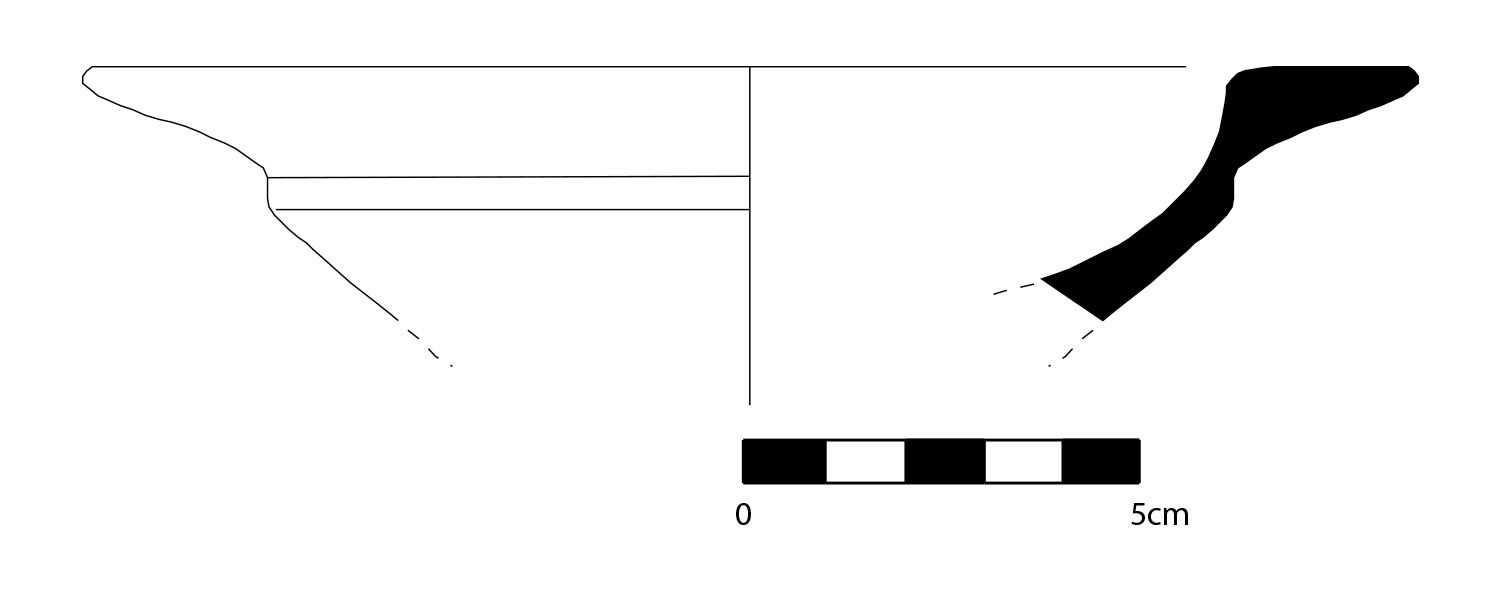
6th century BCE - 1st century CE
Iron Age III/Achaemenid Persian, Hellenistic, Early Roman
