
Taqiye marl, coastal quartz sand and coarse basalt sand for Ceramic Building Materials
Israel/Galilee
calcareous marl, quartz sand, basalt grains
Taqiye marl, coastal quartz sand, Miocene basalt
Their matrix is calcareous foraminiferous marl with some specks of iron oxide and small to noticeable quantities of basalt-derived silt-sized minerals, like olivine and plagioclase. The identifiable foraminifera dates to the Paleocene Epoch. The sand-size non-plastic inclusions compose <5–20% of the volume of each sherd (Table 1) and comprise dominantly quartz and basalt (Fig. 3). The quartz grains are rounded to sub-angular very fine to medium sand size (i.e. 0.05–0.4 mm) and are evenly distributed within the matrix. The basalt is alkali-olivine and eroded, with olivine altered to iddingsite. The basalt grains range from fine-sand to medium-pebble size (i.e. 0.5–8.0 mm), most of them are rounded to sub-rounded and they are unevenly distributed within the matrix. The basalt inclusions of these sizes can be seen by the naked eye and can be identified on the fresh breaks and the clean surfaces of the vessels with the aid of the regular microscope. Apart from quartz and basalt, there are rare fine sand-size phenocrysts of olivine, plagioclase and pyroxene, and sporadic chert. In some of the examined thin sections there are bodies of biogenic chalk, fossil shells fragments and lumps of ferruginous soil. The basalt and the quartz, the dominant non-plastic inclusions in the fabric of the examined CBM, were deliberately added to the clay paste.
The petrofabric is associated with the Ceramic Building Materiasl (CBM) manufactured for the construction of Legio VI Ferrata camp near Tel Megiddo.
The Taqiye marl, identified as the most plausible plastic raw material, is exposed in a long narrow, north–south strip (c. 60×750 m) alongside the southeastern slope of Tel Megiddo and the hill, where the kibbutz of the same name is located, about 500 m north from the camp. The Miocene basalt is exposed 500-700 m west from the camp, and the basalt,is exposed c. 300 m southwest of the camp. The quartz sand is uncommon to the geology of the environs of the Legio camp at Megiddo, and its most probable source should be from along the coast of the Mediterranean Sea. From the site, the Mediterranean coast is about 30 km away both in the direction of Haifa Bay, north–northeast, and in the direction of Caesarea, west–southwest.
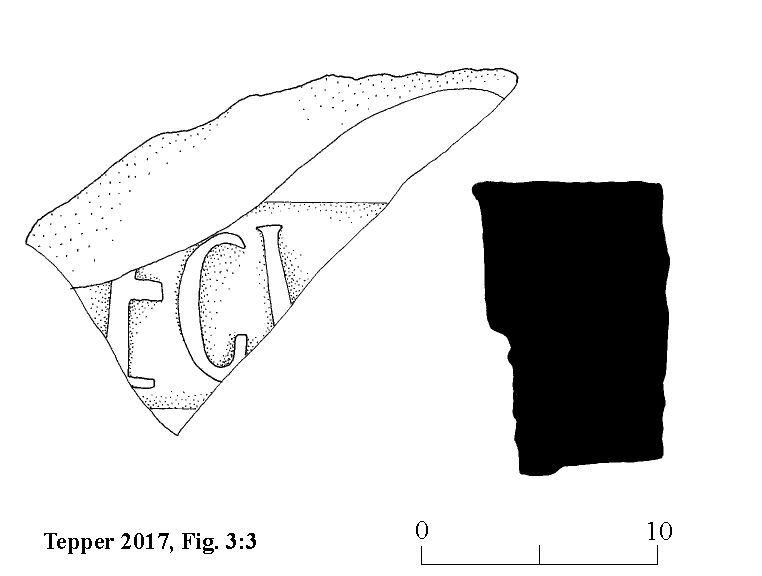
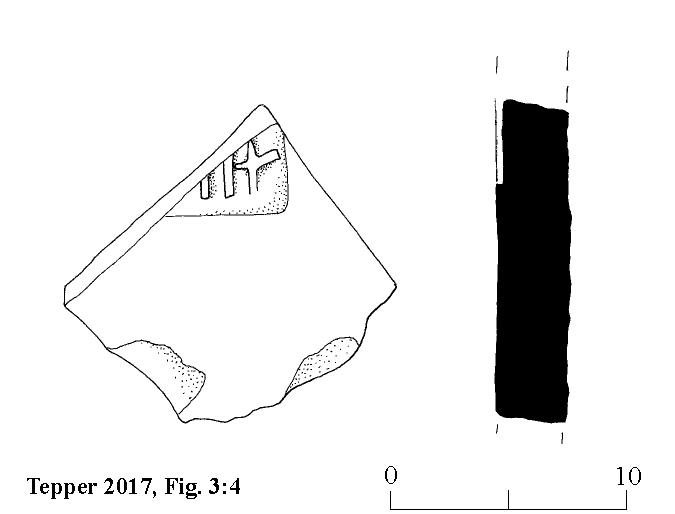
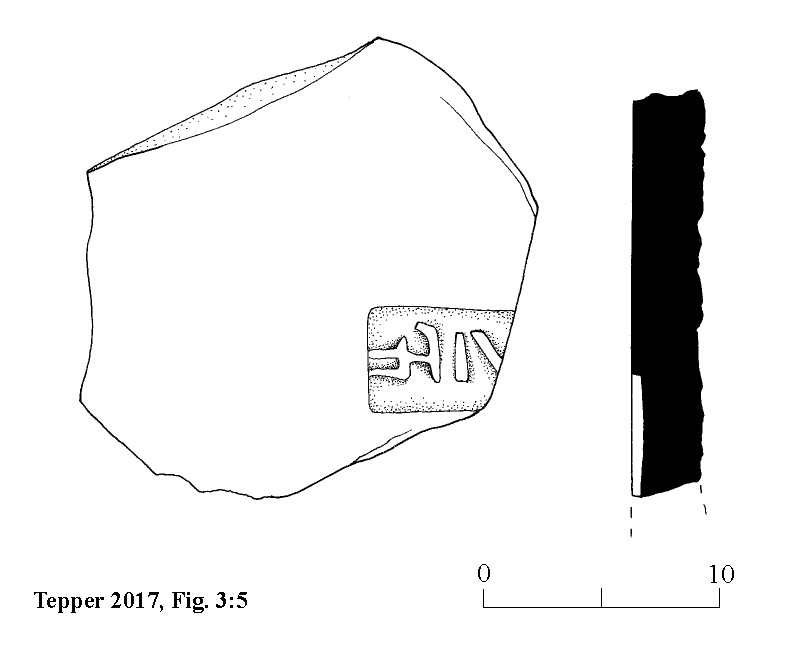
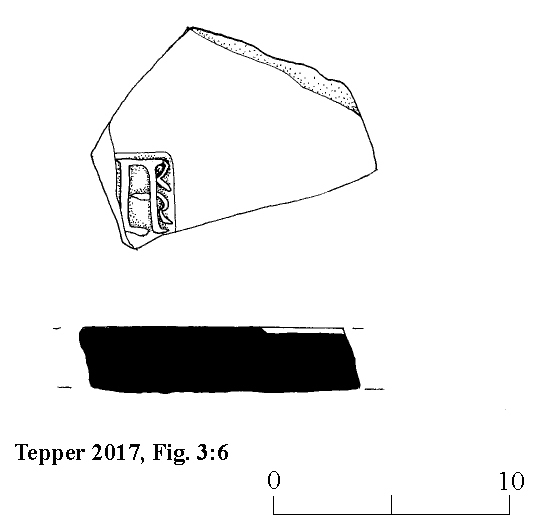
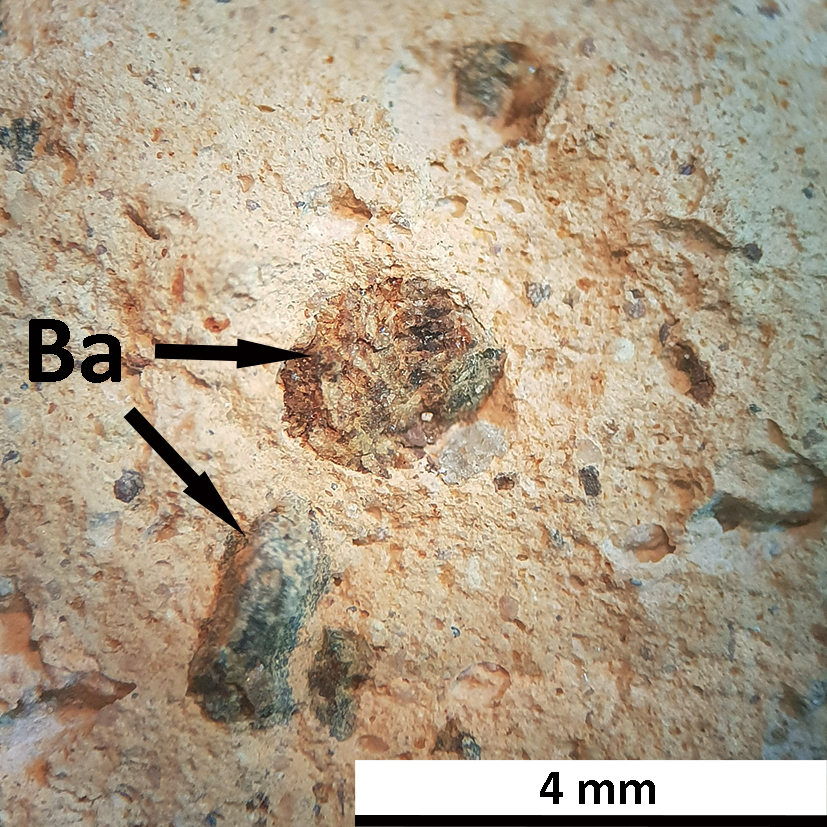
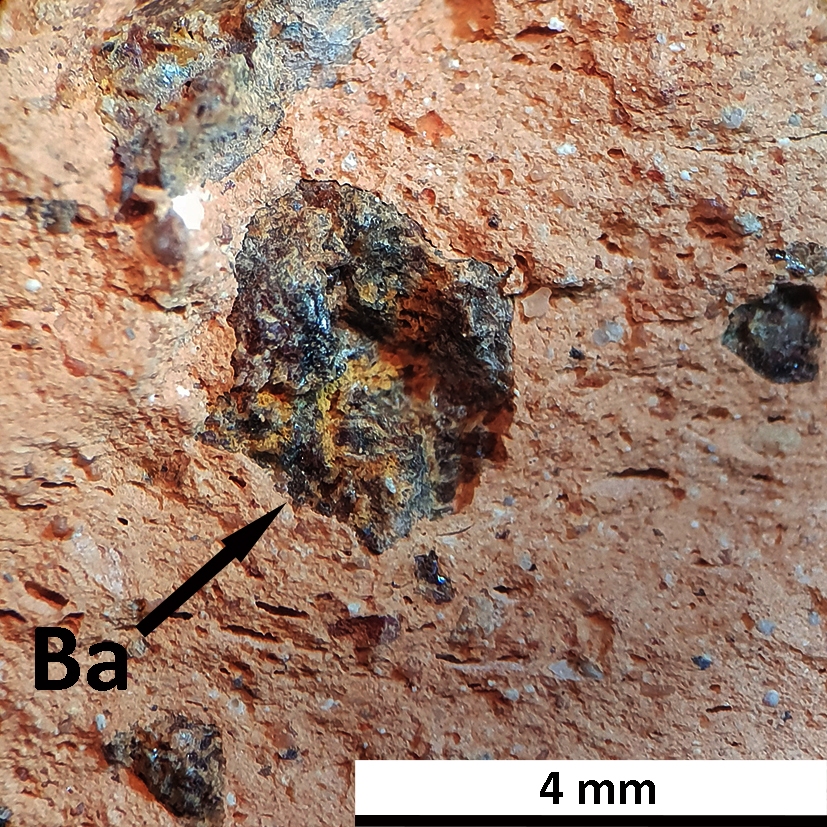
Their matrix is calcareous foraminiferous marl with some specks of iron oxide and small to noticeable quantities of basalt-derived silt-sized minerals, like olivine and plagioclase. The identifiable foraminifera dates to the Paleocene Epoch. The sand-size non-plastic inclusions compose <5–20% of the volume of each sherd (Table 1) and comprise dominantly quartz and basalt (Fig. 3). The quartz grains are rounded to sub-angular very fine to medium sand size (i.e. 0.05–0.4 mm) and are evenly distributed within the matrix. The basalt is alkali-olivine and eroded, with olivine altered to iddingsite. The basalt grains range from fine-sand to medium-pebble size (i.e. 0.5–8.0 mm), most of them are rounded to sub-rounded and they are unevenly distributed within the matrix. The basalt inclusions of these sizes can be seen by the naked eye and can be identified on the fresh breaks and the clean surfaces of the vessels with the aid of the regular microscope. Apart from quartz and basalt, there are rare fine sand-size phenocrysts of olivine, plagioclase and pyroxene, and sporadic chert. In some of the examined thin sections there are bodies of biogenic chalk, fossil shells fragments and lumps of ferruginous soil. The basalt and the quartz, the dominant non-plastic inclusions in the fabric of the examined CBM, were deliberately added to the clay paste.
The petrofabric is associated with the Ceramic Building Materiasl (CBM) manufactured for the construction of Legio VI Ferrata camp near Tel Megiddo.
The Taqiye marl, identified as the most plausible plastic raw material, is exposed in a long narrow, north–south strip (c. 60×750 m) alongside the southeastern slope of Tel Megiddo and the hill, where the kibbutz of the same name is located, about 500 m north from the camp. The Miocene basalt is exposed 500-700 m west from the camp, and the basalt,is exposed c. 300 m southwest of the camp. The quartz sand is uncommon to the geology of the environs of the Legio camp at Megiddo, and its most probable source should be from along the coast of the Mediterranean Sea. From the site, the Mediterranean coast is about 30 km away both in the direction of Haifa Bay, north–northeast, and in the direction of Caesarea, west–southwest.
