
Syria/Coast and Nusayriah Mountains/high bioclastic Content
Syria/Coast/An-Nusayriah Mountains
Alluvial and fluvial sediments
Uplifted marine Late Pleistocene deposits
This petro fabric represents part of the ceramic production of Northern Syria.
Among these is the local production of Tell Tewini and the region of found in different archaeological periods, shapes, and applied production techniques (Degryse and Vansteenhuyse 2019). Tell Tweini is located in the Jebleh plain at, roughly 1.5 km from the Mediterranean coastline and about 30 km south of Latakia. The Tell is situated outside the limits of modern Jebleh located along the coastline. Uplifted marine Late Pleistocene deposits characterize the coastline. The Jebleh plain is bounded in the east by small hills built of Paleogene chalky marls, limestone, and sandy marls. A small river, the Rumailiah, flows in an east-west direction north of the Tell. The river bed lies about 3 m below its foothills. A few hundred meters before the river debouches into the sea, and the plain is remarkably narrow. The mouth itself is hardly 4 m wide and situated between Pleistocene deposits.
Soils in the Tell's surrounding are composed of alluvial and fluvial sediments deposited in an ancient shallow wetland. These consist of homogeneous silty clay with a predominant grey color rich in tufa-nodules and sand-sized particles of the surrounding rock formations. These include limestone fragments and small flints. Shells and shell fragments are also scattered all over. Iron oxide precipitants in the upper part of the sediment succession document that this was a better-drained environment at times. Over the Holocene, it seems that this was an environment with fluctuating groundwater, with a period of forming wetlands, occasionally subject to inundation bringing along slightly coarser material (Baeteman and Bogemans 2019).
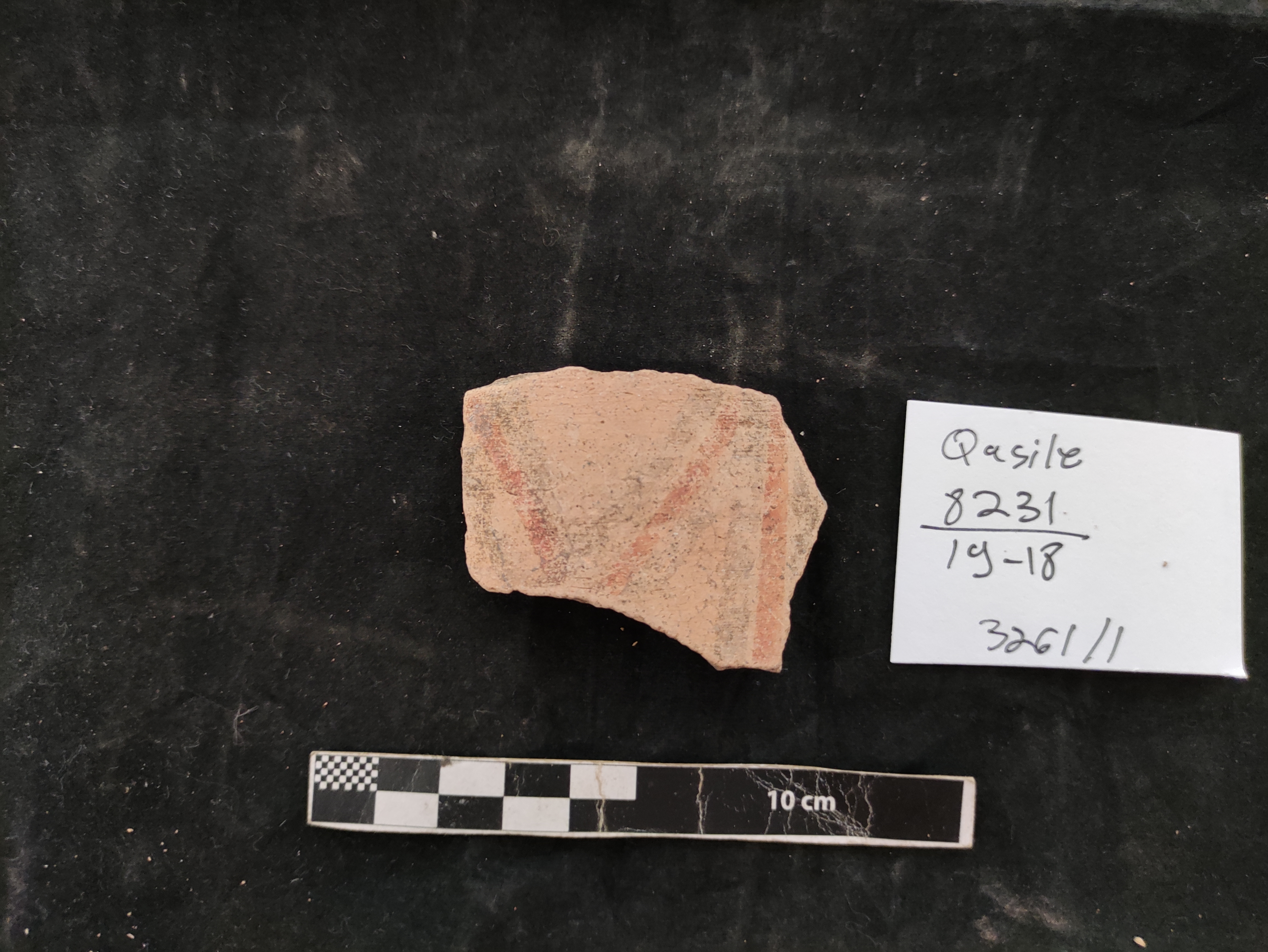
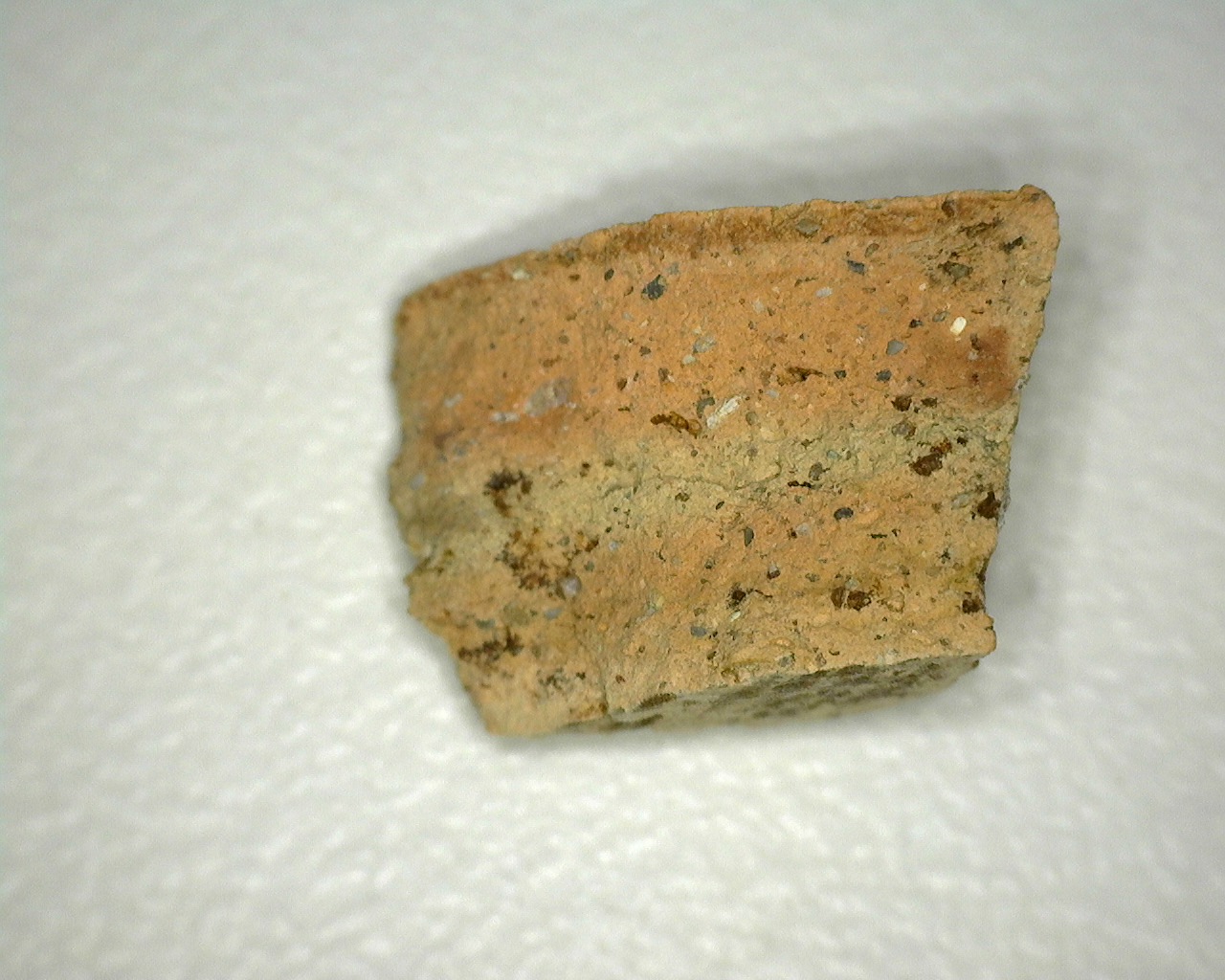
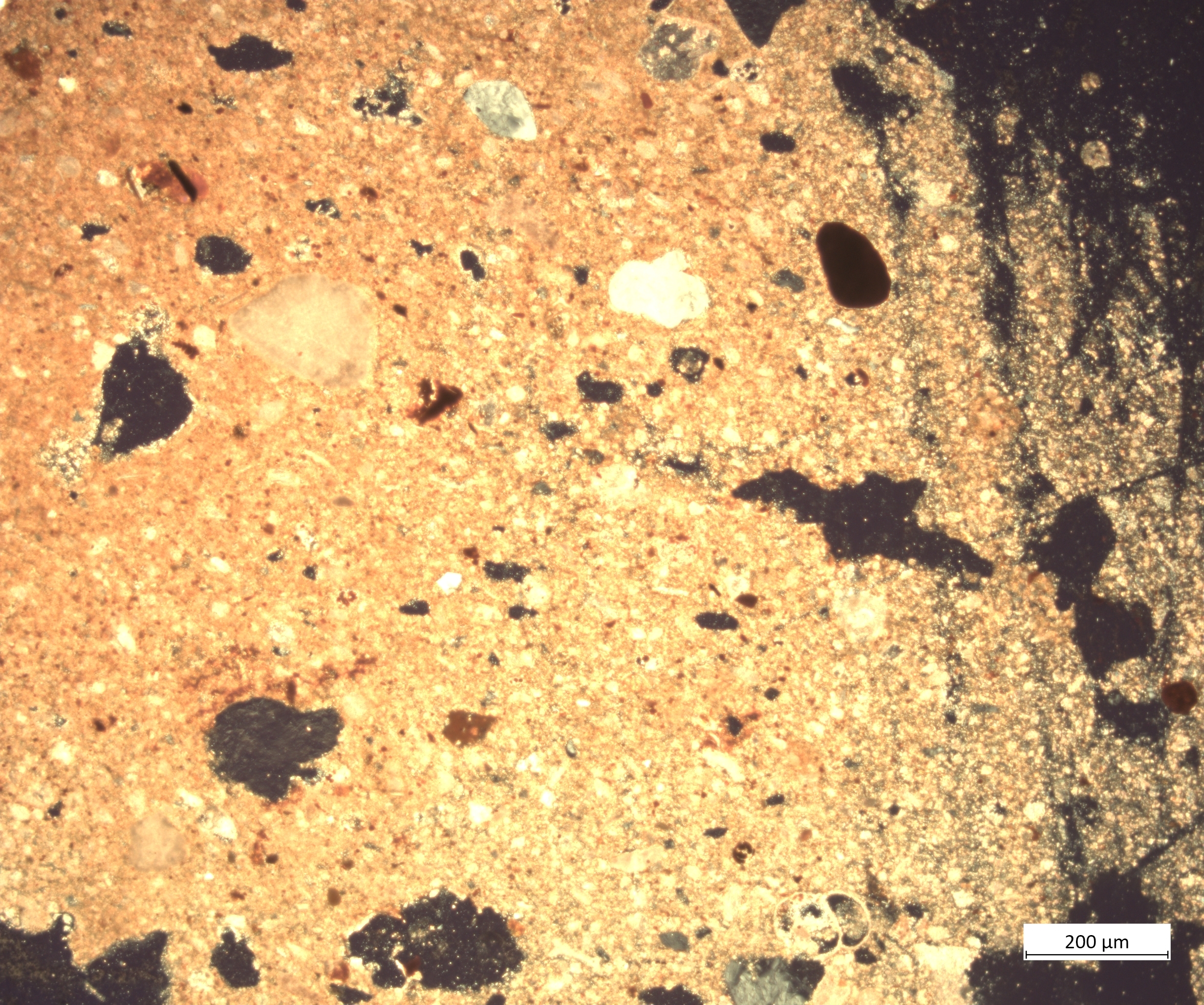
The fabric is characterized by a homogeneous yellow-brown matrix, evenly distributed pores (around 3% to 5%), from 50 up to 500 μm in size. It contains fossil fragments such as shell, gastropods, bivalves, corals, algae, ostracodes, foraminifers, radiolaria, and calcispheres (between 25 and 50%). Bioclastic content is from 100 μm to up to 2 mm in size. The fabric is dark, red to brown in PPL. Grog was added, in which no mineral content is apparent (about 5 to 10%, between 500 μm and 2 mm in size). Few mineral grains were observed: quartz, feldspar, pyroxene (~ 5% up to 100 μm), and rare sandstone or quartzite fragments (up to 1 mm).
This petro fabric represents part of the ceramic production of Northern Syria.
Among these is the local production of Tell Tewini and the region of found in different archaeological periods, shapes, and applied production techniques (Degryse and Vansteenhuyse 2019). Tell Tweini is located in the Jebleh plain at, roughly 1.5 km from the Mediterranean coastline and about 30 km south of Latakia. The Tell is situated outside the limits of modern Jebleh located along the coastline. Uplifted marine Late Pleistocene deposits characterize the coastline. The Jebleh plain is bounded in the east by small hills built of Paleogene chalky marls, limestone, and sandy marls. A small river, the Rumailiah, flows in an east-west direction north of the Tell. The river bed lies about 3 m below its foothills. A few hundred meters before the river debouches into the sea, and the plain is remarkably narrow. The mouth itself is hardly 4 m wide and situated between Pleistocene deposits.
Soils in the Tell's surrounding are composed of alluvial and fluvial sediments deposited in an ancient shallow wetland. These consist of homogeneous silty clay with a predominant grey color rich in tufa-nodules and sand-sized particles of the surrounding rock formations. These include limestone fragments and small flints. Shells and shell fragments are also scattered all over. Iron oxide precipitants in the upper part of the sediment succession document that this was a better-drained environment at times. Over the Holocene, it seems that this was an environment with fluctuating groundwater, with a period of forming wetlands, occasionally subject to inundation bringing along slightly coarser material (Baeteman and Bogemans 2019).
