
Israel/Northern Coastal Plain/calcareous/biogenic sand
Israel/Northern Coastal Plain
—
Hamra and coastal sand
The area of Israeli’s Northern coast stretch from the Haifa/Akko Bay to Achziv near the modern border between Israel and Lebanon. The area is characterized by alluvials are formed from soils along the mountains of western Galilee. This area is was inhabitant in different periods and include some of the most famous Bronze and Iron Age harbor sites, both on the Mediterranean coast and on the banks of inland rivers and wetlands typical to the area.
The coastal sites include Nahariya of the Middle Bronze age and some of the big Phoenician Centers such as Achziv and Akko. Inland, on estuaries where salt marshes—influenced by tidal currents, brackish water from local springs and sweet water from the rivers—sites such as Tell Abu Hawam and Tell Keisan serves as an interface between the coast and its hinterland.
Several paleo-environment studies recently demonstrated that this area was subjected to extensive environmental changes that go back about 6000 years. The changes in the eco-system were caused by changes in sea level, causing prolonged drought and massive deforestation. As a result, mountain sediments washed away as alluvium and probably caused a high rate of freshwater wetland loss.
As evident in this petro-fabric, these alluvials, which contain a high percentage of plastic clay minerals, are excellent candidates for ceramic production. Indeed, in antiquity, red-brown Terra Rossa was extensively used for pottery manufactured in the central highlands of Cis-Jordan and in the Galilee.

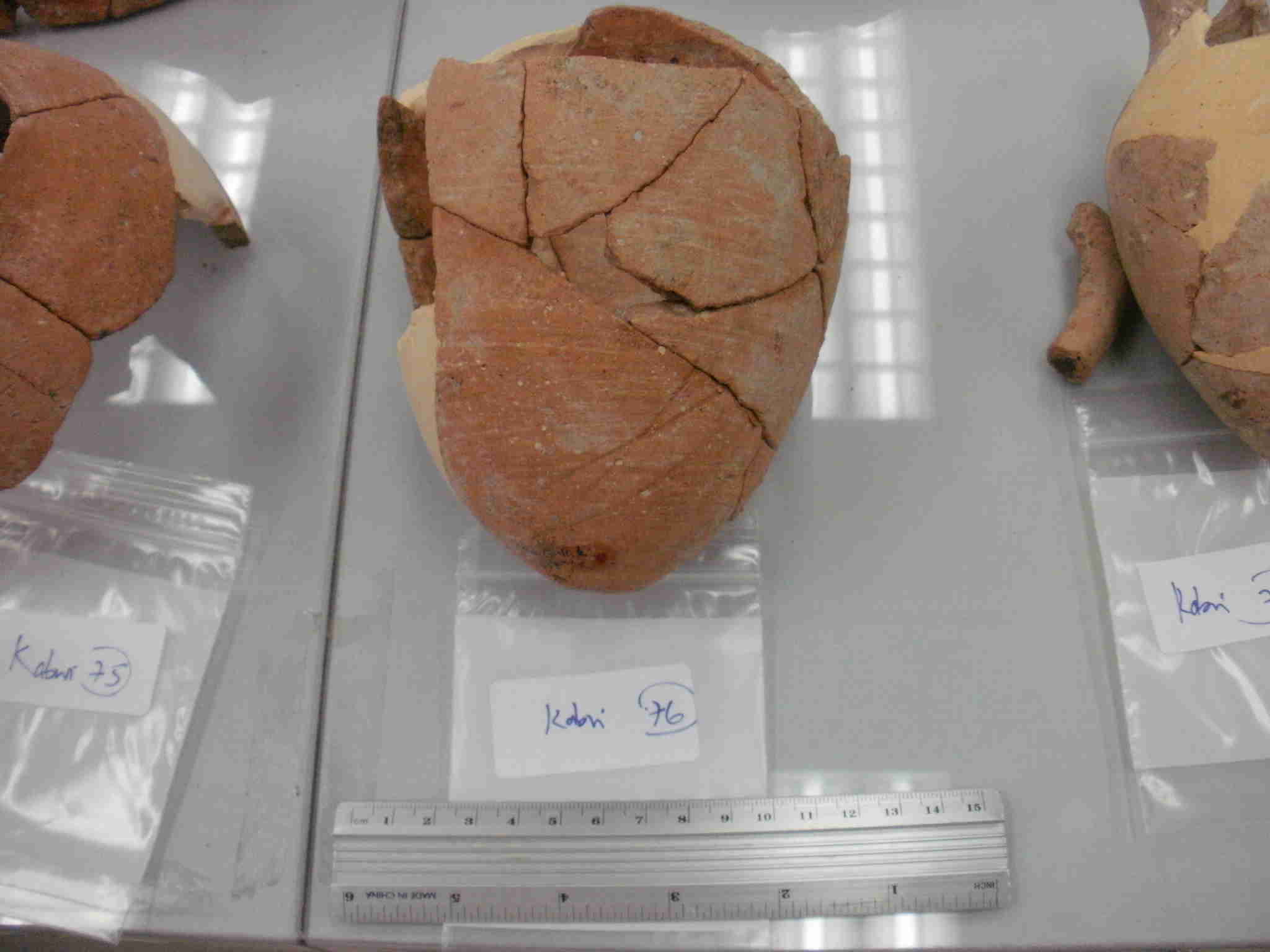


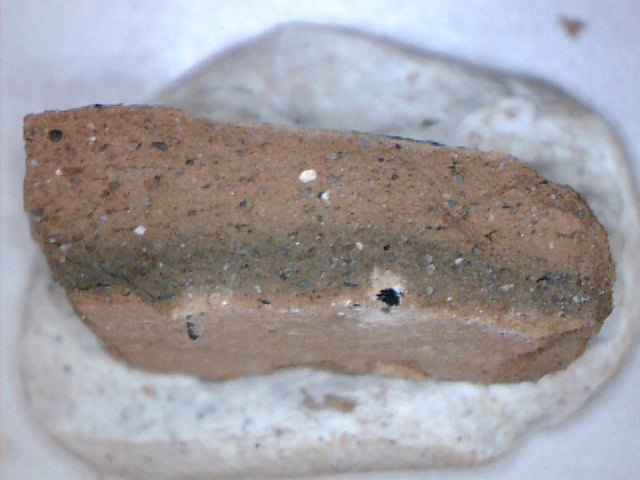
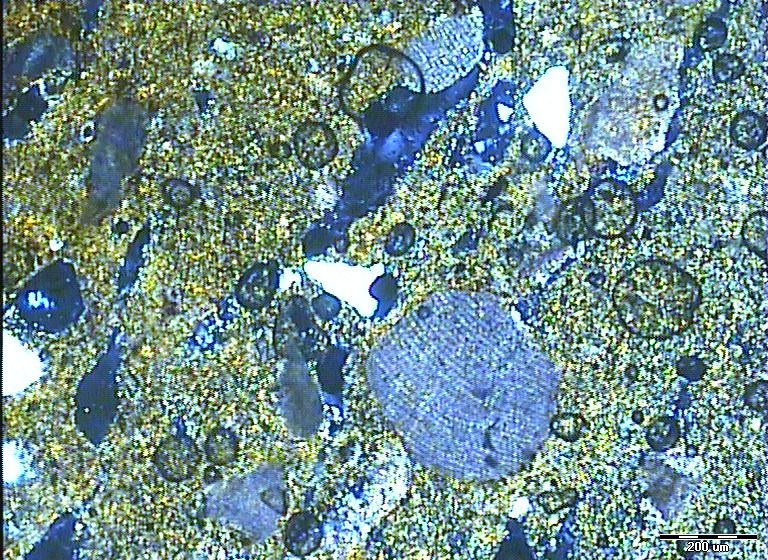


The matrix is ferruginous and little silty, the silt may include rare plagioclase, zircon and other heavy minerals. The possible source of clay is in the lenses of Hamra soil that occur within the shell-stone (kurkar) ridges. The non plastics are sub-angular to rounded grains of c. 50 % quartz and c. 50% shells' debris - coastal sand picked to the north of Akko as far as Rosh HaNiqra. Another possible source of clay may be the terra Rosa soils of the coastal area carefully washed by potters. The materials were used by several pottery workshops apparently settled at the vicinity of sugar manufactures. Latter date from the Fatimid period (11th century CE) to the Crusader period 13th century CE). Great quantities of sugar molds anf molasses jars were produced for the Hospitallers Compuond (excavations of the IAA).
The area of Israeli’s Northern coast stretch from the Haifa/Akko Bay to Achziv near the modern border between Israel and Lebanon. The area is characterized by alluvials are formed from soils along the mountains of western Galilee. This area is was inhabitant in different periods and include some of the most famous Bronze and Iron Age harbor sites, both on the Mediterranean coast and on the banks of inland rivers and wetlands typical to the area.
The coastal sites include Nahariya of the Middle Bronze age and some of the big Phoenician Centers such as Achziv and Akko. Inland, on estuaries where salt marshes—influenced by tidal currents, brackish water from local springs and sweet water from the rivers—sites such as Tell Abu Hawam and Tell Keisan serves as an interface between the coast and its hinterland.
Several paleo-environment studies recently demonstrated that this area was subjected to extensive environmental changes that go back about 6000 years. The changes in the eco-system were caused by changes in sea level, causing prolonged drought and massive deforestation. As a result, mountain sediments washed away as alluvium and probably caused a high rate of freshwater wetland loss.
As evident in this petro-fabric, these alluvials, which contain a high percentage of plastic clay minerals, are excellent candidates for ceramic production. Indeed, in antiquity, red-brown Terra Rossa was extensively used for pottery manufactured in the central highlands of Cis-Jordan and in the Galilee.
3200-c. 550 BCE
Early Bronze Age, Middle Bronze Age, Late Bronze Age, Iron Age
Achziv (Israel/Northern Coastal Plain)
Tel Dor (Israel/Carmel coastal plain)
Tel Kabri (Israel/Northern Coastal Plain)
Tell Keisan (Israel/Northern Coastal Plain)
Tell Qasile (Israel/Central Coastal Plain)
