
Baysan, theater pottery workshop
659-749 CE
Early Islamic - Umayyad/Abbasid/Fatimid
Cooking pot and Lid
Stratum 5 (Umayyad II) evidences a revival at Bet She’an, with a new concept of urban planning and extensive construction, a consequence of the reforms instituted by ‘Abd al-Malik c. 697 CE and followed by his successors (Khamis 1997:60–64). The reforms affected the administration, unified the monetary system, and brought about the adoption of Arabic as the language of government (Walmsley 2000:270). Bet She’an continued as a regional center, although no longer functioning as an administrative capital. The Roman-Byzantine institutions, such as the theater and the amphitheater, as well as the thermae, played no role in the eighth-century CE city. Instead, an administrative center was established on the summit of the mound, and the civic center was divided into commercial and industrial zones (Bar-Nathan and Atrash 2011: Plans 1.4, 1.5; Fig. 1.2; Chapter 8 and further below).8 At this time, the theater and agora pottery workshops and other industries were built over the earthquake rubble and alluvial layer that covered much of the civic center. The introduction of pottery workshops into the city, as opposed to their extra-mural location in the RomanByzantine period; was accompanied by a change in ceramic forms and technology, which can be defined as typical of the Umayyad period (Bar-Nathan and Atrash 2011; see therein).

Kilns

Kilns

Detail of Pots found in Kiln 2
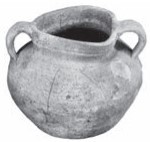
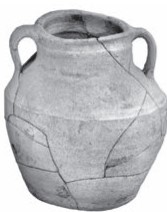

Aknowledgements to Rachel Bar-Nathan, Gaby Mazor and Walid Atrash, directors and field archaeologist on behalf of IAA
copyright: Israel Antiquities Authority
