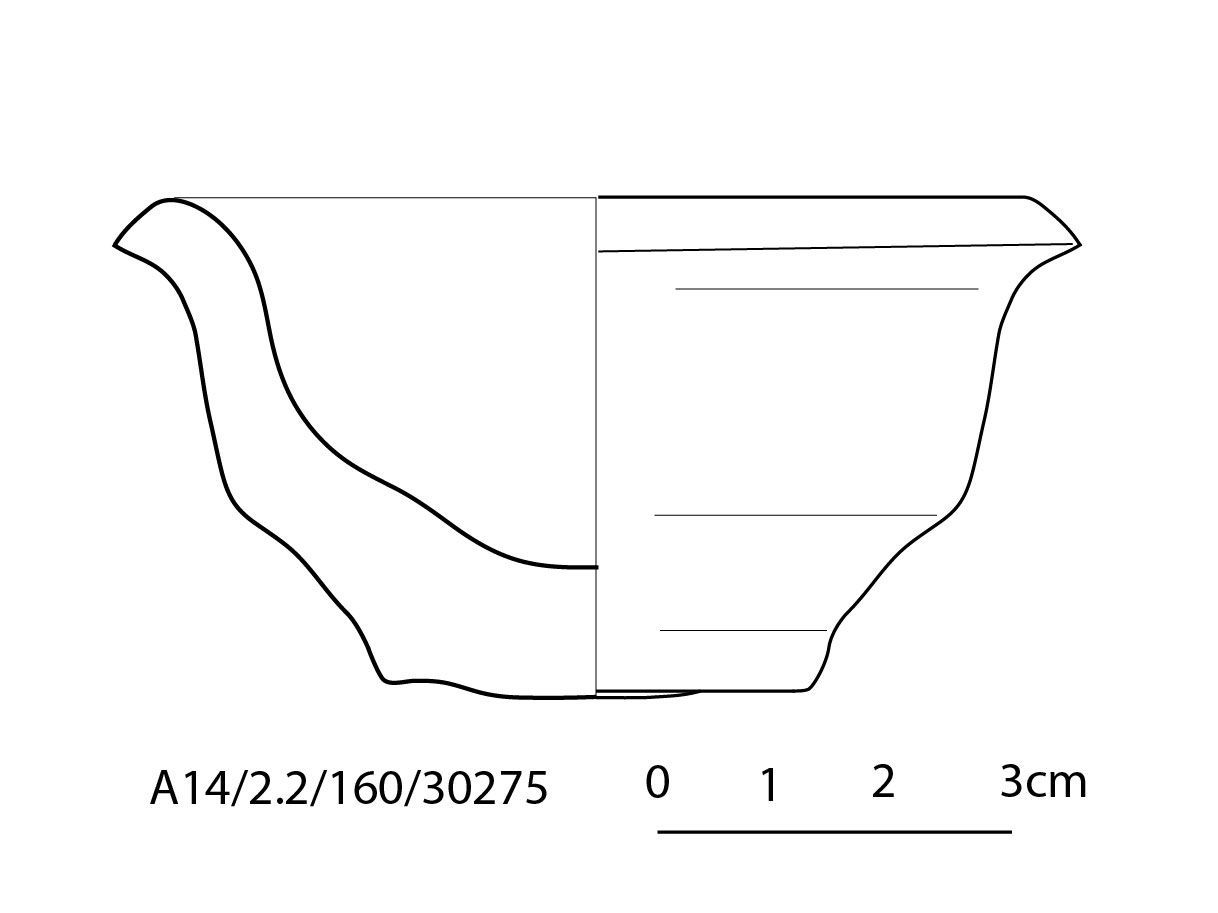
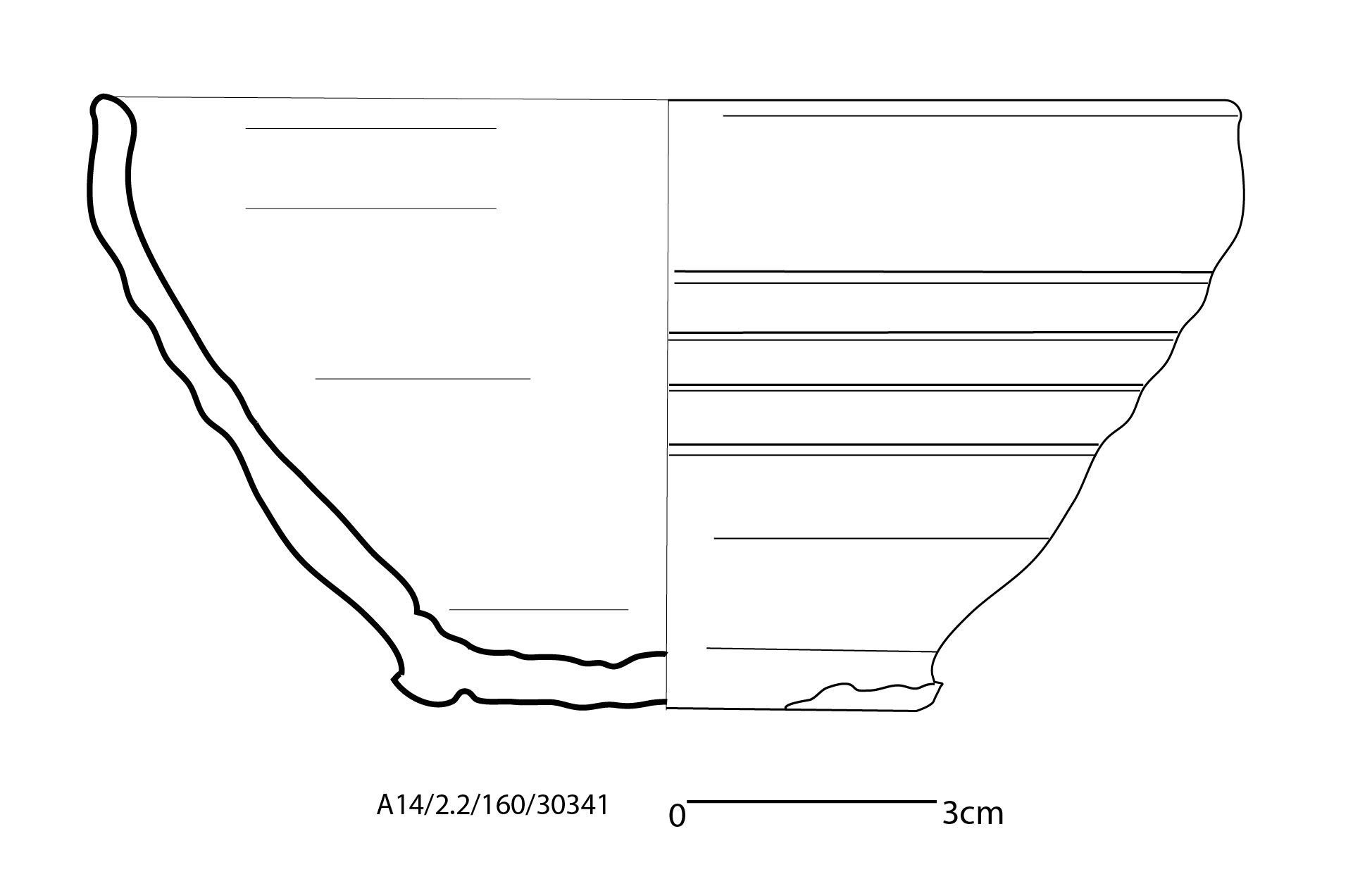
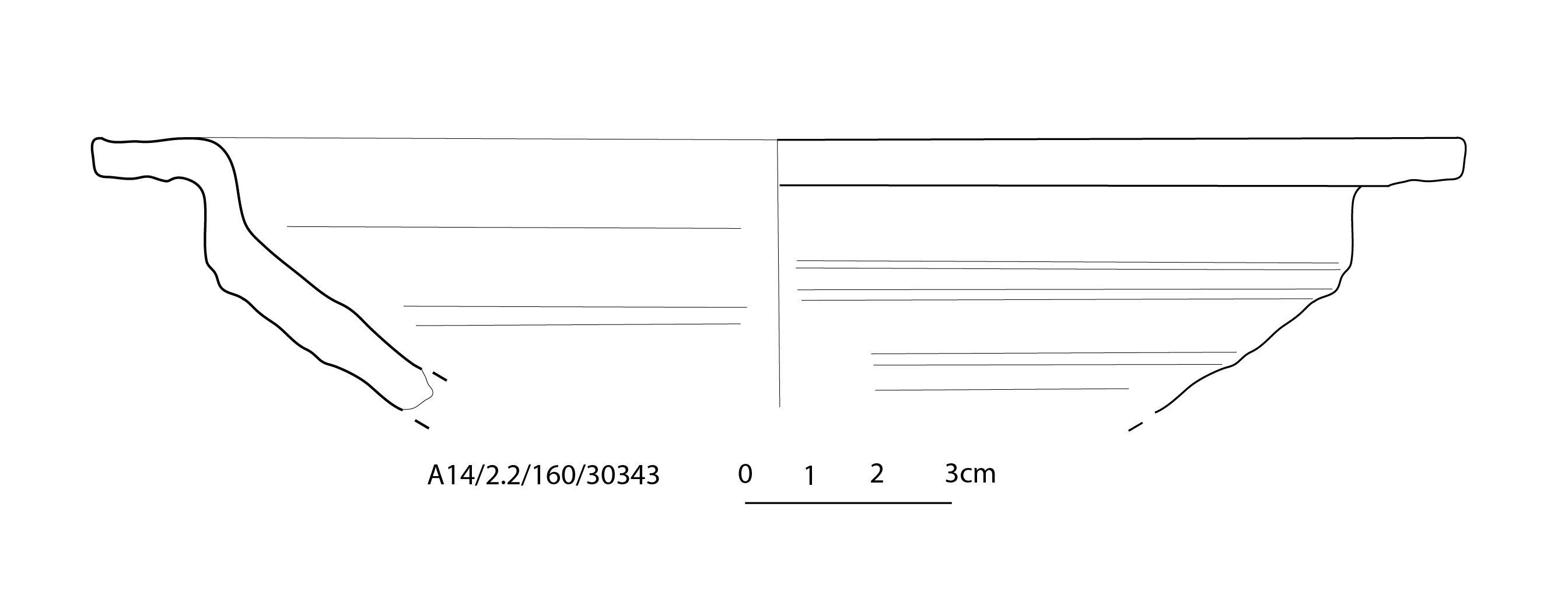
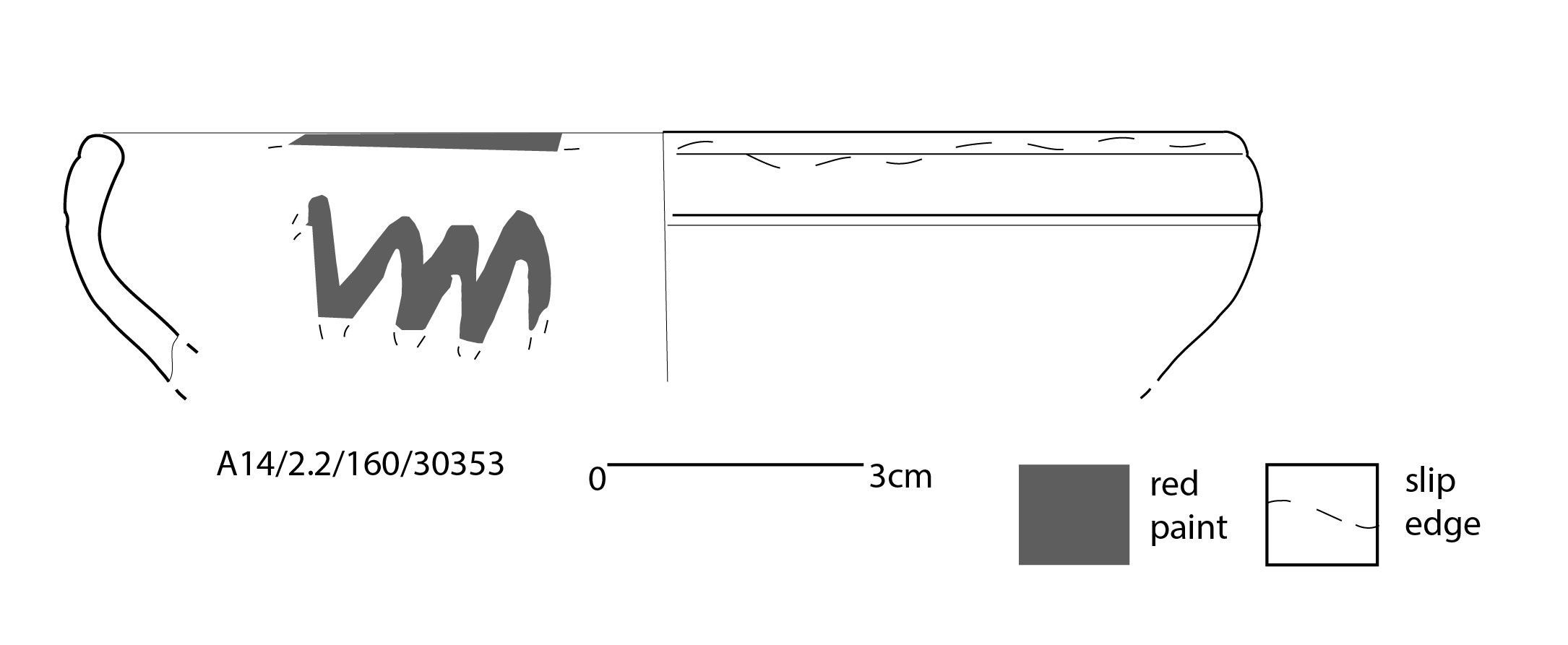
Excavations at Amheida have revealed at least five kilns for the small-scale production of ceramics, dating back to the Roman period (Caputo 2020: 206). The intact stratigraphy from the site indicates that the group of kilns were contemporaneous with House B2, which has been dated to the mid-fourth century CE. House B2 was a notable structure identified in excavations, the house of a Trimithis city councilor. The kilns were grouped together across the street to the north of the house (Boozer 2015). The high density of clinkers, wasters, and over-fired sherds excavated from those contexts suggests the kilns were active during this period (Boozer 2015: 423). Potters produced domestic and utilitarian wares (particularly bowls, jars, and kegs) for local consumption and some regional trade in and outside the oasis. The majority of vessels from this workshop were produced with a coarse ferruginous fabric that was local to the Dakhla Oasis (Eccleston 2006). Common temper additions were sand, limestone, and chaff. Potters from this workshop incorporated the stylistic traditions of other regions, as seen by the imitation of North African Terra Sigillata ware, but they also created their own local styles. The unique Christian Brittle Ware is thought to have been produced here, although more research is required in this area.